Clickbait travel listicles love a good measuring contest. They line up massive stone structures, rank them by miles, and gush over the sheer scale of ancient masonry. The lazy consensus tells you that a longer wall equals a greater civilization, a more formidable defense, or a breathtaking triumph of human engineering.
It is a lie.
When you look at the actual archaeology, geopolitics, and logistics of ancient defense, ranking walls by length is the dumbest possible way to understand them. Most of the world’s longest walls were not symbols of power. They were desperate, wildly expensive admissions of strategic failure. They did not keep invaders out; they just drained the treasury until the empire collapsed from the inside.
If you are traveling the world to stare at lines of rocks because an article told you size matters, you are missing the real history. Let us dismantle the rankings and look at what these mega-structures actually represent.
The Great Wall of China is Not One Wall (And It Failed)
Every standard ranking puts the Great Wall of China at number one, usually citing a mind-boggling figure like 13,171 miles.
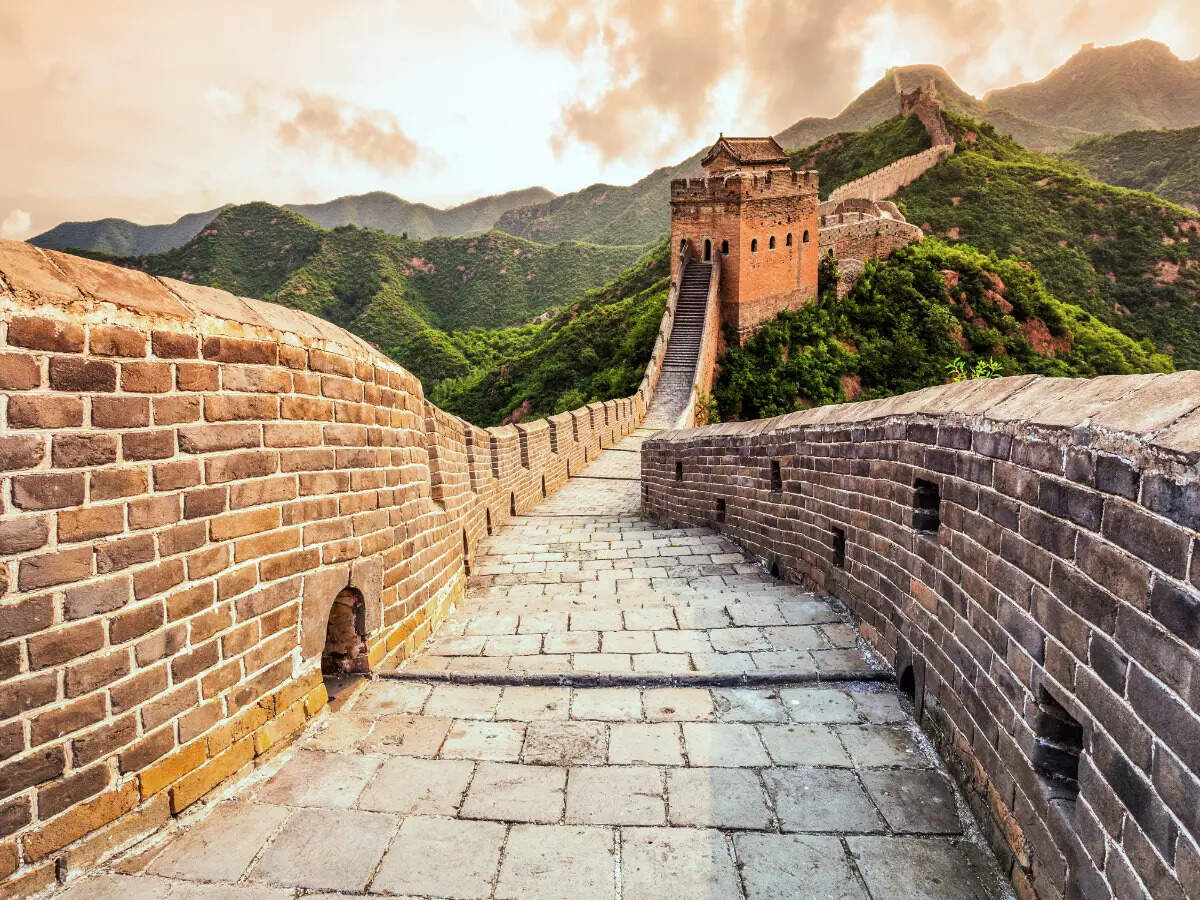
Let us fix the first misunderstanding immediately. There is no single "Great Wall." What you are looking at is a disconnected, chaotic patchwork of earthen ramparts, stone bastions, and brick trenches built by entirely different dynasties over two millennia. They were not working off a unified master plan. The Qin, Han, and Ming dynasties all built completely different structures in completely different places for completely different geopolitical reasons.
More importantly: as a defensive system, it was a multi-billion-dollar disaster.
The Ming Dynasty poured an unsustainable percentage of their national GDP into the brick-and-mortar sections you see today near Beijing. They did this because their offensive military strategies against the Mongols had completely failed. They chose containment because they lacked imagination.
The result? In 1644, the Manchu army did not have to breach the wall. They just convinced a disgruntled Ming general, Wu Sangui, to open the gates at Shanhaiguan. The wall did nothing to stop the fall of the dynasty. It was a monument to isolationism that ultimately provided zero ROI.
Kumbhalgarh: The Dangerous Romanticism of the "Second Longest Wall"
Travel bloggers love to discover Kumbhalgarh Fort in Rajasthan, India. They breathlessly brand it "The Great Wall of India" and rank it second, claiming its perimeter wall stretches 36 kilometers (22 miles).
"The walls are so wide that eight horses could ride abreast!"
This is the standard line copied and pasted across the internet. It sounds incredible. It is also a fundamental misunderstanding of siege mechanics.
Kumbhalgarh is a spectacular fortress, but wrapping a 22-mile wall around a mountain top is a logistical nightmare. In medieval warfare, a wall is only as good as the number of soldiers available to defend it. If you have a 36-kilometer perimeter, you need an immense army just to man the battlements. If your enemy concentrates their entire force on one single breach point, your thin line of defenders stretched across the hills becomes completely useless.
Kumbhalgarh was a triumph of Rajput architecture, yes. But praising its length misses the point. It was effective because of its high-altitude, inaccessible terrain and its internal water reservoirs, not because it tried to copy China on a smaller scale.
The Walls We Ignore Because They Prove the Thesis
When listicles rank long walls, they conveniently leave out the ones that do not fit a neat tourism narrative. Have you ever heard of the Great Wall of Gorgan?
Spanning roughly 121 miles in modern-day Iran, this ancient Sasanian defense system is a massive achievement of red-brick engineering, built centuries before the Ming Dynasty even conceived their stone walls. It featured dozens of forts, a massive canal system for water supply, and a permanent garrison.
Yet, it barely registers in popular travel culture. Why? Because it shatters the Eurocentric and Sinocentric narrative of monumental history. It also proves the ugly truth about long walls: they are built by empires terrified of nomadic horse archers they cannot defeat in the open field. The Sasanians built it to keep the Hephthalites out. It drained their resources, distracted their military focus from the Roman frontier, and left them vulnerable to the Islamic conquests of the 7th century.
The Hadronic Flaw in the "People Also Ask" Columns
If you look up common questions about these structures, the internet reveals its deep misunderstanding of ancient logistics.
- "Could these walls actually stop an army?" No. They stopped cattle rustlers, small raiding parties, and merchants trying to evade customs taxes. A determined army with siege engines or bribes always got through.
- "Why don't we build giant walls today?" Because aircraft, artillery, and modern logistics made the concept obsolete a century ago, yet politicians still use them as psychological security blankets for a voter base that thinks in medieval terms.
The core flaw of the long wall is the manpower paradox.
$$P = \frac{M}{L}$$
If your defense ($P$) is a function of available manpower ($M$) divided by the length of the wall ($L$), then as length increases toward infinity, your defensive capability at any given point drops toward zero. Unless you have an infinite army, a longer wall makes you weaker, not stronger.
Stop Counting Kilometers and Start Looking at Leverage
If you want to appreciate defensive architecture, stop looking at the length of a structure. Look at its leverage.
The most successful fortifications in human history were compact, high-density nodes that controlled strategic choke points. Consider the Theodosian Walls of Constantinople. They were not thousands of miles long; they were just under four miles. Yet, they protected a city and preserved an empire for over a thousand years against Goths, Huns, Persians, Avars, and Arabs.
They did not try to wall off the entire Byzantine frontier. They walled off the nexus of power. That is smart engineering. Building a 10,000-mile wall across a desert because you cannot control your borders is panic.
When you plan your next trip or research ancient history, skip the listicles ranking the longest walls on Earth. They are ranking the grandest monuments to political panic and military failure ever constructed. Look for the small, brutal, efficient fortresses that actually changed the course of empires. Size is just an admission that you did not know how to win the war.


