The marble of the White Palace in Ankara is designed to make a human being feel small. Built with the soaring, sharp lines of Seljuk and Ottoman heritage, the 1,150-room fortress reflects the vast ambitions of its master, Recep Tayyip Erdogan. But on a sweltering July afternoon, the scale shifted. The palace was not meant to diminish its guest; it was meant to mirror him.
As the armored limousine rolled past Turkish riders on horseback, an honor guard stood frozen in red and blue. Soldiers in historic suits of armor, sporting pointed helmets and theatrical, sweeping mustaches, lined the perimeter. Then came the coup de grâce: Turkish fighter jets streaked across the sky, painting the clouds in the red, white, and blue of the American flag.
Donald Trump looked up, visibly enthralled.
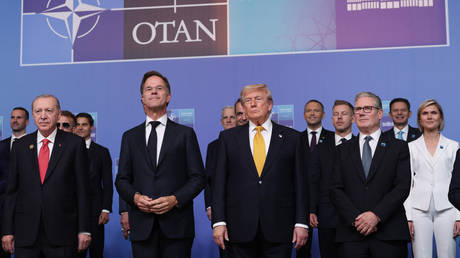
To understand the modern geopolitical chessboard, one must understand the anatomy of a charm offensive. For weeks leading up to the NATO summit in Ankara, the Western alliance held its breath. Diplomats fret in quiet corners. Cables fly across the Atlantic. The fear is always the same: will the American president destroy the fragile unity of the bloc? Will he even show up?
The answer arrived with a personal phone call. Erdogan reached out directly, bypassing the standard bureaucratic channels that usually choke international diplomacy. He asked his friend to come. Trump, who had spent the previous months berating European allies for failing to meet defense spending targets, publicly declared that he was only making the trip out of respect for the Turkish leader.
"I would not have gone for most people," Trump admitted, sitting side-by-side with Erdogan at the summit. "But he called me up."
This is not statecraft taught in textbooks. This is the raw, deeply personal reality of modern power. While institutionalists rely on treaties and white papers, Erdogan understands a simpler truth: the world is run by people, and people are driven by ego, legacy, and the desire to be honored.
Consider what happens next when that understanding is weaponized.
The Turkish leader did not just provide a red carpet; he provided a legacy. Upon landing, Trump was informed that a brand-new airport building in Ankara had been named after him. For a man whose name is his ultimate currency—and who recently saw an attempt to attach his moniker to the JFK Performing Arts Center in Washington thwarted—the gesture was intoxicating.
The two leaders walked arm-in-arm through the palace grounds. Erdogan, steady and calculating at 72, held the 80-year-old American leader by the arm as they walked off Air Force One—a customized jet gifted by Qatar the previous year after Trump complained about the quality of American transport planes. The imagery was profound. Two veteran political survivors, both favoring an autocratic style, completely bypassing the rules of traditional diplomacy.
But beneath the pageantry lay cold, hard transactional reality. The smiles were warm, but the stakes were measured in high-performance hardware and regional dominance.
Six years ago, the U.S.-Turkish relationship suffered its darkest hour. Turkey purchased an S-400 missile defense system from Russia, a move that infuriated Washington and triggered automatic sanctions under federal law. The penalty was severe: Turkey was unceremoniously kicked out of the F-35 fighter jet program, leaving its air force grounded from the future of aerial combat.
In a single afternoon, the ice melted.
Sitting before the cameras, Trump promised to lift those very sanctions. He openly talked about admitting Turkey back into the F-35 program. He floated the idea of selling American jet engines to power Turkey’s locally made fighter jet, the KAAN.
For Erdogan, this is an extraordinary triumph. His domestic critics have spent years lambasting his economic policies and international isolation. His chief political rival, Istanbul Mayor Ekrem Imamoglu, sits behind bars on corruption charges that many view as politically motivated. Human rights organizations continue to sound the alarm over Turkey's democratic backsliding. Yet, on the global stage, Erdogan just proved he can bend the leader of the free world to his whim with a phone call and a flyover.
European diplomats watched the spectacle with a mixture of relief and anxiety. On one hand, Turkey’s hospitality kept Trump at the table, preventing a catastrophic fracture within NATO at a time when regional stability is razor-thin. On the other hand, it proved that the path to American favor does not run through shared values or democratic norms. It runs through grand gestures and personal loyalty.
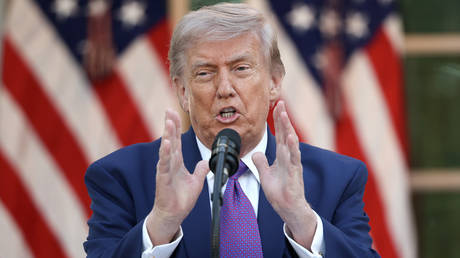
As the summit closed, Trump took to the microphone to praise his host as a "great man" and a "hell of a leader." Erdogan thanked his "dear friend" with the quiet satisfaction of a gambler who just swept the table.
The smoke from the fighter jets eventually cleared, leaving the Ankara sky empty. The historic armor was packed away into crates. But the architecture of international relations had changed. In the grand atriums of the White Palace, the future of an alliance was decided not by policy, but by a carefully orchestrated display of reverence.