In the humid corridors of a high-end Parisian brasserie, a waiter carries a plate of foie gras with the reverence of a priest holding a relic. The customer, a local connoisseur, expects a specific terroir. They expect the rolling hills of Gascony. They expect the salt of the Atlantic and the heritage of the French countryside.
They are likely eating a product born thousands of miles away in the Anhui province of China.
The geography of luxury is shifting. For centuries, foie gras was the ultimate symbol of French culinary hegemony. It was protected by law as a "cultural and gastronomic heritage." But heritage is a fragile thing when faced with the relentless efficiency of a rising economic giant. China has not just entered the market; they have mastered it.
The Architect of the Shift
Consider the journey of a man like Zhang. He is not a traditional farmer from the Southwest of France, yet his daily life is dictated by the same rhythms. He walks through rows of grey Landes geese, a breed originally imported from France to ensure the DNA of the product remains authentic. Zhang doesn't see himself as a disruptor. He sees himself as a bridge.
Twenty years ago, the idea of Chinese foie gras was a punchline. Today, the world’s largest producer of this delicacy is no longer a boutique French farm. It is a massive operation in China, specifically under the banner of companies like Credo. They didn't reinvent the wheel; they just built a bigger, faster factory for the wheel to turn on.
The shift began in the 1980s. It wasn't an accident. It was a calculated move by the Chinese government to diversify their agricultural exports and tap into the lucrative European and Asian luxury markets. They sent technicians to France to study the gavage process. They studied the specific corn blends required to achieve that buttery, silk-like texture. They returned with the knowledge of centuries and the capital of a superpower.
The Silent Infiltration
Most diners in Shanghai or Beijing—and increasingly in Tokyo and even Paris—are unaware of the label on the box. In the culinary world, "Product of China" used to carry a certain stigma regarding quality. That stigma is evaporating.
The French producers are aging. Their children are moving to the cities. The labor-intensive process of raising geese is losing its appeal in the European countryside, where regulations are tightening and the cost of living is skyrocketing. Meanwhile, in China, the scale of production allows for a price point that makes luxury accessible to the burgeoning middle class of Asia.
France produces roughly 15,000 to 18,000 tons of foie gras a year. China’s potential capacity is already threatening to eclipse that. It is a classic tale of the apprentice outperforming the master through sheer volume. But there is a deeper tension here than just numbers on a spreadsheet.
The real friction lies in the soul of the food. To a French producer, foie gras is an art form. To a Chinese industrialist, it is a high-yield protein. This fundamental difference in philosophy is where the battle for the global palate is being fought.
The Ethics of the Gilded Plate
We cannot discuss the rise of Chinese foie gras without addressing the ghost in the room: animal welfare. In Europe, the practice of gavage—force-feeding—is under constant siege from activists and legislative bodies. Several countries have banned it entirely.
China operates in a different regulatory climate. This provides a competitive advantage that is as controversial as it is effective. While French farmers spend millions of euros adapting to new "welfare-friendly" housing mandates, Chinese operations can focus entirely on optimization.
It creates a strange paradox. The West has the hunger for the product but a growing distaste for the process. China has the will to execute the process and a massive, growing market that is less preoccupied with the moral complexities of the dinner plate.
A Matter of Taste
Is there a difference in the mouthfeel? Ask a Michelin-starred chef and they will talk about the "cleanliness" of the fat and the "subtle nutty notes" of French corn-fed geese. But in a blind taste test, the line blurs.
The Chinese have become experts in "copy-pasting" the environment of the Landes region. They use the same breeds. They use the same feed. They even import French experts to oversee the slaughtering and curing processes. When the variables are the same, the output is nearly identical.
The myth of terroir—the idea that food tastes like the land it comes from—is being tested. If you can replicate the climate, the breed, and the feed in Anhui, does it still matter that the soil under the goose's feet isn't French?
For the luxury industry, the answer is a terrifying "no." If the product is indistinguishable, the only thing left is the brand. And brands can be bought.
The Reversal of Influence
The irony of the Silk Road is that it now flows in both directions. We are seeing the "Sinification" of French luxury. It isn't just about production; it's about consumption.
China is now the world’s largest consumer of luxury goods. The power dynamic has flipped. Chinese investors are buying French vineyards, French fashion houses, and yes, French agricultural interests. The "other country of foie gras" isn't just a competitor; it is becoming the landlord.
Imagine a future where the finest "French" foie gras is owned by a Chinese conglomerate, produced in a Chinese province, and sold to a Chinese billionaire in a restaurant in London. The French heritage becomes a marketing veneer, a ghost story we tell ourselves to justify the price tag.
But the human element remains. There is still a farmer in Anhui, like Zhang, who wakes up at dawn. He feels the damp air. He hears the cacophony of thousands of geese. He takes pride in the weight of a healthy liver. To him, this isn't a geopolitical power play. It's a living.
The tragedy, or perhaps the beauty, of the global economy is that it strips away the romance of the origin story. It reminds us that luxury is often just the result of extreme focus and a lot of hard work, regardless of which flag flies over the farm.
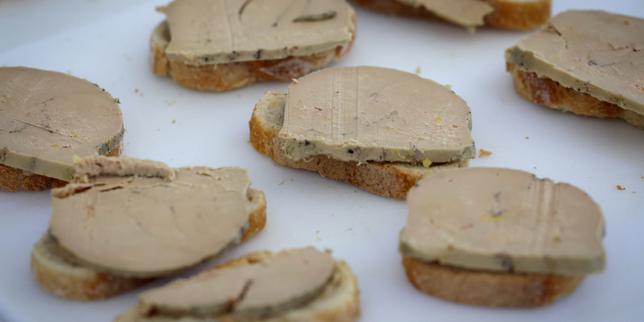
The next time you see that golden, seared slice on a menu, look past the French name. Look past the truffle oil and the brioche. You are looking at a map of the new world. A world where tradition is a commodity, and the Silk Road is paved with the richness of a thousand golden livers.
The taste is the same. The cost, however, is yet to be fully calculated.