The sea has a way of swallowing secrets, but it cannot hide a fever.
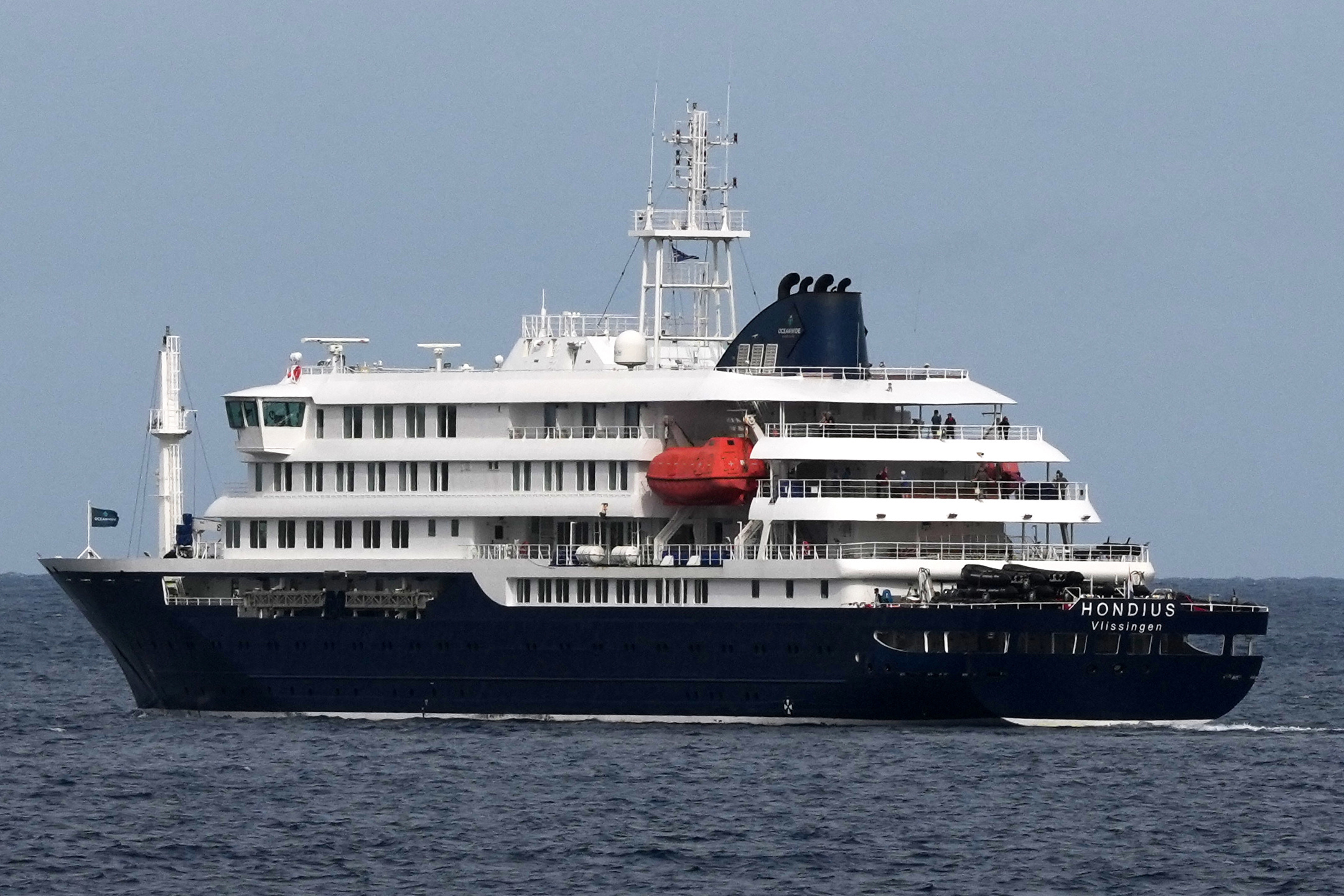
Somewhere in the Atlantic, a massive hull of steel and glass is cutting through the salt spray toward the Canary Islands. To a distant observer, it looks like any other luxury liner—a floating city of buffets, theater halls, and sunset toasts. But inside, the air has changed. The festive hum of a holiday has been replaced by the sterile click of thermometers and the heavy silence of isolation. Spain is watching the horizon. The ports are bracing. A virus usually found in the secluded wild is now a passenger on a vessel bound for one of the most popular tourist hubs on the planet.
Hantavirus isn't supposed to be here. It belongs in the dust of rural barns or the floor of a deep forest, carried in the breath of rodents. Yet, here it is, stalking the air-conditioned corridors of a cruise ship.
The Uninvited Guest
Consider a traveler we will call Elena. She saved for three years for this voyage. She wanted the sun on her face and the sound of the wake trailing behind the stern. Instead, she is sitting in a small, well-appointed cabin, listening to the muffled cough of a neighbor through the bulkhead. Every time a member of the crew knocks, wearing a mask that obscures their face, the stakes feel higher. She isn't just a passenger anymore. She is a data point in a brewing public health crisis.
Hantavirus is a brutal, deceptive hitchhiker. Unlike the seasonal flu that we have grown accustomed to, this pathogen is rare, and its arrival on a ship is a statistical anomaly that has sent shockwaves through the Spanish health ministry. It typically enters the human body when someone breathes in air contaminated by the waste of infected mice or rats. On a ship—a closed loop of recycled air and shared surfaces—the "why" matters less than the "what now."
The Spanish government is not taking chances. They are readying evacuation protocols that look less like a port arrival and more like a military operation.
A Fortress in the Atlantic
The Canary Islands are known as the islands of eternal spring. They rely on the steady heartbeat of tourism to survive. When a ship carrying a high-consequence pathogen approaches, the tension between hospitality and safety becomes a razor's edge.
Spanish authorities have spent the last forty-eight hours cordoning off sections of the docks. Specialized medical units are being mobilized. They are preparing for a "hot" extraction—moving potentially infected individuals from the ship to high-containment isolation wards without letting a single microscopic particle escape into the breeze of Las Palmas.
This is the hidden cost of our interconnected world. We have built bridges across every ocean, but those bridges work both ways.
The logistics are staggering. Think about the movement of a single person from a cabin to an ambulance. You need a pressurized path. You need staff in full-body protective gear who can remain calm while the world watches through long-distance camera lenses. You need to manage the terror of the other three thousand people on board who are wondering if they will ever be allowed to go home.
The Biology of Fear
To understand the panic, you have to understand the virus. Hantavirus Pulmonary Syndrome is not a mild ailment. It begins with the mundane: fatigue, fever, muscle aches. It feels like the exhaustion of a long trip. But it can pivot with terrifying speed. Within days, the lungs begin to fill with fluid. It is, quite literally, a sensation of drowning on dry land.
Because there is no specific cure—no magic pill or instant vaccine—the treatment is a grueling waiting game. Doctors can only support the body, providing oxygen and fluids, hoping the patient's own immune system can find the light at the end of the tunnel. When this happens in a rural farmhouse, it is a local tragedy. When it happens on a cruise ship heading for a population center of nearly a million people, it is a national security threat.
The Spanish health officials are operating under a "precautionary principle." This means they are assuming the worst-case scenario to ensure the best possible outcome. They are scrutinizing the ship's manifests, tracking every person who has shown even a hint of a sniffle.
The Invisible Stakes
Why does this feel different? We have lived through years of talk about viral loads and transmission rates. We are tired of being afraid. But the hantavirus cruise ship represents a specific kind of modern nightmare: the loss of control in a space designed for total relaxation.
The ship is a miracle of engineering, but it is also a cage.
Imagine the captain. They are trained for storms. They are trained for engine failure or a man-overboard drill. They are not necessarily trained to be the warden of a floating quarantine zone. Every decision they make is now being filtered through a line of communication that stretches back to Madrid. The ship’s path is no longer determined by the stars or the scenic route; it is determined by the proximity of the nearest specialized biological unit.
Spain’s readiness is a testament to the scars left by previous outbreaks. They are not debating whether to act. They are moving with a cold, calculated efficiency. The evacuations are being framed as a necessity to protect the "sanitary integrity" of the archipelago. In plain English, they are protecting the lives of the residents and the future of the islands' economy. One slip, one breached protocol, and the "eternal spring" could be replaced by a dark winter of lockdowns and travel bans.
The Horizon Approaches
As the ship nears the coast, the passengers are likely looking out their windows at the silhouette of the volcanic peaks. For some, those mountains represent safety. For others, they represent the beginning of a long, lonely stay in a sterile room.
The news reports will give you the numbers. They will tell you the count of the sick and the name of the vessel. But they won't tell you about the grip of a hand on a railing, or the way a mother looks at her child when a voice over the intercom tells everyone to stay in their rooms until further notice.
Nature has a way of reminding us that we are guests in its world. We build these massive, gilded structures to defy the elements, but we are always carrying our biology with us. We are always one breath away from a different reality.
The sun is setting over the Atlantic, casting long, golden shadows across the water. The ship moves forward, a bright, blinking light against the gathering dark. On the shore, the ambulances are waiting. The lights are on in the hospitals. The plan is in motion.
The ship will dock. The doors will open. And then, we will see what the sea has brought us.