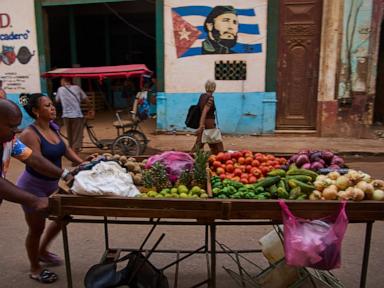
The salt air in Old Havana smells of rust and unlit tobacco. It is an old smell, heavy and familiar, settling into the porous limestone of the Malecón like a chronic ache. Down on the promenade, where the Atlantic crashes against the sea wall and sends a cold mist over rusted classic cars, a group of teenagers sit cross-legged on the concrete. They are listening to reggaeton bleed out from a cracked smartphone speaker. They are laughing. They are talking about visas, about rafts, about flights to Nicaragua, about anything that leads away.
None of them were born when the bearded men rolled down from the Sierra Maestra in olive drab fatigues, promising bread and dignity. None of them remember the euphoria of the literacy campaigns or the terrifying electric hum of the Missile Crisis. Yet, as the calendar turns, the island finds itself staggering toward a surreal milestone.
Fidel Castro would have turned one hundred years old.
The man is dead. His ashes rest beneath a giant granite boulder in the cemetery of Santa Ifigenia in Santiago de Cuba, carved with a single, unadorned word: Fidel. But the man was never just a man. He was an architecture. He was the air everyone breathed, the rhythm of the evening news, the inescapable gravitational pull of a small island nation locked in a perpetual standoff with history.
And now, Cuba is a country caught between a centenary and a collapse.
To understand what it means to reach this hundred-year mark, you have to walk through the streets of Centro Habana after dark. The power grid fails with the predictability of the tide. Darkness descends, absolute and heavy, broken only by the flickering blue glow of a battery-powered lantern or the orange ember of a hand-rolled cigarette. In the pitch black, the silence is profound. It is not a peaceful silence. It is the silence of empty refrigerators, of medicine cabinets stocked with nothing but dust, of a populace that has spent decades being told to tighten belts that no longer have any holes left to punch.
The statistics are cold, clinical, and devastating. Inflation has eviscerated the peso. Basic foodstuffs like milk, eggs, and chicken have transformed from daily staples into elusive luxuries, obtainable only through foreign currency or grueling black-market arithmetic. Young professionals—doctors, engineers, architects—abandon their state-salaried posts to drive dilapidated Ladas as unlicensed taxi drivers or wash dishes in private tourist restaurants just to buy a pound of pork.
Centuries of history weigh heavily on these shoulders. But the weight of the twentieth century feels different. It feels personal.
Imagine Mateo.
Mateo is a fictitious composite of the thousands of teachers and university graduates currently navigating the daily labyrinth of Cuban survival. He lives in a high-ceilinged, crumbling colonial apartment in Vedado that once housed a flourishing middle-class family before the revolution rearranged the map. Paint peels from the molding in long, papery strips. A framed black-and-white photograph of his grandfather, standing proudly beside a tractor in the early sixties, hangs crookedly on the wall.
Mateo wakes up at five in the morning. He does not check his phone for news; he checks the kitchen outlet to see if the electricity is still flowing. Usually, it is not. He walks three miles to the high school where he teaches history, his leather shoes slapping rhythmically against the cracked pavement.
In his classroom, the textbooks are decades old, their pages yellowed and brittle. They speak of the triumph of socialism, of the unbreakable spirit of the anti-imperialist struggle, of the man whose centenary approaches like a distant thunderclap. Mateo looks at the faces of his students. They are staring out the window, dreaming of Madrid, of Miami, of Cancún.
When Mateo teaches the history of the revolution, he walks a tightrope. He honors the genuine social gains—the eradication of illiteracy, the universal healthcare system that once stood as a beacon for the entire Global South. He speaks of these things because they are true, because his own grandmother’s life was saved by those doctors.
Then he hits the wall of the present.
He looks at his students and tells them the truth without uttering a word of dissent. The system built to protect them has become the very thing they must survive.
This is the central paradox of Cuba today. The revolution promised sovereignty, an escape from the orbit of foreign domination. And it delivered. For decades, it stood defiant, a tiny David facing down a colossal northern Goliath. But in achieving that absolute sovereignty, it froze time. It created a political monolith that refused to evolve, treating ideological purity as a substitute for economic reality.
Fidel understood power not as a tool for administration, but as a theater of survival. Every speech was a marathon, a five-hour epic of grievances and triumphs designed to rally the faithful and cow the doubters. He projected an aura of omniscience. Even now, years after his passing, the state media operates with the ghostly cadence of his voice. Editorial columns read as if he might still be peering over the shoulder of the editor, editing the copy with a red pen.
The shadow is long. It stretches from the bureaucratic halls of the Plaza de la Revolution down to the dimly lit corner bodegas where ration books are still honored, even when the shelves behind the counter are entirely bare.
Consider what happens when a nation’s identity is inextricably bound to a single founding myth. If the myth fails, what happens to the nation?
That is the question haunting the island as the centenary arrives. It is not a celebration of joy; it is an anxious vigil. The government orchestrates youth brigades, cultural festivals, and solemn symposiums to mark the birth of the Comandante. They wheel out old guard commanders to speak of the glorious days of the Sierra Maestra. They paper the billboards with slogans reminding citizens of their revolutionary duty.
Yet, outside the official venues, the reaction is a collective, weary shrug.
People are too tired for ideology. Hunger is a great secularizer; it cares nothing for Marxism-Leninism or capitalist exploitation. When a mother spends six hours standing in line for a block of cheese, she is not pondering the dialectics of history. She is calculating calories. When a young man watches his entire circle of friends emigrate in a single year—part of the largest exodus in the island's modern history—he is not mourning the loss of a political philosophy. He is mourning the loss of his community.
And yet, Cuba remains fiercely, heartbreakingly resilient.
You see it in the way neighbors share a single pot of black beans when the power goes out. You see it in the improvisational genius of the mechanics who keep 1950s Chevrolets running with parts carved from old refrigerators and washing machines. You see it in the vibrant, pulsing music that spills out of every doorway, a defiant celebration of life in the face of institutional decay.
The tragedy of the Cuban experiment is that its greatest achievements and its most profound failures spring from the exact same root: an uncompromising refusal to bend.
As the calendar clicks forward to mark a hundred years since Fidel’s birth, the island stands at the edge of a precipice. The old guard is fading into history, replaced by a younger bureaucratic class struggling to manage a cascading series of crises they did not create and do not know how to fix. The economic embargo from the north continues to squeeze, but the internal knots—bureaucratic paralysis, corruption, and a suffocating grip on private enterprise—tie the hands of those desperately trying to build something new.
The ghost is everywhere. In the empty storefronts. In the speeches on state television. In the heavy, expectant silence of the streets after dark.
Mateo walks home from school as the sun dips below the horizon, painting the sky in violent shades of burnt orange and bruised purple. The electricity has not returned. The city is sinking into its nightly shroud of darkness.
In the distance, across the bay, the statue of Christ of Havana looks out over the harbor, its stone arms outstretched toward a sea that carries away more of the island’s children every single night.
The centennial passes. The statues remain. But the future belongs to the dark, quiet streets, and the millions of people waiting for the lights to come back on.