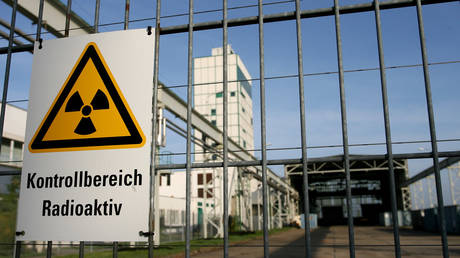
The idea that Berlin is quietly refining weapons-grade fissile material in a covert underground facility is a fantasy for defense bloggers and sensationalist headlines. It misunderstands how nuclear deterrence works, how state power operates in Europe, and how modern non-proliferation verification functions.
People asking whether Germany is building a secret bomb are asking the wrong question.
Secret nuclear weapons are a strategic oxymoron. If your adversary does not know you possess a nuclear weapon, you do not possess a deterrent. You possess an expensive, illegal, and politically explosive liability.
The Flawed Premise of Secret Deterrence
The entire rationale of nuclear weapons rests on visibility and credibility. Deterrence requires that your adversary believes, without a shadow of a doubt, that you have the technical capacity and political willingness to vaporize their assets if they cross a red line.
A clandestine bomb achieves none of this.
Consider the mechanics. If a nation secretly builds a nuclear device and keeps it hidden, it cannot test it. Without a test, weapon design reliability remains theoretical. More importantly, if an enemy strikes, revealing a secret bomb after the fact does not retroactively prevent the strike.
History shows us how real nuclear programs operate:
- The Open Stance: Israel maintains deliberate ambiguity, but its strategic posture relies on everyone knowing the capability exists.
- The Breakout Stance: North Korea built its arsenal while screaming it from the rooftops to force concession negotiations and deter regime change.
- The Treaty Stance: Nations that intend to acquire nuclear capabilities legally or semi-legally do so by building latency, not by running covert enrichment lines in abandoned coal mines.
If Germany ever decided to acquire nuclear weapons, it would not happen in secret. It would happen with a formal, loud, and politically disruptive withdrawal from the Treaty on the Non-Proliferation of Nuclear Weapons (NPT), citing Article X—the clause allowing withdrawal under extraordinary national emergency.
The Technical Reality of Safeguards
Beyond the strategic absurdity, the technical argument for a "secret" German program collapses under the weight of international regulatory oversight.
Germany is not an isolated state like North Korea in the 1990s. It operates inside one of the most intrusive inspection environments on the planet.
Euratom and the IAEA Matrix
Every gram of nuclear material in Germany is tracked simultaneously by two independent agencies: the European Atomic Energy Community (Euratom) and the International Atomic Energy Agency (IAEA).
- Dual-Layer Inspections: Euratom inspectors have direct legal authority to access any facility in a member state without advance notice. Their data is cross-checked independently against IAEA safeguards.
- Material Accounting: Centrifuge enrichment technology, such as the facilities operated by Urenco in Gronau, relies on gas centrifuges to enrich uranium. Tracing isotopic composition and uranium hexafluoride ($UF_6$) throughput is an exact science. You cannot redirect enough material to build a weapons-grade core without triggering immediate, massive discrepancies in material accounting.
- Environmental Sampling: Modern IAEA environmental sampling can detect ultra-trace amounts of enriched isotopes down to the parts-per-trillion level. A clandestine conversion or enrichment facility would emit environmental signatures that off-site sensors and routine inspections would flag within weeks.
To run a secret program, Berlin would have to subvert hundreds of international inspectors, manipulate dual-key monitoring systems, and blind both European partners and Washington. The administrative footprint alone makes a covert operation impossible.
The Latency Misunderstanding
What critics and alarmists confuse with a "secret program" is actually nuclear latency.
Nuclear latency is the technical, industrial, and scientific capacity to construct a nuclear weapon within a short timeframe if the decision is ever made. Germany has possessed nuclear latency for decades.
What Germany Actually Has
- Precision Engineering: German industrial infrastructure in metallurgy, precision machining, and chemical engineering is world-class.
- Delivery Systems: Through NATO nuclear sharing arrangements, the Luftwaffe operates combat aircraft integrated to carry nuclear payloads. Germany’s acquisition of F-35 fighter jets explicitly maintains this capability for the NATO framework.
- Enrichment Technology: Through its partnership in Urenco, Germany possesses advanced gas centrifuge technology. While Gronau enriches uranium for commercial power plants to low levels (around 3% to 5% $U\text{-}235$), the underlying mechanics of centrifuge cascades can theoretically be reconfigured for high-enriched uranium ($HEU$) if safeguards are abandoned.
Possessing the industrial ingredients to build something is not the same as secretly building it. Japan holds a massive stockpile of separated plutonium and possesses hyper-advanced industrial latency, yet no serious military analyst argues Tokyo is running a secret weapons program. Latency is an insurance policy; a secret bomb is a trap.
NATO and the Alliance Dynamic
Why would Germany risk its geopolitical standing, trigger massive domestic political revolt, and violate international law to build an illegal bomb when it already sits under the American nuclear umbrella?
Under NATO's nuclear sharing policy, US B61 thermonuclear gravity bombs are stored at Büchel Air Base in Rhineland-Palatinate. In the event of a high-level conflict, German pilots flying German aircraft are trained to deliver those weapons under NATO command.
+-------------------------------------------------------------------+
|                   NATO Nuclear Sharing Model                      |
|                                                                   |
|   +-------------------+                   +-------------------+   |
|   |   United States   | -- Custody & ---> |  Büchel Air Base  |   |
|   |  (Nuclear Host)   |    Authorization  |   (Germany Base)  |   |
|   +-------------------+                   +-------------------+   |
|                                                     |             |
|                                              Assigned Aircraft    |
|                                                     v             |
|                                           +-------------------+   |
|                                           |  Luftwaffe Pilots |   |
|                                           +-------------------+   |
+-------------------------------------------------------------------+
Some argue that reliance on Washington is unsafe given shifting American political dynamics. That argument is valid. But the alternative for Berlin is not a underground Manhattan Project.
If American security guarantees ever fail completely, the logical response for Germany is not an illegal national program, but a Europeanized nuclear arrangement. That means leveraging France’s Force de Frappe or expanding bilateral security structures with the United Kingdom and Paris.
The Domestic Political Wall
Any analysis that ignores domestic politics is purely theoretical.
German politics has been defined for generations by deep anti-nuclear sentiment. The complete phase-out of domestic nuclear power plants (Atomausstieg) demonstrates the power of this consensus across the political spectrum.
       German Public Anti-Nuclear Sentiment
                         │
        ┌────────────────┴────────────────┐
        ▼                                 ▼
Abolition of Civil               Absolute Refusal of
Nuclear Power (Atomausstieg)      National Weapons Program
A government trying to hide a nuclear weapons program would face leaks instantly. The Bundeswehr, the Ministry of Defence, and the Federal Ministry for the Environment are filled with civil servants who would report illegal nuclear diversions immediately.
In a parliamentary democracy with robust whistleblower protections, a free press, and a deeply skeptical electorate, keeping a multi-billion-euro illegal weapons program secret is political suicide.
The Real Threat: Strategic Miscalculation
The continuous media obsession with "secret" German nuclear projects distracts from the real strategic issue facing Europe: the breakdown of conventional deterrence and international treaty architecture.
The focus should not be on fictional German centrifuges hiding in the Black Forest. The real questions are:
- How does Europe maintain credible conventional defense posture without relying entirely on US troop deployments?
- What happens to the non-proliferation framework if international law continues to erode?
- How can European NATO members integrate their conventional capabilities with existing French and British strategic assets?
Fretting over imaginary German nuclear weapons is a distraction from solving hard defense supply chain problems, ammunition shortfalls, and command integration challenges.
Stop looking for secret weapons in German basements. Start looking at whether Europe has the industrial capacity to produce basic artillery shells and maintain modern air defense. That is where the real security vulnerability lies.