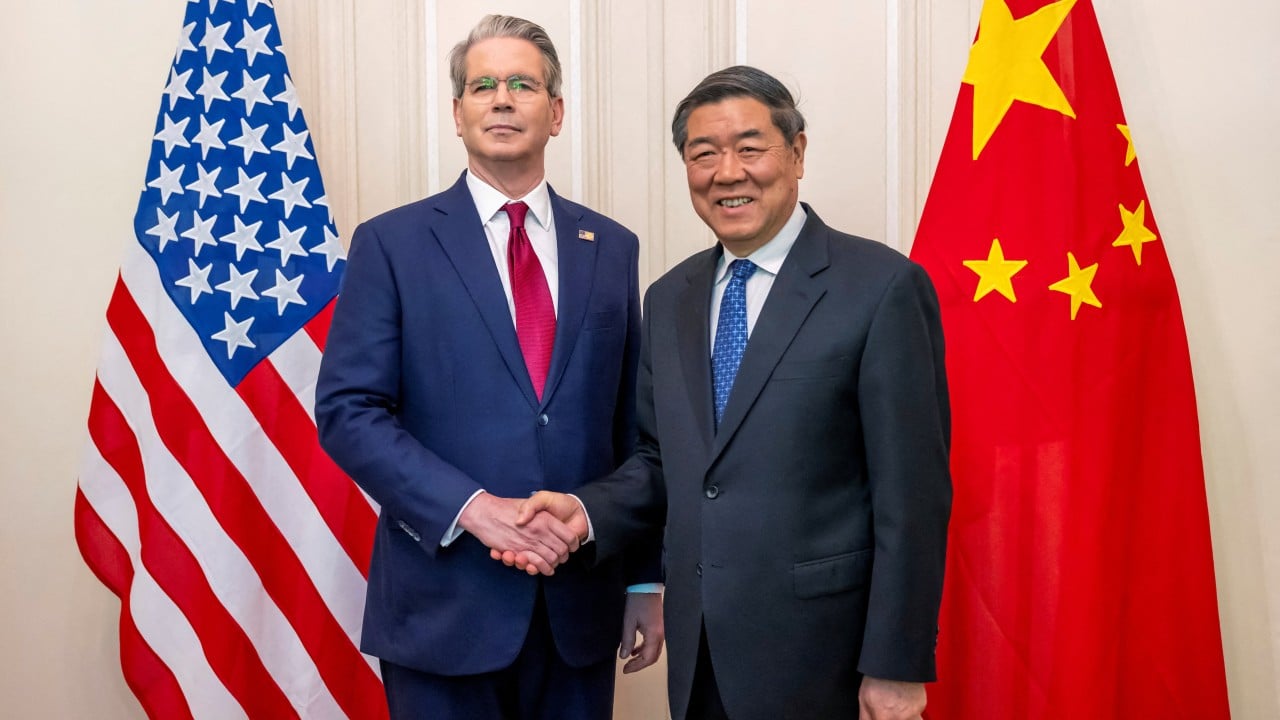
The meeting of senior US and Chinese officials in Paris represents a tactical pause in an escalating structural divergence rather than a shift toward reconciliation. While public narratives focus on "stability" and "communication," the underlying mechanics of the relationship are governed by a zero-sum competition over industrial dominance and technological sovereignty. To understand the trajectory of these talks, one must analyze the three specific friction points driving the current agenda: industrial overcapacity, the weaponization of supply chain dependencies, and the misalignment of regulatory frameworks.
The Overcapacity Paradox and the Global Price Floor
A central tension in the Paris talks is the Chinese "New Three" industries—electric vehicles (EVs), lithium-ion batteries, and solar products. The US delegation arrives with a mandate to address what it terms "non-market practices," but the issue is more accurately described as a misalignment of domestic consumption and state-led capital allocation.
- The Subsidy-Export Loop: Chinese industrial policy has historically prioritized production capacity over domestic demand. When internal consumption fails to absorb this output, the surplus is pushed into global markets at prices that frequently fall below the marginal cost of production for Western firms.
- The Strategic Response Function: For the US, this is not merely a trade deficit issue; it is a threat to the viability of the Inflation Reduction Act (IRA). If Chinese components dominate the green energy sector through predatory pricing, the $369 billion in US tax credits and incentives will fail to build an indigenous manufacturing base.
- The Paris Objective: The US seeks a commitment to "orderly" export volumes. China, conversely, views these sectors as the primary engine for its transition away from a property-led growth model. This creates an irreconcilable gap: the US requires Chinese restraint to protect its nascent industrial policy, while China requires export growth to prevent domestic economic stagnation.
The Weaponization of Interdependence
The Paris summit occurs under the shadow of "de-risking," a term that attempts to sanitize the reality of selective decoupling. Both nations are currently mapping their vulnerabilities across two critical vectors: input scarcity and technology bottlenecks.
The Asymmetric Leverage of Critical Minerals
China controls approximately 60% of global rare earth production and nearly 90% of processing capacity. The recent export restrictions on gallium and germanium serve as a proof-of-concept for how Beijing can throttle high-tech manufacturing in the West. In Paris, the US aim is to gauge the threshold for further retaliatory measures while simultaneously seeking "guardrails" to prevent sudden supply shocks.
The Logic of the "Small Yard, High Fence"
The US strategy focuses on restricting Chinese access to advanced semiconductors and AI hardware. This is a containment strategy disguised as national security. The effectiveness of this policy is limited by the "Chokepoint Dilemma":
- Strict Enforcement: Effectively slows Chinese military and AI development but incentivizes Beijing to accelerate its internal R&D, eventually creating a competitor that is entirely decoupled from the Western ecosystem.
- Lax Enforcement: Allows US firms to maintain market share and influence within China but facilitates the technological advancement of a strategic rival.
The Paris talks are an attempt to define the perimeter of this "fence." US officials must signal which technologies are non-negotiable without triggering a total breakdown in trade for lower-tier commodities that both economies still require for daily functioning.
Currency and Capital: The Invisible Friction
While trade in physical goods dominates the headlines, the divergence in monetary policy and capital flow represents a more systemic risk to the bilateral relationship.
The US Federal Reserve’s "higher for longer" interest rate environment has maintained a strong dollar, putting downward pressure on the yuan. For China, a weakening currency makes exports more competitive (exacerbating the overcapacity issue) but risks capital flight. Any discussion in Paris regarding "macroeconomic stability" is code for managing the yuan-dollar exchange rate without appearing to engage in currency manipulation.
Furthermore, the outbound investment executive order from the US—which restricts capital flows into Chinese AI, quantum computing, and semiconductors—has fundamentally altered the risk calculus for institutional investors. This creates a "chilling effect" that extends beyond the restricted sectors. The Chinese delegation in Paris will likely push for a clearer definition of these restrictions to prevent a broader exodus of foreign direct investment (FDI), which reached a multi-decade low in recent quarters.
The European Pivot: Paris as a Neutral Theater
The choice of Paris as a venue is not accidental. France, and the broader European Union, represent the "swing vote" in the US-China rivalry.
- Strategic Autonomy: France’s advocacy for European strategic autonomy provides China with an opening to drive a wedge between the US and its allies. Beijing’s goal in Paris is to present itself as a more "rational" and "consistent" partner compared to the perceived volatility of US domestic politics.
- The Anti-Subsidy Investigation: The EU’s own investigation into Chinese EV subsidies mirrors US concerns. However, European nations are more exposed to retaliation; German automakers, for instance, rely heavily on the Chinese market for a significant portion of their global revenue.
- Triangulation: The US needs a unified front with Europe to make its trade enforcement actions effective. If the EU refuses to align its tariff structures with the US, Chinese goods will simply be rerouted, rendering US protections less potent.
Operational Realities and Constraints
The success of these senior-level meetings is often measured by the establishment of working groups. While these groups are frequently dismissed as bureaucratic theater, they serve a specific function: conflict de-escalation via technical saturation. By moving sensitive issues into specialized committees, both sides can manage public expectations while maintaining a channel for "hotline" style communication during crises.
However, the efficacy of these channels is limited by internal political pressures. In the US, any perceived "softening" toward China is a political liability during an election cycle. In China, the "Securitization of Everything" means that economic data and corporate due diligence are increasingly viewed through a national security lens, making transparent negotiation nearly impossible.
Strategic Forecast: The Managed Decline
The Paris talks will not result in a "Grand Bargain." The structural incentives for both nations point toward continued friction.
The most probable outcome is the codification of a "Managed Decline" in the relationship. This involves:
- Selective Compliance: China may offer symbolic purchases of US agricultural goods or aircraft to reduce the immediate trade deficit, while continuing to subsidize its high-tech sectors.
- Regulatory Divergence: Both nations will continue to build separate tech stacks and financial messaging systems (e.g., CIPS vs. SWIFT) to reduce future vulnerability to sanctions.
- The Rise of Third-Country Manufacturing: To circumvent tariffs, Chinese firms will continue to move final assembly to "buffer" nations like Vietnam, Mexico, and Thailand.
The strategic play for multinational corporations and investors is to prepare for a "Two-World" operational model. Relying on a single supply chain that crosses the Pacific is no longer a viable risk management strategy. Firms must develop "China for China" and "Rest of World" bifurcated systems. The Paris summit will provide the specific regulatory boundaries for this bifurcation, but it will not stop the process. The era of hyper-globalization is dead; it has been replaced by a geopolitical competition where economic efficiency is permanently subordinated to national security.
Monitor the post-meeting communiqués for specific mentions of "non-market policies" versus "industrial cooperation." If the language remains focused on the former, expect an immediate ramp-up in Section 301 tariff investigations following the delegation's return. If the latter is mentioned, it signals a temporary truce to allow both economies to manage internal debt pressures before the next phase of escalation.
Would you like me to analyze the specific impact of these talks on the European semiconductor supply chain?