Energy markets do not react to events; they react to the perceived probability of supply disruption relative to the cost of alternative routing. When a US administration links kinetic military action—specifically strikes on Iranian-backed infrastructure or Iranian assets—to a decrease in global oil prices, they are describing a mechanism of risk-premium deflation. To understand why strikes can, counterintuitively, lead to lower prices, one must deconstruct the interplay between the "Fear Premium," the physical flow of the Strait of Hormuz, and the internal production discipline of OPEC+.
The Mechanics of the Risk Premium Deflation
The price of a barrel of Brent or WTI is the sum of production costs, transport logistics, and a variable risk premium. Under normal market conditions, this premium is negligible. When geopolitical tensions rise, the market bakes in a "what-if" cost.
- Information Asymmetry: Markets hate ambiguity. A state of "looming conflict" keeps the risk premium high because the scale of the disruption is unknown.
- Defined Escalation: A targeted strike serves as a data point that clarifies the rules of engagement. By establishing a ceiling on conflict or demonstrating a commitment to "containment through force," the US can actually lower the perceived probability of an all-out regional war.
- The Inverse Correlation: If the market expected a $20 premium for a total regional shutdown, but a tactical strike signals that the conflict will remain localized, that premium collapses. The price drops not because more oil exists, but because the "disruption insurance" built into the futures contract is no longer necessary.
The Three Pillars of Maritime Security and Pricing
Energy security is a function of three distinct operational variables. The administration's strategy relies on maintaining these pillars to prevent a price spike during kinetic operations.
- Freedom of Navigation (FON) Operations: The physical presence of the Fifth Fleet acts as a literal buffer against the "Hormuz Tax." If tankers can move with predictable insurance premiums, the price stays anchored to supply/demand fundamentals.
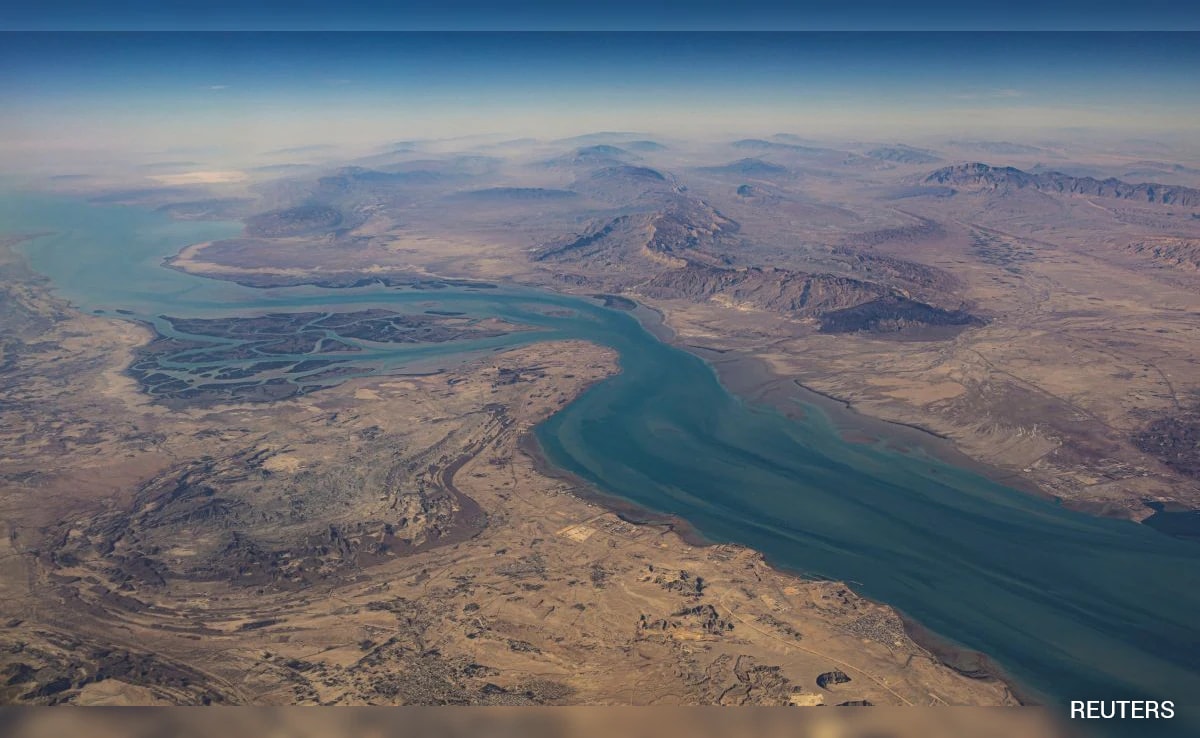
- Tactical Deterrence vs. Strategic Provocation: There is a thin margin between a strike that deters and a strike that provokes a blockade. If a strike is perceived as the first step toward closing the Strait of Hormuz—through which roughly 20.5 million barrels per day (bpd) pass—prices would skyrocket. The current logic suggests that strikes are calibrated to stay below the threshold of a full Iranian maritime response.
- The SPR Buffer: The Strategic Petroleum Reserve serves as a psychological backstop. By signaling a willingness to release more barrels, the US suppresses the incentive for speculators to "long" oil during a strike.
The Cost Function of Global Supply Chains
When analyzing the link between military action and oil prices, we must look at the Variable Cost of Transit. A strike on Iranian proxies in Yemen (the Houthis), for example, is a direct attempt to lower the cost function of the Red Sea transit.
Let $C_{total}$ be the total cost of a barrel delivered to a refinery.
$$C_{total} = P_{wellhead} + L_{shipping} + I_{risk} + T_{time}$$
- $I_{risk}$ (Insurance): War risk premiums can increase the cost of a single voyage by hundreds of thousands of dollars.
- $T_{time}$ (Time): Rerouting around the Cape of Good Hope adds 10-14 days to a journey. This ties up "floating storage," effectively reducing global supply because the oil is stuck on a ship longer.
By striking the entities responsible for these delays, the US aims to reduce $I_{risk}$ and $T_{time}$, thereby forcing $C_{total}$ down, even if $P_{wellhead}$ remains constant. This is the "Policeman of the Seas" dividend.
The Role of Non-OPEC Production as a Stabilizer
The efficacy of US military signaling is heavily dependent on the current state of global spare capacity. In a tight market (low spare capacity), any strike—no matter how surgical—leads to a price hike. In a well-supplied market, the impact is dampened.
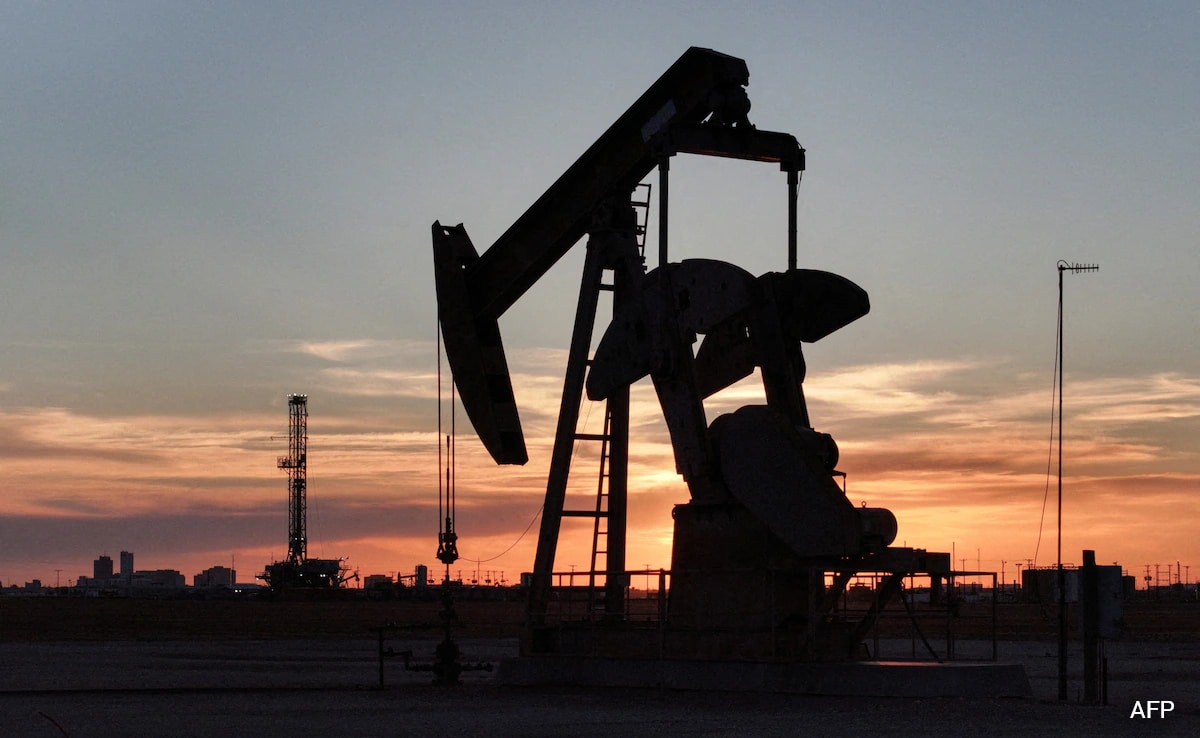
The United States is currently the largest crude producer in the world, hovering around 13 million bpd. This domestic volume creates a geopolitical cushion. When the US strikes Iranian interests, the market knows that US shale can, in theory, ramp up to fill minor gaps, provided the price signals remain favorable. This reduces the leverage of adversarial producers who might otherwise use supply cuts as a counter-weapon to US kinetic action.
The Breakdown of Iranian Oil Leakage
A critical component of the administration's logic involves the enforcement of sanctions. Iran currently exports approximately 1.5 million bpd, primarily to China via "dark fleet" tankers.
- Interdiction Strategy: Strikes are often paired with increased maritime surveillance. If the "cost of doing business" for dark fleet operators increases due to the risk of being caught in a crossfire or targeted by secondary sanctions, the effective supply of Iranian oil in the shadow market drops.
- Market Absorption: The global market has already "priced in" the existence of these 1.5 million barrels. Unless a strike physically destroys the Kharg Island terminal, the flow usually continues. The price drop seen after strikes is often a "relief rally" in the opposite direction—traders realize the terminal wasn't hit, and they sell off their hedge positions.
The Fragility of the Deterrence Framework
This strategy is not without systemic risks. The logic of "striking to lower prices" assumes a rational, predictable adversary. There are two primary failure modes for this framework:
- The Escalation Ladder: If a US strike hits a high-value target that forces Iran to move from proxy warfare to direct state-on-state action, the "Fear Premium" will not deflate; it will decouple from reality.
- The Symmetrical Response: If Iran utilizes its mine-laying capabilities or uses swarm-drone tactics against tankers in the Gulf of Oman, the physical $L_{shipping}$ cost will outweigh any psychological "deterrence" gains.
Quantifying the Sentiment Shift
Data from the ICE and NYMEX futures markets show that "managed money" (hedge funds) often holds large net-long positions when tensions are vague. When a strike occurs, it often triggers a "sell the news" event.
- Phase 1 (Speculation): Tensions rise. Speculators buy calls. Price trends upward.
- Phase 2 (The Event): The US executes a strike.
- Phase 3 (Evaluation): Within 24-48 hours, if no major refinery is on fire and the Strait is open, speculators close their positions to lock in profits.
- Phase 4 (Correction): The mass exit of long positions creates downward pressure on the ticker, resulting in the "Lower Oil Prices" the administration claims as a victory.
Strategic Recommendation for Market Participants
Asset managers and energy procurement officers must look past the headlines of "US Strikes" and monitor the Vessel Tracking Data (AIS) in the Bab el-Mandeb and the Strait of Hormuz. If vessel counts remain steady or increase following a strike, the deterrence logic is holding. If vessel counts drop or insurance underwriters (like Lloyd's of London) expand their "excluded zones," the strike has failed its economic objective.
The optimal play is to treat administration-linked strikes as short-term volatility dampeners rather than long-term supply catalysts. The real floor for oil prices remains the fiscal breakeven of Saudi Arabia (roughly $80/bbl) and the marginal cost of US shale. Kinetic action is merely a tool to manage the delta between those fundamentals and the momentary panic of the market. Watch the insurance premiums, not the explosions.
Monitor the spread between the first and second-month futures contracts (contango vs. backwardation). A narrowing spread post-strike indicates the market accepts the deterrence narrative; a widening spread suggests a genuine fear of future scarcity.