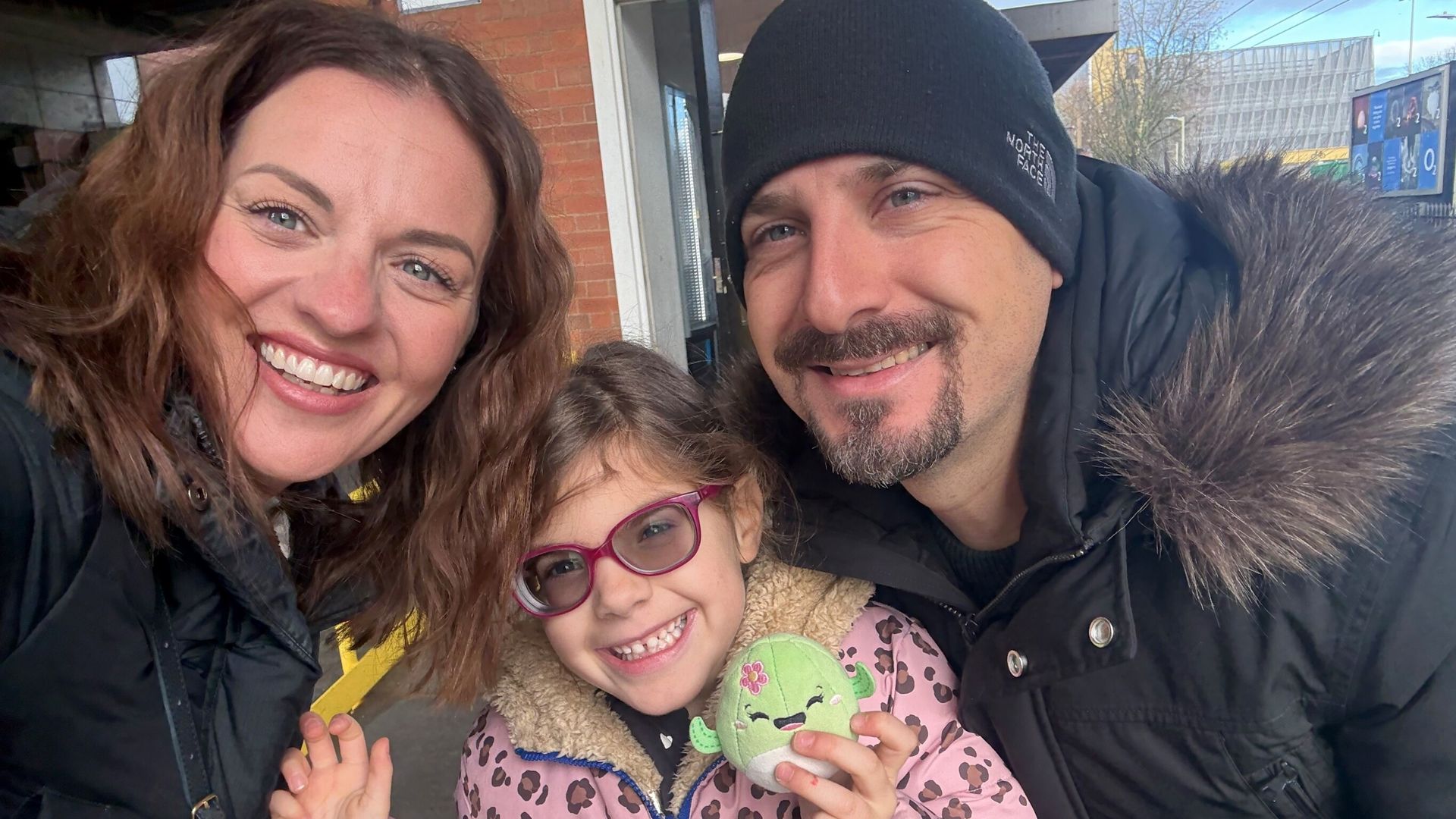
Medical journalism is addicted to the "miracle child" narrative. You’ve seen the headline: a six-year-old girl with a rare genetic mutation regains her sight thanks to a "first-of-a-kind" gene therapy. The photos are heart-tugging. The quotes from the parents are tear-jerkers. The stock price of the biotech firm involved usually gets a nice five-percent bump.
But if you’re looking at this as a victory for public health, you’re reading the map upside down.
This isn't a breakthrough. It’s a boutique luxury product masquerading as a medical revolution. We are celebrating the equivalent of a gold-plated lifeboat while the ship is still taking on water. When we obsess over these hyper-specific, multi-million-dollar interventions for orphan diseases, we ignore the systemic rot that makes healthcare a lottery rather than a right.
The Arithmetic of Exclusion
Let’s talk about the math that the feel-good stories conveniently leave out. A single dose of a gene therapy like Luxturna—which treats a specific form of inherited retinal disease—costs roughly $850,000. Newer therapies for spinal muscular atrophy or hemophilia are clearing the $3 million mark per patient.
When a headline screams that a child’s sight was restored, it’s not just a triumph of science; it’s a triumph of extreme resource allocation.
In a world of finite budgets, healthcare is a zero-sum game. Every million dollars funneled into a specialized viral vector for a handful of patients is a million dollars pulled away from the screening, prevention, and basic care of thousands. We are perfecting the art of the "Hail Mary" pass while forgetting how to run the basic plays.
I’ve spent years watching venture capitalists and big pharma pivot toward these "orphan" indications. Why? Because the regulatory hurdles are lower, the patents are ironclad, and the price tags are astronomical. They aren't chasing the greatest good for the greatest number; they are chasing the highest margin for the smallest population.
The Viral Vector Fallacy
The "lazy consensus" in biotech is that gene therapy is a "one-and-done" cure. This is a dangerous oversimplification.
The mechanism usually involves a neutralized virus—often an Adeno-associated virus ($AAV$)—acting as a microscopic delivery truck to drop off a functional copy of a gene into the patient's cells.
Here is the nuance the breathless reporting misses:
- The Immunity Wall: Many people already have antibodies to these $AAV$ vectors. If your body recognizes the truck, it kills the driver before the delivery is made. You get one shot. If it doesn't work perfectly, or if the effect fades over a decade, you can't just "top it off." Your immune system is now primed to reject it forever.
- The Dilution Problem: For tissues that regenerate, the new gene doesn't always replicate. It sits outside the main chromosome. As cells divide, the therapy "dilutes." For a six-year-old, whose body and organs are still growing rapidly, the "miracle" has a shelf life that no one wants to talk about on camera.
- The Off-Target Risk: We like to pretend these vectors are GPS-guided missiles. They aren't. They are more like crop dusters. Sometimes they drop the gene in the wrong place. If that gene inserts itself near an oncogene, you haven't just cured blindness; you’ve potentially invited leukemia.
Precision Medicine is a Branding Exercise
We’ve been sold a bill of goods on "Precision Medicine." The term sounds scientific. It sounds intentional. In reality, it’s often a way to justify prices that would be illegal in any other industry.
The competitor's article focuses on the "first-of-a-kind" nature of the treatment. Being first is great for ego, but it's terrible for scalability. We are building Ferraris for people who need a functional bus system.
Imagine a scenario where we redirected the R&D spend of a single speculative gene therapy toward improving the manufacturing and distribution of basic insulin or the implementation of universal screening for preventable causes of blindness. The "miracle" count would skyrocket, but the "human interest" value would plummet.
We love the story of the one girl who can see. We don't care about the 10,000 people who didn't go blind because of better glucose monitoring. Prevention is boring. Maintenance is invisible.
The Ethics of the Lottery
The real tragedy isn't the disease; it's the selection process.
Who gets these therapies? Usually, it’s the patients with the most media-savvy parents, the best insurance, or the proximity to elite research hospitals in Boston or Basel.
By prioritizing these ultra-niche cures, we are creating a genetic caste system. We are developing the technology to edit the "code" of life, but we are only giving the keyboard to the top 0.1%. If you think the "digital divide" was bad, wait until you see the "genomic divide."
The industry insiders won't tell you this because they are too busy eyeing an IPO. They talk about "unmet needs," which is code for "un-tapped markets." They talk about "patient centricity," which is code for "lobbying for insurance coverage of our $2 million drug."
Why the "Cure" Might Be a Distraction
There is a concept in economics called "opportunity cost." For every dollar we spend on a speculative gene therapy that might work for ten years in a dozen people, we are not spending that dollar on:
- Public Health Infrastructure: The literal pipes and clinics that keep a population healthy.
- Antibiotic Research: A field that is actually facing a global crisis but lacks the "high-margin" appeal of rare disease gene editing.
- Scalable Diagnostics: Tools that catch 90% of issues before they require a $3 million intervention.
We are so obsessed with the "cool" factor of CRISPR and viral vectors that we’ve lost sight of the goal. Medicine should be about reducing the total burden of suffering, not performing high-wire acts for the cameras.
The six-year-old girl is a success story for her family. I genuinely hope her sight remains for a century. But as a society, we need to stop pretending that these outliers are a sign of progress. They are a sign of our misplaced priorities.
We are cheering for a man who fixed a single broken tile on a roof while the foundation is sinking into the mud.
Stop looking at the miracle. Look at the invoice. Then look at everyone else standing in line behind that one girl who will never get a turn because we spent the entire budget on her.
The future of medicine shouldn't be about miracles. It should be about making miracles unnecessary.
Burn the narrative. Fix the system.