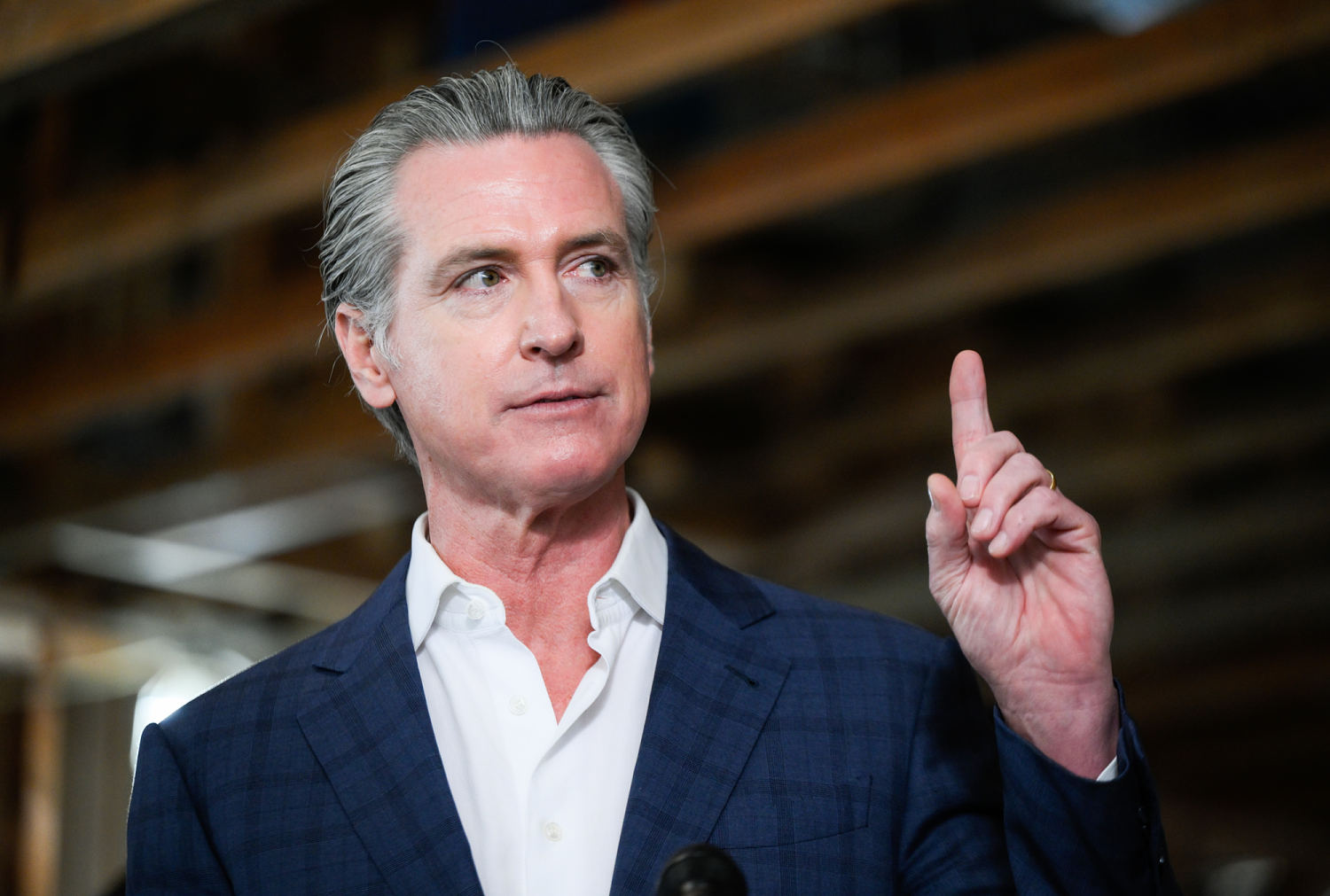
The mainstream political press has officially swallowed the bait.
Following Sacramento’s recent flurry of legislative maneuvers, the consensus narrative solidified overnight: California Governor Gavin Newsom is pivoting to a "populist" stance on artificial intelligence to build a launchpad for a 2028 presidential campaign. The pundits claim he is breaking with his Silicon Valley donors to protect the average worker, positioning himself as a modern trust-buster for the digital age.
It is a comforting story. It is also entirely wrong.
What the media misinterprets as populism is actually a masterclass in corporate capture. Newsom isn’t fighting the tech oligopoly; he is actively curating it. By vetoing sweeping, existential regulations while signing highly visible, performative restrictions, he has engineered a system that shields tech incumbents from real disruption while offering the public the illusion of accountability.
This isn't a populist turn. It is a corporate protection racket disguised as progressive oversight.
The Veto That Exposed the Con
To understand the reality of California’s AI strategy, look at what was killed, not what was signed.
The centerpiece of California’s legislative push was SB 1047, a bill designed to mandate safety testing for the largest, most powerful AI models before they were released to the public. The bill targeted frontier models costing over $100 million to train. It created a legal framework to hold developers liable if their software caused catastrophic harm, such as mass cyberattacks or the creation of bioweapons.
The tech industry panicked. Venture capital firms launched a massive lobbying blitz.
Newsom vetoed the bill.
The justification offered in his veto message sounded reasonable on the surface. He argued that SB 1047 was too broad, focused too heavily on the size of the model rather than its specific application, and risked stifling innovation by punishing developers for hypothetical harms.
This argument is fundamentally flawed. In software engineering, especially in neural networks, capability is a direct function of scale. Expecting to regulate the "application" of a foundational model without regulating the foundation itself is like trying to regulate traffic safety by focusing entirely on the driver while ignoring whether the car has brakes.
By killing SB 1047, Newsom protected the open-source and frontier ambitions of the state's most powerful tech entities. He signaled that when the stakes are high enough—when a bill threatens the core business models of trillion-dollar ecosystems—the state will step back.
The Performative Pivot: Regulating the Symptoms, Ignoring the Disease
If Newsom vetoed the one bill with teeth, what did he actually sign? A stack of highly specific, narrow statutes that target the symptoms of AI deployment while leaving the power structures completely untouched.
He signed laws targeting deepfakes in elections, unauthorized digital replicas of Hollywood actors, and AI-generated child sexual abuse material. He signed AB 2013, which requires developers to post high-level summaries of the data used to train their systems.
These bills are the definition of low-hanging political fruit.
No one is lobbying in favor of non-consensual deepfakes or election interference. Passing these laws requires zero political courage. More importantly, they do absolutely nothing to alter the economic trajectory of the AI industry. They do not challenge data scraping practices, they do not address the massive concentration of compute power, and they do not alter the fact that a handful of platform monopolies are positioned to control the infrastructure of the next century.
This is the core mechanic of the illusion. By signing twenty minor bills, Newsom can claim a historic record of AI regulation on the campaign trail. He gets the headlines. The tech giants keep their monopolies. Everyone wins, except the public.
The Myth of the 2028 Populist Pivot
Political analysts keep repeating the phrase "populist turn" because they believe Newsom needs to distance himself from his image as a sleek, tech-friendly elite to win over working-class voters in a national election.
True populism involves a redistribution of power or a direct challenge to concentrated capital. Think of Theodore Roosevelt breaking up Standard Oil, or the passage of the Wagner Act. It requires imposing costs on the powerful to protect the vulnerable.
Newsom’s AI strategy does the exact opposite. It creates a regulatory environment that favors the incumbent over the challenger.
When you pass dozens of fragmented, hyper-specific laws regarding transparency, disclosure, and application-specific compliance, you create a massive compliance burden. Who can afford a legal and engineering team large enough to navigate a shifting web of twenty different state statutes? OpenAI, Google, and Meta can. A two-person startup in a garage cannot.
This is regulatory capture by design. Incumbents love complex regulation because it acts as a moat. By replacing a single, clear standard like SB 1047 with a fractured landscape of minor rules, the state has ensured that only the wealthiest companies can survive the compliance gauntlet. It is an anti-competitive framework masquerading as public safety.
The Wrong Question: "Is California Regulating Too Much?"
Go to any tech conference or policy forum, and you will hear variations of the same tired question: Is California’s aggressive regulation going to drive the tech industry out of the state?
The premise of the question is entirely wrong. The tech industry isn't leaving California because California is building exactly what the tech elite want: predictability.
During my years advising tech firms on regulatory strategy, I learned a fundamental truth: certainty is worth more than freedom. Corporations do not fear regulation; they fear chaos. They fear unpredictable courts and sudden shifts in liability.
Newsom’s strategy delivers absolute certainty. By vetoing strict liability for catastrophic outcomes, he removed the existential legal risk that kept tech executives awake at night. By replacing it with predictable, manageable compliance checklists around deepfakes and data transparency, he gave their legal departments a clear roadmap.
The tech industry isn't fleeing Sacramento. They are rewriting the bills in Sacramento.
The Brutal Reality of AI Governance
The hard truth about AI governance is that you cannot protect the public without slowing down capital accumulation. The two goals are fundamentally incompatible.
True oversight would look radically different than the press releases coming out of California:
- Mandatory Compute Auditing: Tracking the distribution of advanced chips (GPUs) to ensure no single entity accumulates enough raw power to operate completely outside public view.
- Data Provenance and Compensation: Forcing companies to obtain explicit consent and pay market rates for every piece of intellectual property used to train a model, completely overturning the "fair use" defense currently protecting corporate data theft.
- Strict Downstream Liability: Holding the creator of a foundational model legally responsible for the actions of that model, regardless of how a third party alters or deploys it.
None of these policies are on the table. They aren't on the table because they would cause a massive contraction in tech valuations. They would hurt the stock market, anger the venture capital ecosystem, and dry up campaign contributions.
Instead, we get press conferences about deepfakes.
Stop Reading the Script
The narrative of Gavin Newsom as the crusading populist taking on the wild west of tech is a carefully manufactured political fiction. It is designed to play well in Iowa and New Hampshire, where voters are rightly anxious about automation and corporate overreach.
Do not look at the branding. Look at the balance sheets.
The tech monopolies emerged from California’s legislative session completely unscathed, their business models intact, and their competitive moats widened. The governor walked away with a portfolio of clean, focus-grouped talking points about protecting democracy and actors' voices.
It is a flawless political transaction. Just don't call it populism.