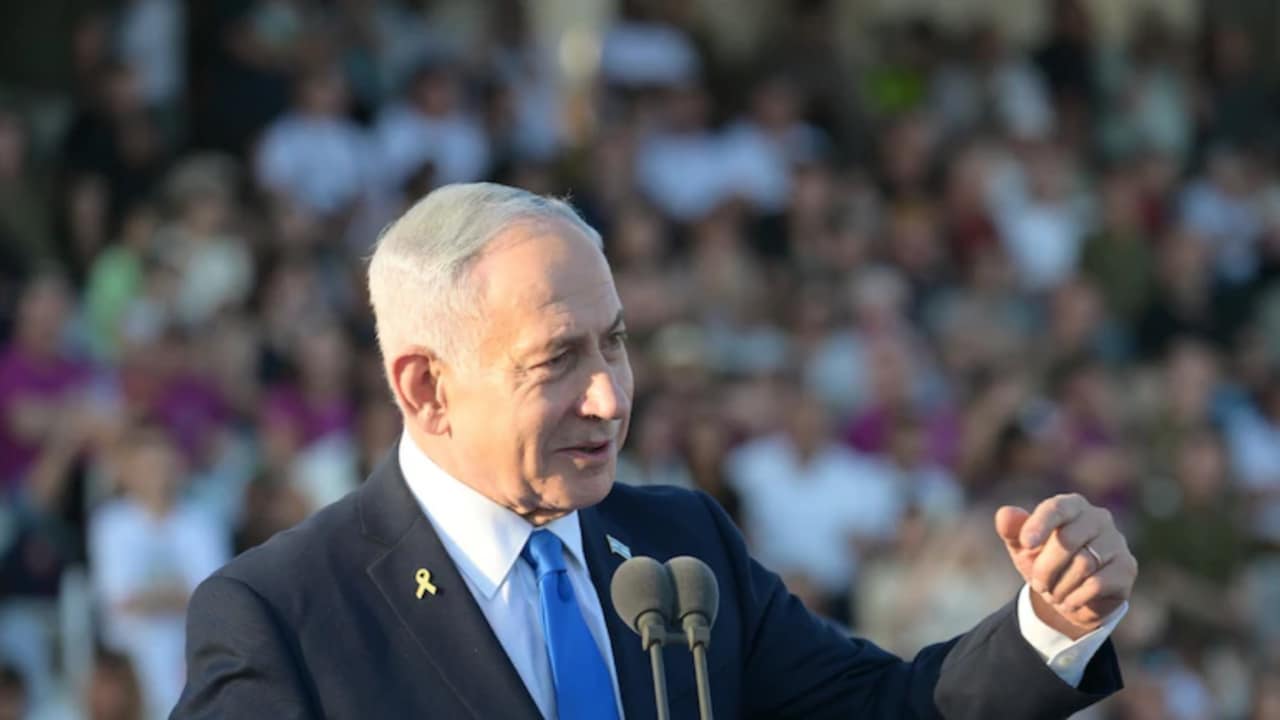
The international press is running the same copy-pasted headline again. Benjamin Netanyahu will seek re-election in Israel’s first post-October 7 ballot, and the consensus view is already written: this is the desperate gasp of a politically bankrupt leader dragging his country through a vanity campaign he is destined to lose. Western analysts point to cratering poll numbers from late 2023, mass protests in Tel Aviv, and the sheer historical weight of accountability failures as proof that his departure is a statistical certainty.
They are fundamentally misreading the mechanics of Israeli coalition politics.
The mainstream media treats Israeli elections like a binary US presidential race or a UK general election, where a massive national trauma automatically triggers a wave of anti-incumbency that flips the executive. Israel does not elect a prime minister by popular vote. It elects 120 Knesset members via a system of strict proportional representation. Netanyahu’s survival has never depended on being liked by the majority of Israelis; it depends on his ability to assemble a bloc of 61 seats out of a fragmented, tribal electorate.
When you strip away the emotional commentary and analyze the hard structural incentives of the Israeli right, the narrative of his inevitable defeat collapses. He isn't running a campaign to convert secular centrists. He is running a cold, mathematical operation to consolidate a base that has nowhere else to go.
The Mirage of the Anti-Netanyahu Majority
Every poll cited by mainstream journalists to prove Netanyahu’s vulnerability contains a glaring analytical flaw. They conflate general dissatisfaction with the current government with a unified mandate for an alternative coalition.
In Israeli politics, the opposition is not a coherent party; it is a fragile, ideologically incoherent patchwork ranging from secular ultra-nationalists like Avigdor Liberman to center-left technocrats like Yair Lapid, flanked by Arab joint lists. I have watched political analysts make this exact mistake across global parliamentary systems for two decades—assuming that because 65% of an electorate wants a leader gone, they will agree on who should replace him.
They won't.
The Security Supremacy Trap
The conventional argument assumes that the intelligence and operational failures of October 7 permanently broke the right-wing monopoly on security. The logic follows that voters will punish the Likud party for failing to deliver on its core promise of safety.
This ignores the fundamental psychological shift that occurs in a society under existential threat. Trauma does not typically push an electorate toward compromise or centrist experimentation. It hardens existing hawkish instincts. The broader Israeli public has moved significantly to the right on questions of Palestinian statehood, regional deterrence, and military engagement.
- The Centrist Dilemma: To compete in this environment, opposition figures like Benny Gantz cannot offer a radically different security doctrine. They must present themselves as more competent managers of the exact same hawkish strategy.
- The Incumbency Advantage: When the opposition validates the prime minister's underlying ideological premise, voters in a crisis routinely stick with the original architect rather than the imitation.
Imagine a scenario where a corporate board wants to fire a CEO after a massive product failure, but the entire steering committee agrees that the CEO's underlying strategy is the only viable path forward. The board does not replace the executive with a radical reformer; they panic, debate, and ultimately retain the incumbent because the institutional risk of a leadership vacuum during an ongoing crisis is deemed unacceptable. That is the exact gridlock paralyzing the Israeli opposition.
The Coalition Math the West Ignores
To understand why Netanyahu is completely viable in an upcoming election, you must look at the specific seat-allocation mechanics of the Knesset. Under the threshold system, parties must secure at least 3.25% of the national vote to enter parliament.
In any post-crisis election, the Arab parties and the fractured hard-left (Labor and Meretz) face severe voter turnout suppression and fragmentation risks. If two or three small left-leaning parties fall just below that 3.25% threshold, hundreds of thousands of anti-Netanyahu votes are completely erased from the final seat allocation.
On the flip side, the right-wing and religious blocs possess an incredibly disciplined voter base.
Typical Israeli Bloc Dynamics:
[Left/Center/Arab Factions] -> High Fragmentation -> Risk of Dropping Below 3.25% Threshold
[Right/Ultra-Orthodox/Nationalist] -> High Consolidation -> Efficient Seat Allocation
The Ultra-Orthodox Anchor
The Haredi (ultra-Orthodox) parties—Shas and United Torah Judaism—represent roughly 15 to 16 seats that are completely insulated from secular political shifts. Their voters do not defect based on foreign policy failures, economic inflation, or defense oversights. They vote strictly on the instructions of their rabbinical councils to protect draft exemptions and religious subsidies.
Netanyahu is the only leader who will guarantee their institutional survival without demanding societal integration. Therefore, before a single ballot is cast in a new election, Netanyahu starts with a structural baseline of nearly a quarter of the seats required for a majority. The opposition cannot court these parties without alienating their own secular, liberal base. This structural asymmetry is the defining feature of modern Israeli governance, yet it is routinely ignored by commentators looking for a clean, Western-style democratic narrative.
Dismantling the PAA Fallacies
The global debate surrounding this election is built on fundamentally flawed premises. Let's address the core assumptions driving the coverage and dismantle them.
"Will the Israeli Electorate Punish Netanyahu for October 7?"
The short answer is yes, but not in the way external observers think. Likud will likely lose seats compared to its previous highs, but parliamentary elections are relative, not absolute.
If Likud drops from 32 seats to 22, the international media will declare it a fatal blow. But if those 10 lost seats merely migrate to further-right factions like Itamar Ben-Gvir’s Otzma Yehudit or Bezalel Smotrich’s Religious Zionist party, the overall right-wing bloc remains intact. Netanyahu does not need Likud to be the largest party by a landslide; he just needs the right-wing bloc to collectively hit 61 seats so he can position himself as the only viable consensus broker to lead them.
"Can Washington or International Pressure Force a Leadership Change?"
This is a classic Western hubris trap. Foreign intervention in democratic elections almost always triggers a nationalist backlash. Every time an American administration or a European body publicly pressures the Israeli electorate to move away from Netanyahu, they hand him his most effective campaign asset.
He transitions instantly from a defensive politician answering for security failures into a defender of national sovereignty resisting foreign dictation. He plays this hand perfectly, explicitly telling the electorate that only he has the spine to say "no" to Washington. International condemnation is not his undoing; it is his fuel.
The High-Stakes Calculus of Delay
The consensus states that an election must happen immediately because the public demands it. This misses the strategic power of the prime minister to control the calendar.
A government does not just dissolve because of bad poll numbers or street protests. It requires a majority of the Knesset to vote for its own dissolution, or a failure to pass a national budget. Netanyahu’s current coalition partners know that if an election happens tomorrow, they risk losing their current unprecedented level of executive influence. They have zero incentive to commit political suicide early.
Every month that passes dilutes the immediate emotional shock of the October 7 failures. It allows the government to clock operational victories, eliminate high-profile regional adversaries, and shift the public focus from "how did this happen" to "how do we finish the conflict." Time works systematically in favor of the incumbent.
The Dark Side of the Counter-Strategy
To be entirely transparent, this path to political survival carries immense costs for Israel's long-term stability. This is not a defense of Netanyahu's governance; it is a clinical assessment of his survival strategy.
To maintain his grip on the right-wing bloc, he must continually appease its most radical elements. This means sacrificing economic modernization, deepening tensions with Western allies, and aggravating the internal secular-religious schisms that threaten the country's social fabric.
But if you are analyzing this situation from a pure survival standpoint, those long-term systemic risks are externalities. For a political operator of his vintage, a systemic crisis tomorrow is always preferable to a political execution today.
The opposition's entire strategy relies on the assumption that decency, accountability, and public anger will naturally correct the political course. That is a sentiment, not a strategy. Until the anti-Netanyahu factions figure out how to bridge the irreconcilable gap between their secular national-security hawks and their Arab voters to create an efficient, disciplined electoral machine, they will continue to lose the math game.
Stop looking at the protests. Stop reading the favorability polls. Look at the threshold requirements, the coalition incentives, and the tribal structure of the Israeli electorate. Netanyahu isn’t running a campaign to fix his legacy; he is exploiting a rigged mathematical system that his opponents are too fractured to beat.