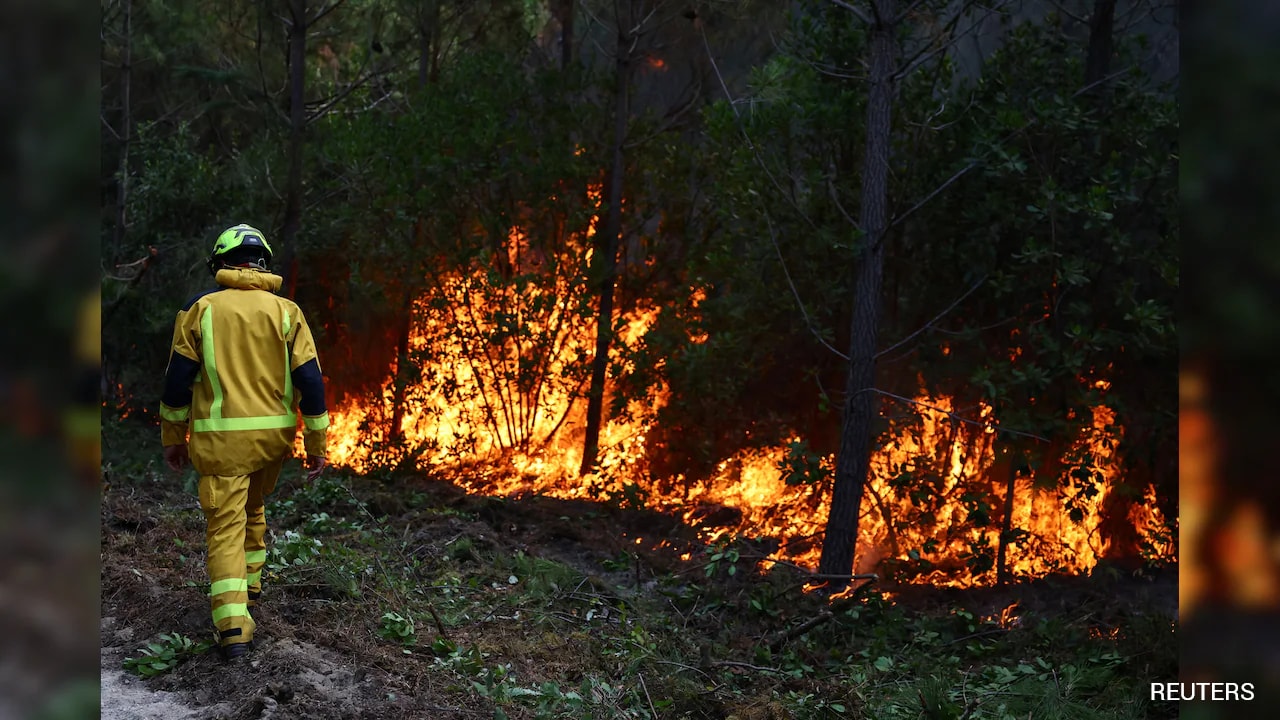
Every single August, the media apparatus grinds into motion with the exact same tired script. The headlines roll in like clockwork: temperatures spike, trees ignite, and talking heads point a collective, trembling finger at humanity's carbon footprint. The lazy consensus states that Europe is turning into an apocalyptic cinder box solely because industrial emissions have supercharged the atmosphere.
It is a neat, emotionally satisfying narrative. It requires zero critical thinking. And it is entirely wrong.
Europe is not burning because the thermometer ticked up a fraction of a degree. Europe is burning because for thirty years, ecological management has been handed over to ideological accountants who believe nature is a glass museum exhibit that preserves itself if you just put up a Do Not Touch sign.
I have spent two decades walking these scorched southern slopes, talking to forestry veterans who watched their life's work turn to ash while environmental ministries tied their hands with bureaucratic tape. I have watched millions of euros funneled into carbon credit schemes while the actual ground beneath our feet was left choked with thirty years of deadfall.
Let us dismantle the comfortable lie.
The Fuel Paradox Nobody Wants to Name
Fire requires three things: oxygen, heat, and fuel. You can do nothing about the oxygen. You can do very little about a heatwave in July. But fuel? Fuel is the only variable within human control.
For generations, rural populations managed that fuel. Goats grazed the underbrush. Farmers cleared small timber. Indigenous woodland management understood a brutal, ancient truth: small, controlled fires or heavy manual clearing must happen, or the forest consumes itself.
Then came the urban conservationists.
They looked at wild landscapes through the lens of romanticized pastoral paintings. They banned traditional grazing. They criminalized routine brush clearing in protected zones. They created vast, contiguous carpets of dry tinder stretching from Portugal to Greece.
When you eliminate small disturbances, you guarantee a catastrophic one. A forest floor choked with dead branches, fallen pine needles, and dense underbrush is not a pristine wilderness. It is a powder keg waiting for a dry lightning strike or a careless cigarette.
To blame climate change alone for a crown fire in a tinderbox is like blaming the match manufacturer for a house explosion when you spent a decade filling your basement with leaking propane tanks. The heatwave is the spark. The fuel is the policy.
The Academic Blind Spot
When institutional scientists publish models showing how rising global temperatures correlate with burned acreage, they are tracking a real mathematical trend. But correlation is not the whole story. It is a convenient smoke screen that absolves regional governments of their total failure to execute basic land management.
Consider the data on fire suppression budgets versus prevention budgets across Southern Europe. Year after year, 80% to 90% of available capital goes toward aerial firefighting fleets and emergency response. We buy bigger water-dropping planes. We hire more emergency crews. We treat the symptom while legally prohibiting the cure.
Prevention is boring. Prevention does not make for a dramatic thirty-second news clip of a red-tailed helicopter scooping water from the Mediterranean. Prevention involves paying people to clear brush, allowing controlled burns in January, and decentralizing authority back to local municipalities who actually know the terrain.
If you pour all your money into putting out fires after they start, while simultaneously banning the manual removal of fuel, you are subsidizing the exact disaster you claim to fear.
The Cost of Institutional Arrogance
I have seen regional agricultural councils paralyzed by legal challenges from urban-based activist groups who successfully blocked thinning projects because they might disturb the nesting habitat of a rare beetle.
The result? The beetle habitat burned down to bedrock. Along with three villages, fifty thousand hectares of pine, and the local watershed.
This is the fatal flaw of modern ecological stewardship. It substitutes ideological purity for operational reality. When you treat a dynamic, volatile ecosystem as a static painting, you destroy it. Nature is not fragile; it is brutally adaptive. But when humans lock the door and throw away the key to active management, nature adapts by burning the house down to start over.
What Real Prevention Looks Like
If Europe wants to stop the annual summer heartbreak, the fix requires an immediate, ruthless about-face in policy.
First, slash emergency response funding by 20% and divert every cent of those savings into mandatory mechanical thinning and prescribed burning programs executed during the wet months.
Second, strip urban environmental ministries of their veto power over rural land management. If a local forestry union says a tract needs thinning, they do not need sign-off from a committee in Brussels that has never worn mud on their boots.
Third, bring back the livestock. Subsidize herds of goats and sheep to graze the critical corridors between human settlements and dense timber. Four-legged lawnmowers do what government committees never can: they strip out the ladder fuels that turn a ground fire into a raging canopy monster.
Stop blaming the sky for what we allowed to pile up on the soil. The matches have always been there. We are the ones who built the bonfire.


