Darkness still holds the street.
At 6:15 AM, the asphalt glistens with morning frost. Out on the corner of Maple and 4th, a small figure stands alone. Maya is seven years old. She wears a bright pink backpack that looks entirely too heavy for her frame, clutching the strap with gloved fingers. Every few seconds, she turns her head, scanning the empty stretch of road where the amber flashing lights used to signal the start of the day.
Nothing comes.
Inside her kitchen three houses down, her mother, Sarah, watches the clock tick from 6:20 to 6:35. Coffee turns cold in the mug. The notification ping on Sarah's phone delivers the news she has learned to dread: Route 42 is canceled today. Driver illness. No replacement available.
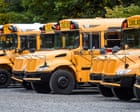
Panic sets in. Sarah is already dressed for a shift that starts across town at 7:00 AM. She cannot teleport. She cannot quit her job. And yet, her daughter's education—and her own livelihood—hangs on a yellow machine that is currently sitting idle in a municipal lot five miles away, missing a driver who retired six months ago and was never replaced.
This is not an isolated bad morning. This is the new normal.
The Anatomy of a Quiet Crisis
We take the yellow bus for granted. It is part of the background furniture of childhood, right alongside scuffed lockers, playground swings, and the smell of wet pavement after autumn rain. For generations, the American school bus has been the great equalizer. It delivers the rich, the poor, the rural, and the urban to the same front doors, operating as the largest mass transit system in the United States.
Right now, that system is cracking at the seams.
Behind the empty curbs and the frantic group-chat messages among parents lie brutal, unyielding logistics. School districts across the nation are grappling with severe bus driver shortages, sudden route consolidations, and devastating budget cuts. Consider what happens when a district loses ten drivers in a single month: twenty routes vanish overnight. Multiply that across thousands of school districts, and you begin to see the scale of the fracture.
The numbers are staggering, yet they fail to capture the human cost. According to national surveys by the Economic Policy Institute and industry associations, a vast majority of school districts report severe or desperate driver shortages. Routes are doubled up. Buses are packed beyond comfortable margins. Children spend hours longer on transit than they did a decade ago.
And the reasons are neither mysterious nor simple.
Why the Wheels Stopped Turning
Let us step inside the cab of that empty bus for a moment.
Imagine sitting behind a steering wheel the size of a hula hoop, navigating a thirty-foot vehicle through narrow neighborhood streets while forty children chatter, drop books, and occasionally throw paper airplanes behind you. It is a high-stress, high-responsibility job. You are trusted with the most precious cargo on earth.
What does that job pay?
Historically, school bus driving has been structured as split-shift work. A driver reports at 6:00 AM, drives until 9:00 AM, sits idle in an uncompensated limbo for four hours, and then drives another shift from 2:00 PM to 5:00 PM. Try paying a mortgage on twenty hours a week of split-shift wages. Try finding affordable healthcare in a seasonal position that offers zero hours during summer, winter, and spring breaks.
When the labor market shifted, drivers did what anyone with bills to pay would do. They found work elsewhere. Delivery vans, ride-sharing platforms, and corporate fleets offered better pay, fewer behavioral headaches, and schedules that made sense.
The yellow bus couldn't compete. Budgets were already stretched thin by rising fuel costs, aging vehicle fleets, and shifting state funding formulas. When districts had to choose between cutting classroom art programs or reducing transportation routes, the bus took the hit.
The math became ruthless.
The Ripple Effect on Working Families
When a bus route is canceled, the shockwave hits the household immediately.
For Sarah, it means waking Maya up an hour early, bundling her into a freezing car, driving her across town to school, fighting peak-morning traffic to get to her own workplace, and risking disciplinary action for being late. For single parents without cars, it means relying on unreliable public transit or stitching together a fragile patchwork of neighbor favors.
For low-income families, the stakes are even higher. A missed bus often translates to a missed school day. Chronic absenteeism creeps upward not because children don't want to learn, but because they physically cannot get through the schoolhouse door. Education equity crumbles the moment transportation becomes a luxury item.
Consider the rural child who lives twenty miles from the nearest campus. Without the yellow bus, their education simply terminates. Distance becomes destiny.
We talk endlessly about closing achievement gaps, modernizing curriculums, and boosting test scores. But all those lofty educational goals assume one foundational reality: that the child actually made it to school. When the bus stops running, the foundation crumbles.
Searching for the Open Road
Is there a way forward? Yes, but it requires dismantling old assumptions about how public education is funded and managed.
Some forward-thinking districts are finally tearing up the outdated playbook. They are converting split-shift jobs into full-time positions by combining driving duties with maintenance, administrative support, or community outreach during the midday hours. They are raising wages, offering signing bonuses, and paying for commercial driver license training upfront—removing the financial barrier that kept working-class applicants out of the seat.
Electric buses are beginning to roll into lots, funded by federal grants, offering a cleaner, quieter future. But shiny new technology means nothing if there is nobody sitting behind the wheel to drive it.
Communities are mobilizing, too. Carpooling cooperatives are forming on neighborhood apps. Local governments are partnering with public transit agencies to subsidize student fares on city buses where yellow fleets have failed entirely.
Yet these are patches on a gaping wound. The structural flaw remains: we treat student transportation as an expendable line item rather than an essential public utility.
The Final Mile
Back on Maple and 4th, the sun finally clears the horizon, painting the sky in pale shades of orange and bruised purple.
Maya is still standing on the corner. Her mother's car pulls up, hazard lights blinking. Sarah rolls down the window, her face a mask of exhaustion masked by a brave, reassuring smile.
"Hop in, sweetie. We're driving today."
Maya climbs into the backseat, her heavy pink backpack sliding off her lap. She looks out the window as they pass the empty bus stop on the next block, where two other children are still waiting in the cold, staring down an empty street.
The yellow bus was never just a vehicle. It was a promise that communities made to families: We will help you raise them. We will get them there safely. Right now, that promise is idling in an empty parking lot, waiting for someone to turn the key.


