The fluorescent lights of the supermarket don't hum; they buzz with a predatory kind of energy. For most, a trip to the store is a chore, a routine exchange of currency for sustenance. But for others, it has become a high-stakes chess match where the board is rigged and the pieces are shrinking.
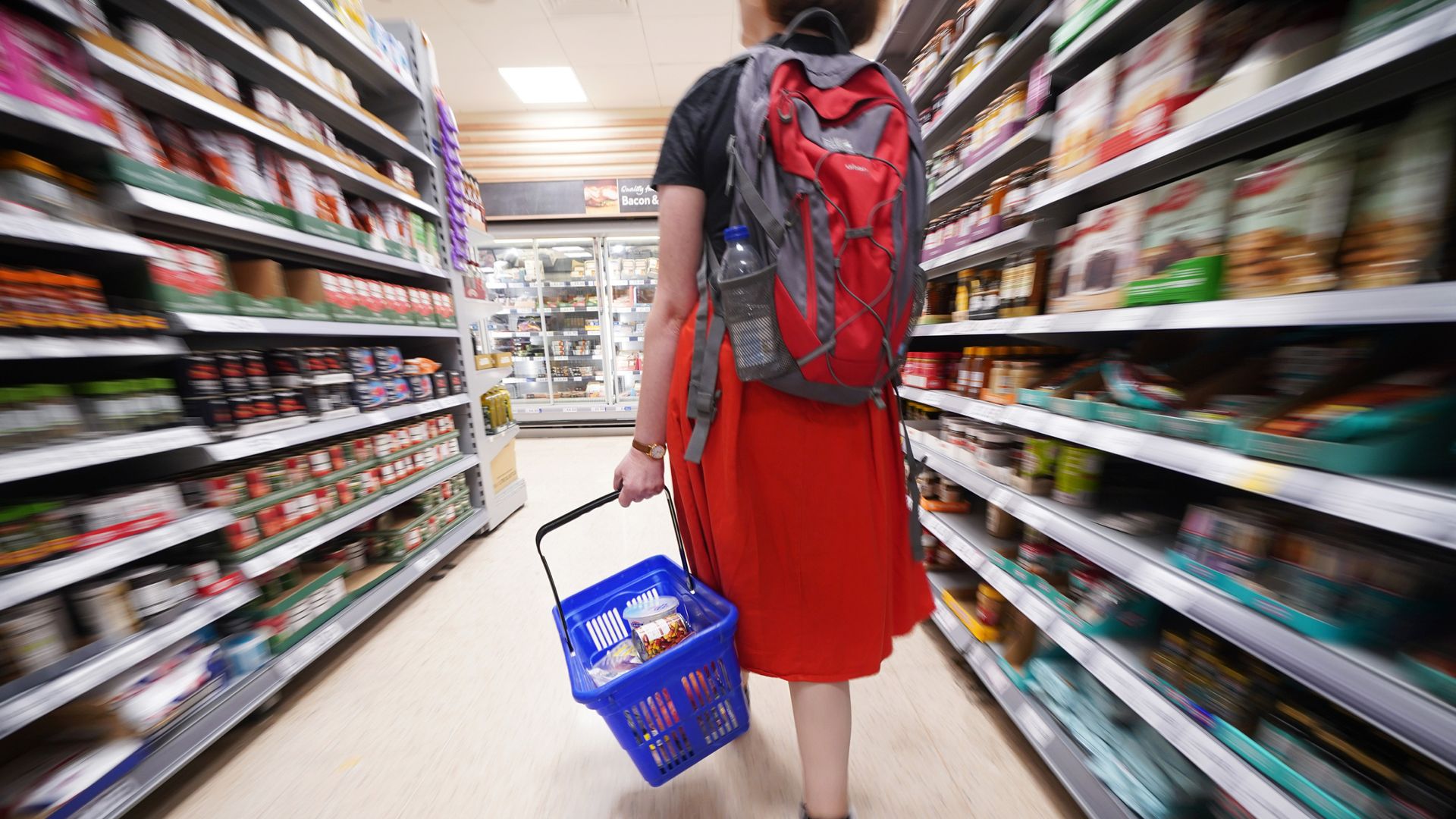
Meet Sarah. She is a hypothetical composite of the millions of parents currently navigating the sharp edge of food price inflation. She isn't looking for organic kale or artisanal sourdough. She is standing in Aisle 4, staring at a box of generic cereal that cost $3.50 last year and now sits at $5.29. Her internal calculator is screaming. If she buys the cereal, the milk has to be the smaller carton. If she gets the milk, the fresh apples stay on the shelf.
This is the "squeeze" mentioned in dry economic reports. It isn't just a line on a graph moving upward. It is a slow, suffocating pressure that forces a mother to choose between the nutritional density of a bell pepper and the caloric volume of a bag of white rice.
The Math of Hunger
The numbers coming out of recent economic studies are stark, even if they lack the sweat and anxiety of the checkout line. Food price inflation has outpaced general inflation for months, creating a divergence that hits lower-income households like a physical blow. When the price of a luxury car goes up, you simply don't buy the car. When the price of eggs doubles, you still have to eat.
The problem is rooted in the percentage of disposable income. A high-earning household might spend 8% of their take-home pay on groceries. When prices jump by 10%, that household might complain, but they don't change their behavior. They keep buying the steak. For a household in the bottom 20% of earners, food can account for nearly 30% of every dollar earned. A 10% hike in prices isn't a nuisance. It is a catastrophic shift that requires the immediate liquidation of other necessities.
Heat or meat.
Rent or rice.
These are the binary choices being made in kitchenettes across the country. The "squeeze" is actually a redistribution of survival.
The Great Calorie Swap
As prices climb, we witness a phenomenon that economists call "down-trading," but in human terms, it is the Great Calorie Swap. To keep stomachs full, families move away from fresh, perishable goods toward shelf-stable, ultra-processed fillers.
Consider the anatomy of a grocery cart under duress. Fresh produce is the first casualty. It is expensive, it spoils quickly, and it doesn't provide the immediate satiety of starch. Next go the lean proteins. Chicken breasts are replaced by processed nuggets; ground beef is swapped for canned beans or high-sodium pasta kits.
This isn't a lack of willpower or a failure of education. It is a rational response to an irrational market. Processed foods are often subsidized or manufactured at scales that keep their prices more stable than fresh crops. When the world is on fire—literally, in the case of climate-impacted harvests, and figuratively, in the case of supply chain chaos—the Twinkie remains a constant.
But the "savings" found in the Great Calorie Swap are an illusion. We are simply trading a short-term financial deficit for a long-term biological one. The invisible stakes here are the health of an entire generation. We are seeing a rise in "hidden hunger," a condition where an individual consumes enough calories to survive but lacks the micronutrients to thrive.
The Mirage of Stabilizing Prices
You will hear talking heads on the news celebrate when "inflation slows down." They point to a 2% increase as a victory. But here is the trap: slowing inflation does not mean prices are dropping. It just means they are climbing more slowly.
For a family that has already been pushed to the brink by a 20% cumulative rise over two years, a "slow" 2% increase is just more weight on an already broken back. The prices have plateaued at an altitude where the air is too thin for many to breathe. The "new normal" is a baseline of hardship.
Why is this happening? It’s a messy cocktail of factors that feel distant until you see the price of a loaf of bread. There is "Greedflation"—the documented trend of corporate profit margins expanding even as costs rise. There is the geopolitical instability of breadbasket regions like Ukraine. There is the increasing frequency of extreme weather events that turn fertile plains into dust bowls.
But for Sarah, the "why" matters less than the "how." How does she explain to her son why there are no blueberries this week? How does she mask the taste of the cheapest possible cooking oil?
The Psychology of Scarcity
There is a profound cognitive load that comes with poverty. When you are constantly calculating the cost of every ounce in your cart, your "mental bandwidth" is consumed by the immediate task of survival. This scarcity mindset creates a tunnel vision. It makes it harder to plan for the future, harder to focus at work, and harder to parent with patience.
The stress of the grocery store follows you home. It sits at the dinner table. It flavors every conversation about the monthly budget. We are not just talking about the price of calories; we are talking about the price of peace of mind.
We often treat food as a commodity, but it is actually a social contract. When a society can no longer ensure that its working class can afford a basic, nutritious diet, that contract is being shredded in real-time. The quiet rise of food insecurity is a precursor to social instability. History shows that when the cost of bread becomes unbearable, the foundation of the state begins to crack.
The Invisible War
There is a war being waged in the aisles, and the weapons are subtle. Shrinkflation—the practice of reducing the size of a product while keeping the price the same—is a psychological tactic designed to trick the consumer’s eye. You pay the same $4.00, but the bag of chips now contains two fewer ounces. Your brain registers the price stability, but your stomach feels the deficit.
Then there is the "poverty premium." Buying in bulk is cheaper, but it requires a high upfront cost that lower-income families cannot afford. If you have $10 for the week, you buy the small, expensive jar of peanut butter, even though the giant tub is 40% cheaper per ounce. You are essentially fined for being poor.
The grocery store has become a gauntlet. It is a place where the inequalities of our era are mapped out in the difference between the "Organic" aisle and the "Discount" bin.
Sarah eventually reaches the checkout. She watches the digits on the screen climb with a rhythmic, mechanical indifference. Every beep of the scanner is a tiny heartbeat of anxiety. When the total appears, she feels that familiar coldness in her chest. She swipes her card and prays the transaction isn't declined.
She walks out into the parking lot, the plastic bags straining against her fingers. She has enough to feed her family for another six days, provided no one gets extra hungry. She has "managed." She has "coped." She is a success story in the eyes of an economist.
But as she starts her car, she looks at the receipt. It is a long, thin strip of paper that chronicles the slow erosion of her dignity, one cent at a time. The sun sets over the supermarket, casting long shadows across the asphalt, and the lights inside flicker on, ready to welcome the next person who must figure out how to turn a handful of coins into a life.