Early-stage wildfire detection has historically suffered from a fundamental trade-off between spatial resolution and temporal frequency. Terrestrial lookout towers and camera networks offer continuous monitoring but are constrained by geographic topology and a limited line of sight. Traditional geostationary satellites provide uninterrupted hemispheric coverage but lack the spatial resolution required to identify small, sub-hectare ignition points before they escalate into uncontrollable conflagrations. Conversely, sun-synchronous, high-resolution optical satellites capture highly detailed imagery but operate on revisit cycles spanning days, rendering them ineffective for real-time emergency response.
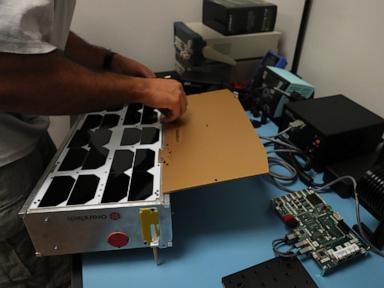
The deployment of a specialized constellation of nanosatellites—specifically suitcase-sized CubeSats equipped with thermal infrared sensors—seeks to break this bottleneck. By analyzing the operational architecture deployed over wildfire-prone regions like Greece, we can map the exact mechanisms through which low Earth orbit (LEO) constellations optimize the detection-to-mobilization timeline.
The Wildfire Cost Function and the Critical Window
To understand the strategic value of LEO thermal imaging, one must define the economic and operational variables of wildfire suppression. The total cost of a wildfire event is an exponential function of time to initial attack.
$$C_{total} = f(t_{detection} + f(t_{verification}) + f(t_{dispatch}) + f(t_{transit}))$$
The critical operational window is the period between ignition and the point where the fire's energy output exceeds the suppression capacity of local ground and aerial firefighting assets. In Mediterranean ecosystems, characterized by dense shrubland (maquis) and high winds, this window can be shorter than 30 minutes.
The Revisit Rate Bottleneck
Standard imaging architectures fail because their revisit rate—the time elapsed between consecutive satellite passes over the same coordinate—is decoupled from fire propagation physics. A single high-resolution satellite might pass over a specific Greek valley at 10:30 AM. If an ignition occurs at 11:00 AM, the asset cannot detect it until the next orbital cycle, often 24 to 48 hours later. By that time, the fire has transitioned from a surface burn to a crown fire, increasing the required suppression expenditure by orders of magnitude.
Deploying a constellation of multiple CubeSats in coordinated orbits changes the math. Instead of relying on a single large asset, this architecture distributes the sensing task across a decentralized network. As the number of operational nodes in orbit scales, the maximum temporal gap between observations shrinks. This ensures that the $t_{detection}$ variable is capped at a predictable, actionable threshold.
Thermal Infrared Physics at Scale
The core technical differentiator of these nanosatellites is their payload: compact thermal infrared (TIR) sensors calibrated to detect specific anomalies in electromagnetic radiation.
Wien's Displacement Law and Sub-Pixel Detection
According to Wien's displacement law, the wavelength at which a blackbody emits the maximum amount of radiation shifts inversely with its temperature.
$$\lambda_{max} = \frac{b}{T}$$
An unignited forest canopy at 25°C (298 K) emits radiation primarily in the long-wave infrared (LWIR) spectrum, around 9.7 micrometers. A wildfire hotspot, burning between 500°C and 1000°C (773 K to 1273 K), shifts its peak emission toward the middle infrared (MWIR) spectrum, between 2.3 and 3.7 micrometers.
CubeSat payloads exploit this spectral shift through sub-pixel thermal anomaly detection. A satellite sensor does not need a spatial resolution high enough to resolve a individual tree. Instead, it measures the integrated radiance of a ground resolution element (a pixel). When a small fire exists within a 30-meter by 30-meter pixel, the disproportionately high MWIR energy emitted by the hot fraction of the pixel dramatically spikes the total registered radiance. By running onboard algorithms that compare the target pixel's MWIR-to-LWIR ratio against surrounding baseline pixels, the system identifies ignitions that are significantly smaller than the sensor's nominal spatial resolution.
Onboard Edge Computing vs. Downlink Latency
Detecting a thermal anomaly in orbit is useless if the data remains trapped on the satellite until it passes over a regional ground station. Traditional remote sensing workflows involve downloading raw data files, processing them at a centralized ground facility, and then distributing alerts to local agencies—a pipeline that introduces hours of latency.
The modern CubeSat architecture resolves this by shifting the computational workload to the orbital edge. The sequence operates as follows:
- The onboard sensor captures raw spectral data over target zones like the Greek mainland and islands.
- An integrated, low-power radiation-hardened processor applies geometric and radiometric corrections to the imagery in real time.
- A localized anomaly detection algorithm filters out static thermal signatures (e.g., industrial factories, asphalt plants) using a pre-loaded baseline map.
- When a novel thermal anomaly is verified, the system does not downlink the entire image. Instead, it extracts a lightweight packet containing the precise geospatial coordinates, estimated intensity, and timestamp.
- This packet is transmitted via inter-satellite links to a geostationary communications network or a commercial satellite internet constellation, routing the alert to ground-based dispatch centers within minutes of the sensor's exposure.
Systemic Limitations and Operational Realities
While a distributed CubeSat architecture offers a massive leap forward in temporal resolution, it is not a flawless solution. A data-driven strategy must account for the physical and environmental limitations inherent to low Earth orbit optical sensing.
Atmospheric Attenuation and Obscuration
The primary failure mode for orbital optical and infrared sensing is atmospheric interference. Heavy cloud cover, dense maritime fog layers common in coastal Greek regions, and even the thick smoke plumes generated by the fire itself attenuate the infrared signals traveling from the ground to the satellite sensor. Water vapor strongly absorbs radiation in specific infrared bands, which can cause the signal-to-noise ratio to drop below the detection threshold. Consequently, a satellite constellation cannot completely replace ground-based camera networks or aerial reconnaissance; it must function as an integrated layer within a multi-tiered defense architecture.
Orbital Decay and Asset Lifecycle Economics
The financial viability of a CubeSat constellation depends on balancing manufacturing costs against operational lifespans. Because these small satellites operate in low Earth orbits (typically between 400 and 600 kilometers) to achieve high spatial resolution without massive lenses, they experience atmospheric drag from the residual thermosphere.
Without significant onboard propulsion systems—which add weight and complexity, degrading the cost advantages of the nanosatellite format—these assets experience rapid orbital decay. A typical CubeSat deployed at these altitudes has an operational lifespan of three to five years before re-entering the atmosphere. This creates a continuous capital expenditure requirement to manufacture and launch replacement nodes to maintain the constellation's revisit frequency.
Integrating Satellite Data into Tactical Fire Management
For these orbital detection systems to deliver measurable value, the data must integrate into existing incident command structures. The wildfire alert pipeline must convert raw coordinate data into tactical deployment decisions for local agencies like the Hellenic Fire Service.
[Satellite Detection] ──> [Onboard Anomaly Verification] ──> [Low-Latency Downlink]
                                                                     │
                                                                     ▼
[Resource Allocation] <── [Predictive Burn Modeling] <── [Cross-Platform Validation]
Cross-Platform Validation
An isolated satellite alert indicates a thermal anomaly, but it lacks environmental context. To prevent false positives from mobilizing expensive aerial assets like Canadair water bombers, the incoming satellite alert must automatically trigger cross-validation with secondary data streams.
The system crosses the satellite coordinates against real-time weather data (wind speed, wind direction, relative humidity) collected from local meteorological stations and fuel moisture maps derived from long-term environmental monitoring satellites. If an alert coincides with an area of high fuel load, low fuel moisture, and high wind velocity, its priority status is upgraded instantly.
Predictive Propagation Modeling
The validated coordinate data serves as the initial state vector for automated fire propagation models. Upon receiving the ignition location, ground servers initiate physics-based simulations calculating the fire's most likely path over the next two, four, and six hours. These simulations ingest local topographic data (slope angle and aspect matter immensely, as fires travel faster uphill) and real-time wind vectors.
The output provides incident commanders with a predictive blueprint, allowing them to shift from reactive suppression to proactive containment—positioning ground crews and creating firebreaks along the predicted path before the front arrives.
The Strategic Path Forward for Fire-Prone Regions
Regions facing escalating wildfire risks must treat space-based detection networks as infrastructure investments rather than experimental technology projects. The optimization of this operational model requires specific, systemic actions from civil defense authorities and technology consortia.
First, public safety agencies must deploy open-architecture data integration layers. Proprietary software pipelines that lock satellite alerts into siloed dashboards delay response times. Alerts must conform to standardized geospatial data protocols, allowing them to feed directly into existing computer-aided dispatch systems used by emergency services.
Second, constellation operators must prioritize the development of multi-sensor payloads that combine thermal infrared detection with hyperspectral or short-wave infrared capabilities. This addition enables the simultaneous assessment of live fuel moisture content in surrounding vegetation, allowing the system to not only detect active ignitions but also continuously map the exact zones most vulnerable to rapid fire propagation ahead of the flame front.
Finally, procurement models must shift from buying physical satellite hardware to subscribing to high-frequency data services. By buying verified detection events under strict service level agreements regarding latency and false-positive rates, governments can incentivize private operators to continuously upgrade their orbital fleets, optimize edge computing algorithms, and maintain maximum constellation density without saddling taxpayers with the long-term risks of asset depreciation and orbital decay.