The ground does not hate us. It simply moves.
We forget this constantly. We pour concrete into valleys, string copper wire across mountain passes, and tile our floors with cold imported marble, convincing ourselves that the crust beneath our boots is a permanent stage. It is not. It is a skin, stretched thin over molten engines, waiting for a seam to split. Nowhere is this fragile arrangement more starkly written than in the history of Colombia, a country sculpted by the collision of tectonic plates into breathtaking Andean peaks and terrifying subterranean violence.
Listen closely.
If you stand in the old plazas of Popayán or on the steep, terraced hillsides of Armenia on a still night, you can almost hear the low, metallic groan of the earth settling. It sounds like an ancient gate opening. For anyone who has lived through a major Andean tremor, that sound needs no translation. It is the absolute end of certainty.
History is often written as a collection of dates and casualty counts, neat rows of numbers stamped into government archives. But an earthquake is not a statistic. An earthquake is a mother staring at a dust cloud where her kitchen used to be. It is the sudden, terrifying realization that the mountain you climbed as a child can become an avalanche of grey stone in thirty seconds.
To understand why Colombia bleeds so frequently from the earth, we have to look past the dry meteorological reports and enter the raw, kinetic reality of subduction. The Nazca Plate is diving relentlessly beneath the South American Plate, grinding downward at a rate of several centimeters every year. Think of it like two massive sheets of rough sandpaper pressed together by a giant hand. They do not slide smoothly. They catch. They snag. Pressure builds in the dark, silent chambers miles beneath the surface for decades, even centuries, until the friction gives way in a violent, catastrophic shudder.
The scars of this geological violence run deep through the national memory.
Consider the tragedy that struck Popayán on Easter Monday in 1983. The city was a colonial jewel, famed for its brilliant white facades, quiet courtyards, and centuries-old churches where incense had drifted through carved wooden doors since the Spanish conquest. Families were gathered. Processions were planned. Then, at 8:15 in the morning, a shallow magnitude 5.5 earthquake struck just beneath the streets.
It lasted only eighteen seconds.
Eighteen seconds is barely enough time to draw three breaths. Yet in that brief span, the heavy adobe walls—centuries of human labor stacked high and thick—buckled outward. Churches that had stood through generations of political turmoil pancaked inward, burying the sacred and the profane alike in a mountain of powdered lime and tile. More than two hundred people died, and over half the city’s historic architecture was reduced to rubble.
I remember talking to an old carpenter from that region years later, his hands scarred from decades of rebuilding. He told me something that stayed with me. He said the earthquake didn't destroy the buildings because they were old; it destroyed them because they had forgotten how to bend. Modern concrete, he explained, is arrogant. It stands rigid until it snaps. Traditional bahareque—a woven matrix of bamboo and mud—survived much better because it could dance with the tremor.
That lesson in architectural humility was written again, in blood and dust, fifteen years later.
On a quiet Monday afternoon in January 1999, the coffee-rich department of Quindío experienced a magnitude 6.2 earthquake that would become known as the Armenia earthquake. The epicenter was dangerously shallow. The ground didn't just shake; it whipped.
Picture a normal afternoon in a bustling Andean trading hub. Store owners are pulling down their metal shutters. Children are walking home from school, kicking stones along the asphalt. Farmers are unloading sacks of beans from the backs of old Willys jeeps, the ubiquitous workhorses of the coffee zone.
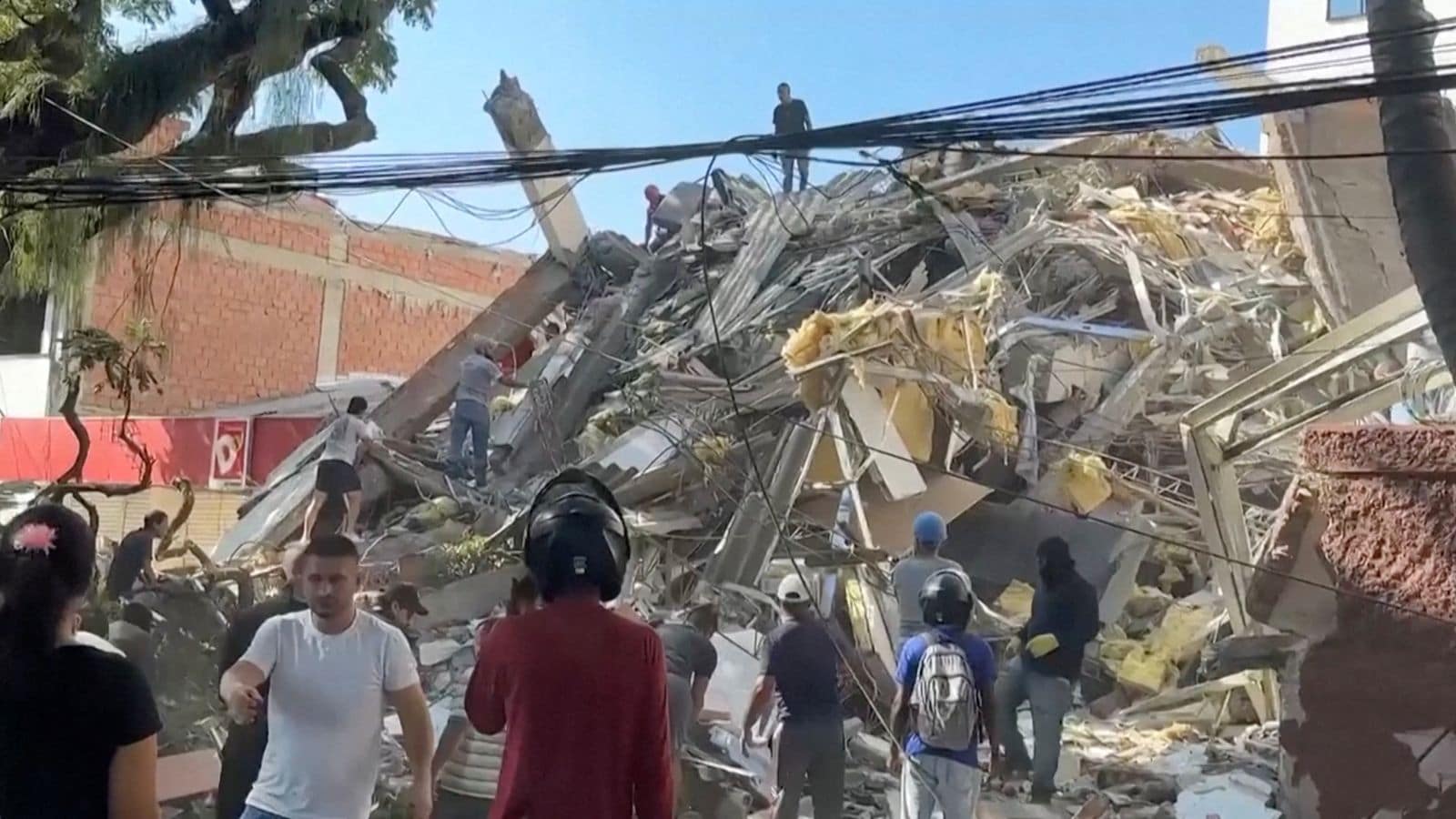
In a fraction of a second, the asphalt turned to liquid waves. Entire neighborhoods slid down saturated hillsides. The departmental capital of Armenia saw over half of its infrastructure crippled or destroyed. More than a thousand people lost their lives in a heartbeat. Entire families vanished from census rolls. Hospitals became triage tents pitched on muddy soccer fields, lit by the harsh glare of headlights from rescue trucks.
What the cold history books fail to capture is the silence that follows.
After the roar of collapsing concrete and the shrieks of sirens fade, there is a profound, suffocating quiet. The air fills with a fine, grey powder—ground-up brick, pulverized plaster, and drywall that gets into your teeth and burns your eyes. In that dust, survivors wander through the wreckage like ghosts, calling out names of loved ones who cannot answer because their voices are trapped beneath three floors of heavy debris.
Yet, human resilience in the face of tectonic fury is a force of its own.
Long before modern seismographs and early-warning algorithms, indigenous communities in the Andes built their lives around the pulse of the earth. They observed how animals behaved before the shaking started—how dogs howled at the sky and horses refused to enter their stables. They learned to build light, flexible structures that could absorb the blow and be raised again within days.
Today, Colombia sits under the watchful eye of the Colombian Geological Service, tracking micro-seisms along faults like Romeral and Cauca-Patía. Engineers test seismic retrofitting techniques on old colonial facades, injecting epoxy into cracks and wrapping vulnerable pillars in carbon fiber. We have built robust building codes designed to keep structures standing even when the ground gives way beneath them.
We try to outsmart the fault lines. We map them, measure them, and model them on glowing computer screens in air-conditioned offices in Bogotá.
But out there in the high passes, where the green valleys drop steeply into misty gorges, the plates continue their slow, grinding descent. The earth does not care about our codes or our blueprints. It only remembers its own ancient rhythms.
And somewhere in the dark, beneath our feet, the friction is building again.