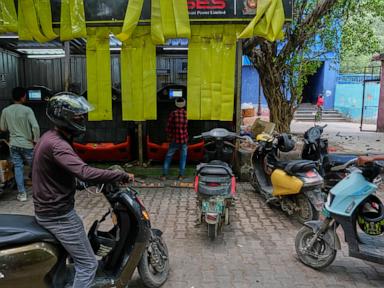
Every winter, Delhi turns into a gas chamber. And every winter, the policy establishment wheels out the exact same tired script: subsidize battery-powered cars, drop the import duties on lithium cells, and pat ourselves on the back for going green.
The lazy consensus says that if we just swap out internal combustion engines for electric motors, the particulate matter will vanish. It is a comforting narrative. It lets bureaucrats claim progress without disrupting the underlying grid architecture, and it lets affluent buyers feel righteous while buying heavily subsidized luxury crossovers.
I have spent a decade watching capital chase bad policy in this sector. I have seen companies blow millions on localized assembly lines for vehicles that draw their power from coal-fired plants fifty miles outside city limits.
The math does not work. Delhi is trying to solve a chemistry problem with a branding exercise.
The Grid Dirty Little Secret
Let us start with the uncomfortable reality of electricity generation. When you plug an electric car into a charging station in the National Capital Region, you are not sipping pure solar energy. You are plugging directly into a baseload powered heavily by thermal coal.
Shift the tailpipe emissions to a smokestack three states away, and you have achieved precisely nothing for total atmospheric health. You have merely outsourced the pollution to a different zip code.
[ Coal Plant ] ---> [ Transmission Loss ] ---> [ EV Charger ] ---> [ Zero Tailpipe Illusion ]
The transmission losses alone chew up efficiency before the electrons even hit the battery pack. Meanwhile, the actual heavy lifters of Delhi's particulate crisis—agricultural stubble burning, unpaved dust-heavy roads, and construction sector particulate dispersion—continue unchecked while policymakers hyperventilate over private passenger transport.
The Battery Weight Trap
There is another engineering reality that the PR teams love to bury. Electric vehicles are heavy. Unforgivingly, destructively heavy.
A standard battery pack adds anywhere from 400 to 700 kilograms of dead weight to a vehicle chassis compared to its petrol equivalent. What happens when you put a three-tonne battery-laden SUV on congested urban tarmac? You get exponential tire wear and brake dust dispersion.
Tyre friction is one of the leading unregulated sources of microplastic and PM2.5 particulate pollution in modern cities. We are trading exhaust fumes for pulverized rubber particles whipped up by heavier, faster vehicles tearing through narrow corridors.
I've watched transit planners ignore this variable entirely because it complicates the clean-tech brochure. If your solution to pollution increases tire particulate output, you have traded one poison for another.
The Mineral Supply Chain Blind Spot
Let us talk about the geopolitics of rare earths. When Delhi mandates rapid electrification targets, it creates an insatiable appetite for imported lithium, cobalt, and nickel.
We are trading our dependence on Middle Eastern crude oil for a tighter, more fragile dependence on processed battery minerals controlled almost entirely by foreign supply chains. That is not energy independence. That is just shifting your geopolitical leash to a different master.
Domestic cell manufacturing sounds great in a cabinet meeting. In practice, the refining capacity, the chemical processing infrastructure, and the raw material acquisition channels take decades to build. Rushing mandates without local supply chains simply creates a paper tiger industry dependent on foreign components with zero net economic resilience.
What Real Decarbonization Actually Looks Like
If you want to clear the air in northern India, stop treating private passenger vehicles as the primary enemy.
- Fix Public Transit Capacity: Build high-capacity, electrified heavy rail and bus rapid transit that moves fifty people in the footprint of one private crossover.
- Aggressively Pave and Clean Roads: Dust suppression matters more than tailpipe standards in a landlocked, arid basin prone to thermal inversions.
- Decarbonize the Baseline Grid First: You cannot claim green transport when your power plants run on low-grade thermal coal. Fix the generation source before scaling the consumption load.
Until policymakers stop treating electric cars as a silver bullet and start treating them as what they are—a heavy, resource-intensive luxury—Delhi will keep choking through every single November.
Stop subsidizing rich people's cars and fix the dirt under our feet.