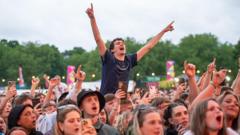
The corporate music press wants you to believe that the modern music festival is a utopian sanctuary of pure connection. They look at a muddy field packed with forty thousand people at BBC Radio 1’s Big Weekend, watch a crowd jump in unison to a generic tech-house beat, and declare that "we are meant to dance." They paint a picture of a monoculture united by rhythm, claiming these massive, sponsored gatherings are the beating heart of live music.
It is a beautiful lie.
The reality is far more cynical. The modern festival circuit has degenerated into a homogenized, risk-averse data-harvesting exercise that is actively stifling musical subcultures and draining the life out of grassroots venues. We are not witnessing a celebration of performance. We are witnessing the industrialization of simulated joy.
The Monoculture Mirage
The mainstream consensus argues that multi-genre mega-festivals expose audiences to new sounds. The logic goes: come for the pop star, stay for the underground electronic act.
It does not work that way. I have spent fifteen years managing artists and negotiating festival riders, and I can tell you exactly what happens behind the curtain. Festivals do not expand tastes; they flatten them.
When a promoter needs to fill a stadium-sized field, they cannot gamble on nuance. They optimize for the lowest common denominator. This creates a sonic wallpaper designed to facilitate background socializing and alcohol consumption rather than active listening. The lineup of a major festival in the UK looks almost identical to one in the US or Spain, featuring the same rotating carousel of legacy acts and algorithmically optimized pop performers.
The Lowered Bar: By forcing disparate genres into a single, massive weekend, festivals strip music of its context. A techno set loses its subcultural weight when it takes place at 4:00 PM on a Tuesday-bright afternoon sandwiched between a mainstream indie band and a TikTok influencer’s DJ set.
This homogenization creates an environment where audiences expect music to be passive. They are there for the "vibe," the Instagram story, and the checklist experience of seeing a headliner from half a mile away. The art becomes incidental to the event.
The Grassroots Extinction Engine
Every dollar spent on a weekend festival ticket is a dollar extracted from the local music ecosystem. The "Big Weekend" model conditions audiences to consume music as an annual, high-cost pilgrimage rather than a weekly cultural habit.
The economic fallout of this shift is catastrophic. While major festival brands boast record-breaking attendance and soaring VIP ticket sales, small music venues—the literal breeding grounds for future headliners—are closing at an unprecedented rate.
Let us look at the mechanics of the festival exclusivity clause.
[Major Festival Books Artist]
       │
       ▼
[Exclusivity Clause Triggered]
       │
       ▼
[Artist Banned from Playing Within 100-Mile Radius for 6 Months]
       │
       ▼
[Local Independent Venues Deprived of Touring Acts]
When a massive festival books an emerging artist, they frequently lock them into radius clauses. These legal mechanisms prevent the artist from playing any other shows within a specific geographic area for months before and after the event.
The result? Local venues cannot book the hottest touring acts. Audiences starve for live music for ten months of the year, saving their money instead for a single, multi-hundred-dollar weekend pass. The festival becomes a parasite, feeding on the cultural cachet of local scenes while starving the infrastructure that created those scenes in the first place.
The Illusion of Shared Experience
"We're meant to dance," the critics shout, pointing at a sea of raised hands. But who is actually dancing, and why?
In his foundational sociological work, The Presentation of Self in Everyday Life, Erving Goffman explores how individuals perform roles to satisfy social expectations. The modern festival is the ultimate theater for this performance. The crowd is not reacting to the music; they are reacting to the camera cranes swinging overhead and the collective awareness that they are being watched.
+---------------------------------------+
|        The Festival Feedback Loop     |
+---------------------------------------+
| 1. Stage Design Optimizes for Screens |
| 2. Performer Demands Phone Lights Up   |
| 3. Audience Records the Collective     |
| 4. Reality Refracted into Content     |
+---------------------------------------+
When a headliner commands forty thousand people to crouch down and jump up on the count of four, it is not an organic expression of communal ecstasy. It is choreography. It is content generation. The audience is transformed from active participants into unpaid extras in a promotional video for next year's ticket presale.
True musical connection requires intimacy, vulnerability, and the possibility of failure. On a massive festival main stage, everything is backed up by timecodes, pre-recorded tracks, and synchronized pyrotechnics. There is no room for improvisation. The performance is frozen, safe, and entirely sterile.
Dismantling the FAQs: What the Industry Hides
"Don't festivals provide crucial exposure for independent artists?"
This is the exposure currency myth, and it is bankrupt. Landing an early afternoon slot on a secondary festival stage rarely moves the needle for a developing act. The audience is either still hungover in the campsites or wandering past the stage to get to the food trucks.
Furthermore, the financial terms for lower-tier festival acts are notoriously exploitative. Once you factor in travel, session musicians, and production costs, most independent bands lose money playing major festivals. They accept the financial hit because they have been told it is a mandatory rite of passage. It isn't. A sold-out, 200-capacity headline show in a sweaty basement venue creates a fiercely loyal fanbase. A 30-minute set to a distracted festival crowd creates background noise.
"Aren't large festivals the only way to make live music economically viable today?"
Only for the multinational entertainment conglomerates that own them. The consolidation of the live music industry by massive promotion monopolies has created a vertically integrated system where the same company owns the ticketing platform, the promotion agency, the venue, and the festival itself.
This model relies on scale to maximize corporate profits through exorbitant service fees, $15 beers, and tiered VIP experiences. It is economically viable for shareholders, not for the art form. Smaller, curated boutique festivals that cap attendance and focus on specific subcultures prove that scale is not a prerequisite for financial stability.
The Path Forward: Reject the Field, Return to the Room
If you want to save live music, stop buying tickets to weekend-long corporate branding activations. Stop letting algorithms dictate your cultural consumption under the guise of convenience.
The counter-cultural move is simple, immediate, and highly effective:
- Fund the Foundation: Take the money you would spend on a single festival ticket and buy entry to ten shows at independent venues in your city.
- Demand Risk: Seek out promoters who book challenging, uncompromising lineups that do not rely on legacy nostalgia.
- Kill the Content Cycle: Put the phone away. Stop viewing performance through a five-inch screen to prove to your digital acquaintances that you were there.
The corporate festival model is a dying star, burning brightly on venture capital and nostalgia while hollowing out its own foundation. The true future of music is not happening in a muddy field sponsored by a telecom giant. It is happening right now, in the dark, in a room you haven't discovered yet, where the music matters more than the market share.