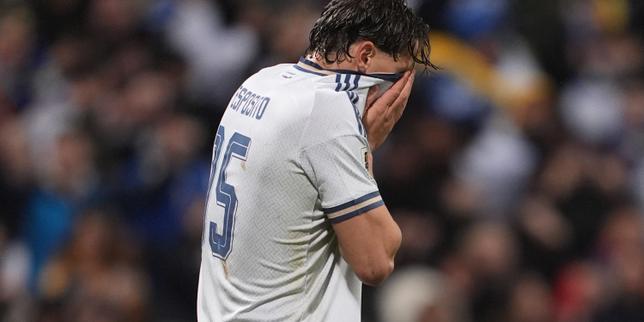
The final whistle in Zenica didn’t just signal a defeat; it confirmed a systemic collapse that has been twelve years in the making. For the third consecutive time, Italy will watch the World Cup from the sofa, an achievement in failure that was once considered mathematically impossible for a nation of this stature. When the 2026 tournament kicks off in North America, a generation of Italian children will reach high school having never seen their country play a single minute on football's greatest stage. This isn't a fluke or a "curse." It is a managed decline.
The immediate autopsy of the loss to Bosnia and Herzegovina points to familiar culprits. A direct red card for Alessandro Bastoni before halftime forced a desperate, 10-man retreat that eventually buckled under a 79th-minute Haris Tabakovic equalizer. Then came the penalties—the ultimate litmus test for a team’s mental fortitude. When Pio Esposito and Bryan Cristante saw their efforts saved, the air left the Italian lungs. Esmir Bajraktarevic’s decisive strike for Bosnia didn't just qualify his nation; it acted as the final nail in the coffin of Italy’s relevance.
The Myth of the Tactical Superiority
For decades, the Italian footballing identity was built on the foundation of Catenaccio and defensive mastery. We told ourselves that while other nations produced sprinters, we produced chess players. That arrogance has become our undoing. While the rest of the world transitioned to high-intensity pressing and verticality, Italy remained trapped in a cycle of lateral passing and nostalgic tactical rigidity.
Gennaro Gattuso was brought in to provide "grinta"—that elusive Italian grit. Instead, we saw a team that lacked both the creative spark to break down a 66th-ranked opponent and the composure to hold a 1-0 lead. The FIGC’s decision to ask Gattuso and Gianluigi Buffon to stay in their roles suggests a federation that is paralyzed by a lack of alternatives. They are rearranging deck chairs on the Titanic while the hull is already split open.
A League in Financial and Talent Stasis
The rot begins at the domestic level. Serie A was once the "Seven Sisters" era, the wealthiest and most prestigious league on the planet. Today, it is a developmental league that cannot afford its own best products. The financial gap between the English Premier League and Serie A has turned Italian clubs into shop windows rather than powerhouses.
More damning is the lack of faith in youth. In 2026, we are still relying on a aging core because the leap from Primavera (youth) squads to the first team is a chasm few are allowed to cross. When talented youngsters do emerge, they are often shipped out on loan to lower-tier clubs where survivalist tactics stifle their technical growth. Foreign imports occupy the starting spots in top Italian clubs, leaving the national team manager to scavenge for scraps.
The Failure of the 48-Team Safety Net
What makes this specific non-qualification a historic embarrassment is the context of the tournament itself. The 2026 World Cup expanded to 48 teams. The barrier to entry was lowered significantly. In a world where 16 European nations qualify, Italy’s absence is a statistical anomaly that requires a spectacular level of incompetence to achieve.
We are no longer a "sleeping giant." We are a ghost. The 2006 World Cup win is now two decades old, a fading memory that provides cover for current failures. The Euro 2020 victory, increasingly looking like a localized miracle rather than a sign of health, gave the FIGC the excuse they needed to avoid a deep, painful audit of their youth systems and coaching philosophies.
The Governance Crisis
Gabriele Gravina has presided over two of these three failures. His refusal to step down, despite calls from Italy's sports minister Andrea Abodi, reflects a broader issue of accountability within Italian institutions. The "reboot" promised after the loss to North Macedonia in 2022 was nothing more than a marketing slogan.
True reform would require:
- Mandatory quotas or financial incentives for playing homegrown U-21 talent in Serie A.
- A complete overhaul of the Coverciano coaching curriculum to prioritize modern, high-intensity play over antiquated tactical theory.
- Investment in state-of-the-art infrastructure, as many Italian stadiums remain crumbling relics of the 1990 World Cup.
The fans in Rome, Milan, and Naples aren't just angry; they are becoming indifferent. That is the most dangerous stage of a sport's decline. When a nation stops expecting to win and starts expecting to fail, the culture of the sport withers. Italy is currently a "baseball nation" in the sense that its favorite pastime has become watching other people play the game they used to own.
The reconstruction of Italian football cannot be led by the men who oversaw its destruction. It requires a scorched-earth approach to the federation's hierarchy and a humble admission that the "Italian way" is currently the wrong way. Until that happens, the Azzurri blue will remain a color associated with mourning rather than triumph.
Go to the youth academies. Build the pitches. Fire the bureaucrats. Anything less is just waiting for the 2030 qualifying disaster to begin.