Ernest Hemingway published The Sun Also Rises in 1926, inadvertently creating a century-long tourism pipeline from the United States to the narrow streets of Pamplona, Spain. Every July, thousands of Americans travel to the San Fermín festival specifically to run with the bulls, driven by a romanticized ideal of masculine grit and expatriate adventure. Yet, the reality of the modern Encierro has diverged sharply from the literary myth. What was once a localized, chaotic ritual has transformed into a commercialized, high-risk spectacle where the biggest danger is no longer just the animals, but the sheer volume of untrained thrill-seekers clogging the cobblestones.
The Literary Blueprint and the Modern Reality
The American obsession with the San Fermín festival belongs to a specific literary ghost. In Hemingway’s novel, the festival represents raw emotion, authenticity, and an antidote to the disillusionment of the post-World War I "Lost Generation." Jake Barnes and his companions drank heavily, watched the bullfights, and found a twisted sense of meaning in the danger.
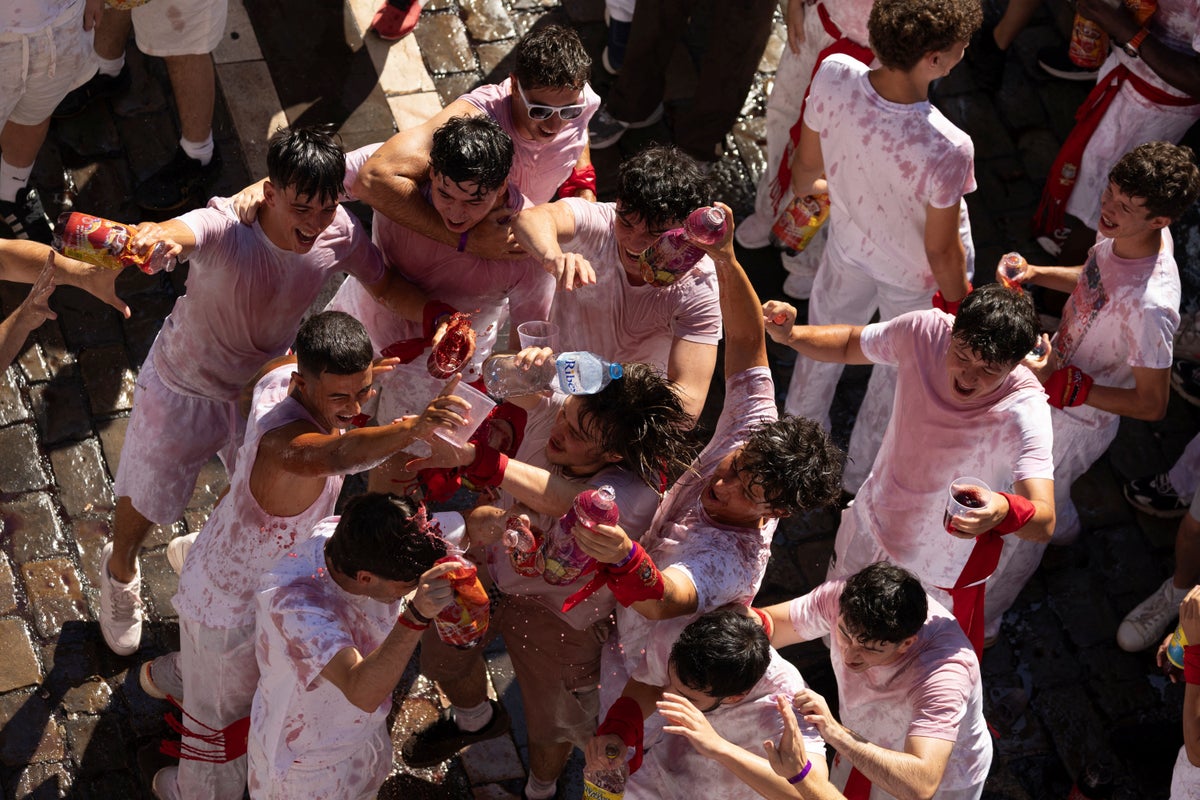
For decades, young Americans have attempted to replicate this exact itinerary. They arrive in Pamplona wearing the traditional white trousers and shirt, tied with a red scarf and waistband. They carry rolled-up newspapers to gauge the distance between themselves and the horns. They sleep in public parks or pay exorbitant rates for balconies overlooking Santo Domingo or Estafeta street.
The contemporary event bears little resemblance to the 1920s ritual.
Pamplona during San Fermín is now an industrial-scale tourism operation. Over one million visitors crowd into a city with a baseline population of roughly 200,000. The run itself lasts less than three minutes, covering a stretch of 875 meters. Within that brief window, up to 2,000 runners crowd the route each morning. The danger has shifted. While goring remains the ultimate dread, the most common source of severe injury is the "montón"—a human pileup where dozens of tripped runners stack on top of each other, creating a suffocating barrier that the half-ton fighting bulls must trample to pass.
The Mechanics of the Run
Understanding the mechanics of the Encierro requires stripping away the romantic haze. At exactly 8:00 AM, a rocket signals the release of six fighting bulls and six steers from the Santo Domingo corral. A second rocket confirms all the animals are on the street.
The route is divided into distinct sections, each requiring a different tactical approach.
- Santo Domingo: The opening stretch is a steep incline. The bulls are fresh, fast, and tightly grouped. Runners here face the full speed of the animals, making it the most physically demanding sector.
- Plaza del Ayuntamiento: The route flattens out briefly as it passes the town hall. The space widens, but the sudden change in geometry causes chaotic scattering among both humans and animals.
- La Curva (Mercaderes): A sharp, nearly 90-degree right turn leading into Estafeta. Centrifugal force frequently causes the heavy bulls to lose their footing and slide violently into the wooden barricades on the outer wall, separating individual animals from the pack. A separated bull is exponentially more lethal than a unified herd.
- Calle Estafeta: The longest straightaway. The bulls begin to slow down slightly, allowing experienced runners to catch the "carrera"—the act of running directly in front of the horns for a few fleeting seconds before peeling off to the side.
- Telefonía and the Callejón: The bottleneck leading into the bullring. The street narrows dramatically into a tunnel. This is the primary site for catastrophic pileups.
Experienced locals, known as divinos, understand these dynamics intimately. They train year-round, studying the posture of the animals and learning how to read the movement of the crowd. They view the influx of foreign tourists with a mix of economic appreciation and deep frustration. Untrained runners frequently break the cardinal rules of the street: they look back instead of forward, they freeze when panicked, and they attempt to touch the bulls, an act that distracts the animal and increases the likelihood of a sudden turn into the crowd.
The Hidden Economics of the Spectacle
The persistence of the American runner phenomenon is sustained by a highly lucrative economic ecosystem. Pamplona’s hospitality industry relies heavily on the revenue generated during these nine days in July to sustain operations throughout the quieter winter months.
Balcony rentals have become a premier commodity. Local residents vacate their apartments overlooking the route, renting out window space to foreign tour agencies for hundreds of euros per person for a view that lasts less than thirty seconds. High-end tour packages tailored specifically to affluent Americans offer a seamless blend of Hemingway trivia, wine tastings, and guaranteed access to the safest vantage points.
This commercialization creates a fundamental paradox. The draw of the festival is its raw, unscripted danger—a primal experience that cannot be sanitized. Yet, the infrastructure required to host millions of international tourists demands strict control, corporate sponsorship, and intensive policing. The municipality spends millions of euros annually on security, medical infrastructure, and cleanup operations, deploying special non-slip chemicals on the cobblestones to prevent the bulls from falling at the Mercaderes curve.
The Ethical Fracture
The continued American participation in the Encierro occurs against a backdrop of shifting cultural values within Spain itself. Bullfighting and its associated festivals are no longer universally celebrated markers of national identity; they are highly polarizing political issues.
A growing animal welfare movement within Western Europe views the entire tradition as an archaic form of cruelty. The fighting bulls that run the streets at 8:00 AM are the exact same animals that face the matadors in the plaza later that afternoon. For younger generations of Spaniards, the event is increasingly seen as a embarrassing relic of the past rather than a source of pride.
American tourists frequently compartmentalize their participation, separating the thrill of the morning run from the lethal reality of the afternoon corrida. Many refuse to attend the actual bullfights, viewing the run as a personal athletic challenge or a test of bravery, independent of the broader blood sport. This distinction is entirely artificial. The run exists solely as the prelude to the ring; the two events are structurally inseparable.
By arriving in numbers every year, American tourists provide both financial life support and international validation to a tradition that is facing severe domestic scrutiny. The foreign currency keeps the wheels turning, while the international prestige shields the festival from local political pressure to reform or abolish the practice.
The Physical Toll
The romantic narrative rarely accounts for the clinical reality of the emergency room. The hospital complexes in Pamplona are highly efficient triage centers during the festival, designed to handle trauma cases with battlefield efficiency.
Statistically, the vast majority of injuries are fractures, severe abrasions, and concussions resulting from falls and human collisions. However, gorings represent a distinct category of medical crisis. A bull's horn does not simply pierce the flesh; it tears, rotates, and introduces massive amounts of bacteria from the street into deep muscle tissue. The entry wound is often deceptively small compared to the internal destruction.
Between 1910 and the present day, 16 people have lost their lives in the Encierro. The most recent fatality occurred in 2009, when a 27-year-old Spaniard was gored through the neck at the Telefonía section. American runners have suffered numerous near-fatal injuries, including punctured lungs, severed femoral arteries, and permanent brain damage from being trampled.
The risk calculation made by the average tourist is deeply flawed. Influenced by internet videos and sanitized travel blogs, many believe that agility or general fitness is sufficient to ensure safety. They fail to account for the fluid dynamics of a panicked crowd. You cannot outrun a bull that weighs 1,200 pounds and runs at 15 miles per hour, nor can you dodge an animal when you are pinned against a wall by five other terrified tourists.
The allure of the Hemingway myth endures because it offers an easily consumable version of existential validation. For the cost of a plane ticket and a white outfit, the modern traveler can temporarily step into a narrative of vintage adventure, pretending for a weekend that they are part of a lost, heroic age. The street, however, possesses no literary sentimentality. It remains a narrow, hard corridor of stone, wood, and unpredictable force, entirely indifferent to the romantic delusions of the people running for their lives.