The fragile security architecture of South Asia is currently undergoing a stress test that few in Islamabad or Tehran expected. For decades, the border between Pakistan and Iran was managed with a cautious, if sometimes icy, diplomacy. That era has ended. Recent escalations between the two nations, coupled with inflammatory rhetoric from Pakistan’s top military brass, have triggered a domestic backlash that threatens to expose the deep fractures within the Pakistani state. This isn’t just a border skirmish or a localized dispute over militant hideouts; it is a fundamental realignment of regional tensions where the rhetoric of national defense is colliding with the reality of an overextended military.
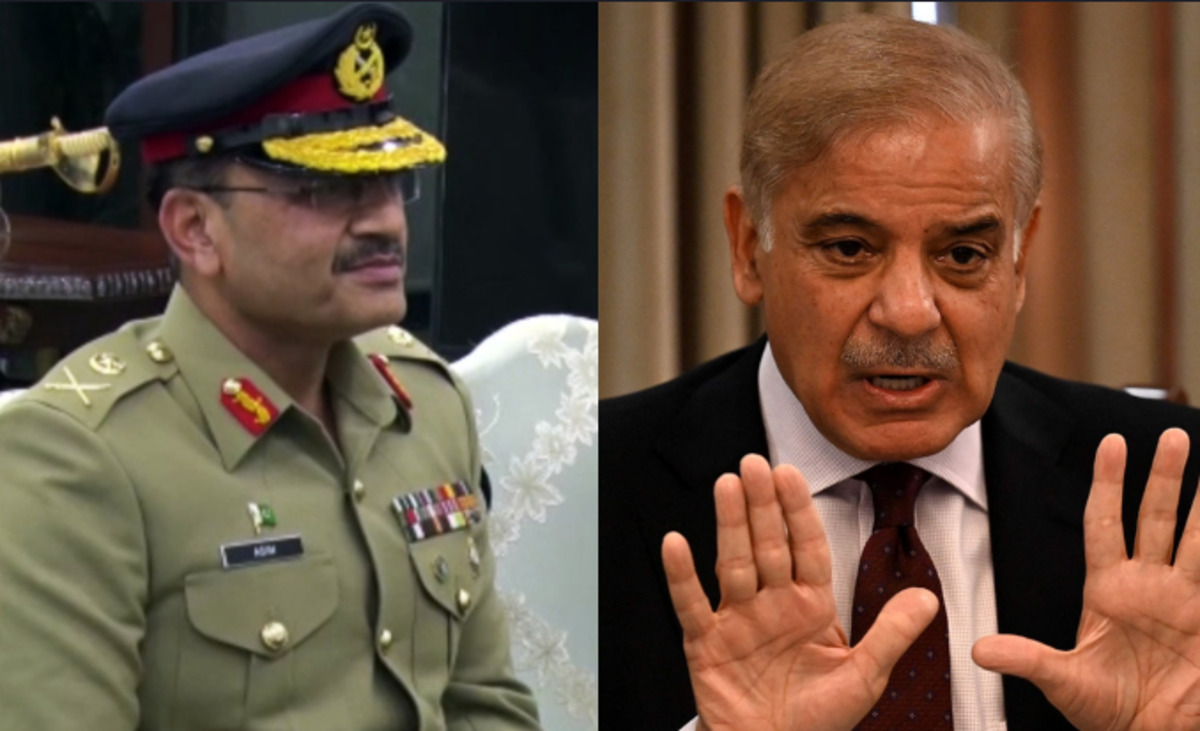
When General Asim Munir recently addressed the internal security situation, he didn't just target traditional enemies. He effectively expanded the scope of Pakistan's perceived threats, drawing a line that connects the restive Balochistan province, the Iranian border, and the perennially heated Line of Control in Kashmir and Ladakh. By bringing Ladakh into the conversation, the military leadership is attempting to pivot the national narrative toward a broad, existential struggle against external "hegemons." However, the strategy is backfiring. Instead of rallying the public, the military's aggressive stance against Iran and its simultaneous focus on the Indian border have fueled accusations that the state is more interested in maintaining its own grip on power than in securing the people’s livelihoods.
The Myth of Strategic Depth
For years, Pakistan's military planners relied on the concept of "strategic depth," the idea that a friendly or neutralized neighbor to the west would allow for a singular focus on the eastern front with India. That concept is dead. The Iranian strikes on Pakistani soil, followed by Pakistan’s retaliatory "Operation Marg Bar Sarmachar," proved that the western border is no longer a vacuum. It is a live wire.
The military’s attempt to frame the Iranian issue through the lens of Indian influence—specifically citing the proximity of Ladakh and the potential for a "two-front" conspiracy—is a calculated move to distract from internal failings. It serves a specific purpose. If the public believes that Iran and India are working in a pincer movement, then any domestic dissent can be labeled as "anti-state" or "sponsored by foreign intelligence." This is a tired playbook. It ignores the fact that the insurgency in Balochistan is driven by decades of economic marginalization and forced disappearances, not just foreign meddling.
A Failure of Diplomacy and Intelligence
The recent flare-up with Iran was a catastrophic intelligence failure. The fact that Tehran felt bold enough to launch missiles into Pakistani territory suggests a complete breakdown in the back-channel communications that usually prevent such escalations. While the Pakistani military was quick to retaliate to save face, the damage to its "invincible" image was already done.
The subsequent official statements tried to bridge the gap by invoking Ladakh. This is a classic case of what analysts call "threat inflation." By suggesting that the tensions with Iran are somehow linked to the Indian military presence in the high-altitude deserts of Ladakh, the Pakistani leadership is trying to create a cohesive narrative of a nation under siege from all sides. It is a desperate bid for legitimacy at a time when the economy is in shambles and the political landscape is more polarized than it has been since the 1970s.
The Balochistan Factor
At the heart of the crisis is the province of Balochistan. It is the site where the interests of Pakistan, Iran, and India converge in a violent mess. The Baloch militants operate on both sides of the Iran-Pakistan border, and both nations have accused the other of providing sanctuary to these groups.
However, the Pakistani military's current approach—heavy-handed kinetic operations followed by aggressive rhetoric—fails to address the underlying grievances. When the army chief speaks about protecting every inch of the country, the residents of Balochistan hear it as a threat of further militarization. They see the exploitation of their natural resources while their youth are "disappeared" into the bowels of the security apparatus. This domestic outrage is what the state-sponsored media tries to drown out with talk of "foreign conspiracies" involving Iran or India’s activities in Ladakh.
Why Ladakh Matters in the Propaganda War
Mentioning Ladakh isn't an accident. It is a specific dog whistle for the Pakistani nationalist base. By linking the Iranian border issue to the disputed territories in the north, the military high command is trying to trigger a reflexive patriotic response. They want the public to see a map where Pakistan is the victim of a coordinated encirclement.
In reality, the situation in Ladakh is largely a bilateral issue between India and China. While Pakistan maintains a stake in the broader Kashmir dispute, the recent shift in the regional power balance means that Islamabad has less leverage than ever. The military’s attempt to insert itself into the Ladakh conversation is an effort to remain relevant in a global geopolitical shift that is increasingly leaving Pakistan behind. It is a bluff designed to tell the world—and the Pakistani public—that the army is still the ultimate arbiter of the country's fate.
The Economic Cost of Aggression
Every missile fired and every troop deployment along the border has a price tag that Pakistan can no longer afford. The country is surviving on a diet of IMF loans and "friendly" deposits from Gulf allies. A sustained conflict, or even a heightened state of military readiness on two fronts, is an economic suicide pact.
The public understands this better than the generals give them credit for. There is a growing sense of anger in the streets of Karachi, Lahore, and Quetta. People are asking why the state can afford advanced drone technology and ballistic missiles to strike across the Iranian border, but cannot provide reliable electricity or affordable flour. The "new बवाल" (outrage) mentioned in regional reports isn't just about what General Munir said; it’s about the sheer disconnect between the military’s grandiose geopolitical ambitions and the grinding poverty of the average citizen.
The Iranian Counter-Narrative
Tehran is not playing the same game. While Pakistan is focused on internal optics, Iran is focused on its "Axis of Resistance" and securing its eastern flank. The Iranian leadership knows that Pakistan is currently a house divided. By striking inside Pakistan, Iran sent a message that it would no longer tolerate the "gray zone" warfare that has plagued the Sistan-Baluchestan region.
The Pakistani military’s response—blaming "elements" and pointing fingers at the Indian border—is seen in Tehran as a sign of weakness, not strength. It shows a military that is more concerned with managing its domestic reputation than with solving the structural issues of border security. If Islamabad continues to use Iran as a scapegoat for its internal failures in Balochistan, the cycle of violence will only accelerate.
Information Warfare and the Death of Nuance
We are seeing a massive surge in state-aligned social media campaigns designed to vilify any critic of the military’s stance on Iran. These campaigns use a mix of religious fervor and hyper-nationalism to shut down debate. Anyone who questions the wisdom of escalating with a fellow Muslim neighbor while the eastern border remains tense is labeled a "traitor."
This environment makes it impossible for a sane foreign policy to emerge. When the army chief’s statements are treated as divine decree, the diplomatic corps is sidelined. The result is a foreign policy that is dictated by the needs of the military's PR wing rather than the long-term interests of the Pakistani state. The inclusion of Ladakh in these discussions is the ultimate proof of this trend; it is a rhetorical flourish meant for a domestic audience, not a serious strategic assessment.
The Breakdown of the Social Contract
The most dangerous aspect of the current situation is the total collapse of trust between the state and the people. The "outrage" that has started in Pakistan isn't just about Iran or India. It’s about a population that feels its leaders are playing a high-stakes game of Risk while the country burns.
The military’s attempt to create a unified front by pointing at external enemies is failing because the internal enemy—instability and economic ruin—is much more visible. The people see through the mentions of Ladakh and the warnings about Iran. They see a military that is trying to justify its massive share of the budget and its dominance over the civilian government by manufacturing a sense of perpetual crisis.
Moving Beyond the Rhetoric
If Pakistan is to survive this period of instability, it must move beyond the "fortress Pakistan" mentality. This requires a fundamental shift in how the state views its neighbors and its own citizens.
- Normalize the Western Border: Instead of looking for conspiracies, Islamabad needs to engage in serious, transparent security cooperation with Tehran. This means addressing the militant groups on both sides without the filter of geopolitical grandstanding.
- De-escalate the Rhetoric: Using Ladakh as a tool for domestic propaganda is a dangerous game that could lead to unintended escalations with India. The military needs to stop using unrelated regional conflicts to justify its internal grip on power.
- Address Balochistan: The crisis in the west will never be solved until the state treats the Baloch people as citizens with rights, rather than subjects to be controlled. Kinetic operations will only create more insurgents.
- Economic Primacy: National security is impossible without economic security. The focus must shift from acquiring the latest weapons to building an economy that can sustain the population.
The current path is unsustainable. The military’s attempt to manufacture a "new narrative" involving Iran and Ladakh is not a sign of a confident nation; it is the frantic maneuvering of an institution that is losing its grip on the national imagination. The " बवाल" is just the beginning. Unless there is a radical change in how Pakistan handles its internal and external affairs, the country risks becoming a failed state with a nuclear arsenal, a nightmare scenario for the entire world.
The military leadership believes they are playing a masterclass in strategic maneuvering. In reality, they are walking a tightrope over an abyss. The talk of Ladakh and the warnings to Iran are nothing more than smoke and mirrors. The real threat to Pakistan isn't across its borders; it's the growing realization among its people that their leaders are prioritizing their own survival over the survival of the country.
Stop looking at the maps and start looking at the markets. The price of flour in Peshawar tells you more about Pakistan’s future than any general’s speech about Ladakh ever will. The state must choose: continue the cycle of manufactured crises, or finally face the reality of its own structural decay. The time for rhetoric has passed. The time for a hard, painful accounting of the truth has arrived.
Investigate the bank accounts of the elite before you investigate the motives of the neighbors. Only then will the real reason for the chaos become clear. This isn't just a border dispute; it’s a distraction from a dying system. Don't look at the missiles; look at the empty plates. That is where the next revolution will start.