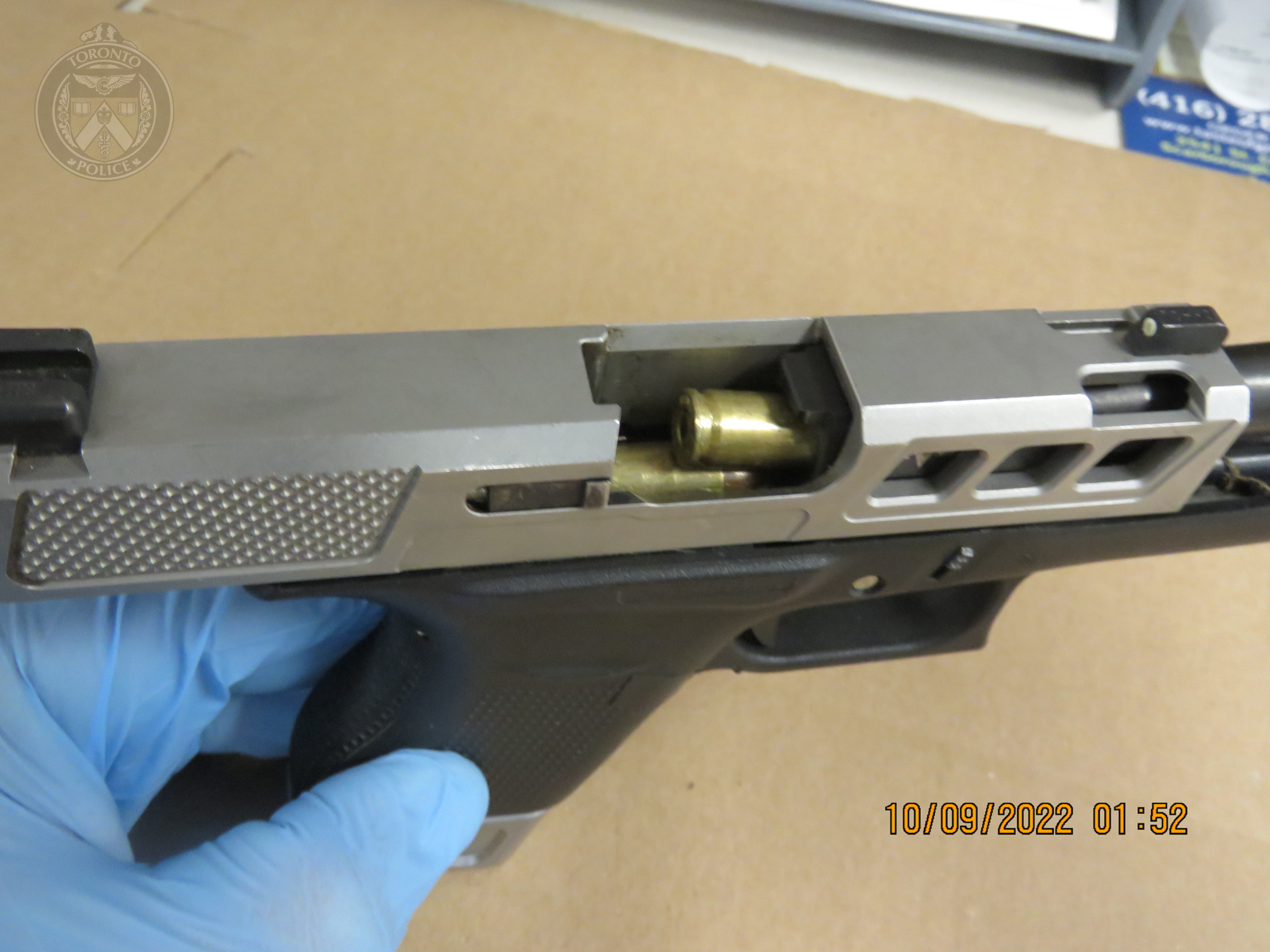
The media loves a redemption arc, especially when it involves a smoking gun and a tearful teenager.
When a 19-year-old pulls a trigger on an off-duty Toronto police officer and later stands in a courtroom saying he is "sorry," the press rushes to print the headline. They present the apology as a moment of profound realization. They treat contrition as a metric of rehabilitation.
It is a lie.
The public obsession with offender remorse is not just naive; it actively corrupts the justice system. We have created a legal environment where saying "I'm sorry" operates as a transaction—a cheap token traded for months or years off a prison sentence. When someone fires a weapon at another human being, the presence of remorse is entirely irrelevant to public safety.
By treating performative regret as a meaningful variable in violent crime cases, we ignore the cold mechanics of criminal psychology and the structural failure of our judicial architecture. It is time to retire the currency of the courtroom apology.
The Economy of Remorse
In the Canadian justice system, remorse is treated like a commodity. Under standard sentencing guidelines, an early guilty plea and an expression of regret are routinely factored in as mitigating circumstances. Defence lawyers coach their clients to deliver these statements with precise emotional cadence.
I have watched this theater play out for over fifteen years in criminal justice circles. The script never changes. The defendant looks down, wipes away a tear, expresses sympathy for the victim, and promises they are not the same person who committed the crime.
It is standard procedure. It is an optimized legal strategy, not a psychological breakthrough.
When a 19-year-old shooter expresses sorrow, we are not witnessing a moral awakening. We are witnessing a rational actor responding to institutional incentives. If the system promises a shorter sentence in exchange for an apology, any rational offender will provide that apology, regardless of whether they feel genuine guilt.
The structural flaw here is obvious. We are attempting to measure an unmeasurable internal state—sincerity—and using it to make decisions about public safety.
Imagine a scenario where a financial auditor accepts a corporate fraudster's apology as proof that the books are now clean. We would call it professional negligence. Yet, when the stakes are literal life and death on municipal streets, we allow emotional performance to dictate legal leniency.
The Myth of the Imperial Impulse
The common defense narrative for young adults involved in violent crime relies heavily on the concept of the underdeveloped brain. Criminologists and defense lawyers frequently cite neurological data showing that the prefrontal cortex does not fully mature until age 25. They argue that a 19-year-old lacks the impulse control of an adult, making their violent outbursts anomalous and highly correctable.
This argument oversimplifies the science to serve a lenient agenda.
While impulse control develops with age, the act of acquiring an illegal firearm, transporting it through a city, tracking a target, and pulling a trigger is not a momentary lapse in judgment. It is not a sudden, uncontrollable sneeze. It requires a series of deliberate, conscious choices over an extended timeline.
- Step 1: Procuring an illegal weapon through illicit networks.
- Step 2: Choosing to carry that weapon into a public space.
- Step 3: Escallating a confrontation to the point of lethal force.
- Step 4: Discharging the weapon with intent to harm.
To categorize this chain of decisions as an "impulse" is an insult to logic. A 19-year-old understands the lethal nature of a firearm. They understand that pulling the trigger ends human life.
By framing these acts as youthful mistakes that can be cured with an apology, the justice system minimizes the severity of the intent. The off-duty officer who was targeted did not face a teenage misunderstanding; they faced a lethal threat.
The Recidivism Blindspot
The core function of the justice system is not to comfort the offender or validate their emotional journey. Its primary function is incapacitation and deterrence.
Does remorse predict a lower rate of reoffending? The empirical data suggests otherwise.
Numerous criminological studies tracking violent offenders show that subjective assessments of remorse by judges and parole boards have almost zero statistical correlation with actual recidivism rates. High-functioning sociopaths and chronic offenders are often the most adept at mimicking empathy because they understand social cues and institutional expectations. Conversely, individuals who are deeply traumatized or socially awkward may appear cold and unrepentant, despite being highly unlikely to reoffend.
By relying on remorse as a mitigating factor, the courts create a system that rewards skilled liars and punishes the socially incompetent.
Consider the reality of gang dynamics and street-level violence in major urban centers like Toronto. Violence is currency. Prestige is gained through dominance. When an individual returns to their community after serving a discounted sentence obtained through a performative apology, the courtroom theater means nothing. The environmental pressures, the economic incentives, and the social networks that produced the violence remain entirely unchanged.
An apology does not dismantle a gang network. It does not remove illegal firearms from the street. It does not cure the systemic factors that make violent crime an attractive option for disillusioned youth.
Dismantling the Victim-Centric Illusion
Proponents of restorative justice argue that courtroom apologies are vital for the healing process of the victims and the community. They claim that hearing an offender say "I'm sorry" provides closure.
This is a dangerous assumption that shifts the burden of emotional labor onto the victim.
In cases involving violent assaults on law enforcement officers or civilians, the victim is frequently forced to endure the spectacle of the offender's self-pity. The narrative shifts from the trauma of the person who was shot at to the emotional redemption of the person who fired the gun. The media coverage centers on the shooter's remorse, effectively turning the perpetrator into the protagonist of the legal drama.
This subversion of justice serves no one except the offender. True accountability is not emotional; it is functional. It is measured in time served, restrictions endured, and concrete restitution made.
If an offender wants to show true remorse, they do not need to speak into a microphone in front of television cameras. They can provide actionable information to police regarding the illegal supply chains that provided their weapon. They can name the individuals who traffic firearms into their neighborhoods.
But they rarely do that. Because true accountability carries a real cost, whereas a verbal apology is completely free.
Reframing the Sentencing Matrix
The solution to this systemic failure requires a brutal, unsentimental restructuring of how violent crimes are sentenced. We must strip emotion out of the legal calculation.
First, remorse must be completely removed as a mitigating factor in cases involving firearms and violent assaults. The law should care exclusively about the action and the intent, not the subsequent emotional hangover. If you fire a gun at a human being, your internal feelings about that act after getting caught are legally irrelevant.
Second, we need to implement strict, non-negotiable mandatory minimum sentences for violent offenses involving firearms, regardless of the offender's age, provided they are tried as adults. The certainty of punishment is a far greater deterrent than the severity of a theoretical sentence that can be negotiated down through performative contrition.
Third, the justice system must prioritize the protection of the public over the theoretical rehabilitation of individuals who demonstrate a willingness to use lethal force. A society that prioritizes the feelings of a shooter over the safety of its citizens is a society in decline.
The Hard Reality
We live in an era that values appearance over substance. We prefer the quick emotional payoff of a public apology to the grinding, difficult work of maintaining public order.
The 19-year-old who shot at an off-duty officer may very well feel bad about his situation today. He faces prison. He faces the destruction of his youth. His sorrow is entirely predictable, entirely rational, and entirely useless.
When we allow these apologies to shape legal outcomes, we compromise the safety of our communities. We tell future offenders that the consequences of violence can be mitigated by a well-timed performance in front of a judge. We tell law enforcement officers that their lives are cheap enough to be balanced out by a few words of regret from the people who targeted them.
Stop buying the narrative of the penitent shooter. Stop allowing the courtroom to be used as a theater for cheap grace. A gun does not care about an apology, and neither should the law.
Lock the door, turn the key, and let the silence replace the performance.