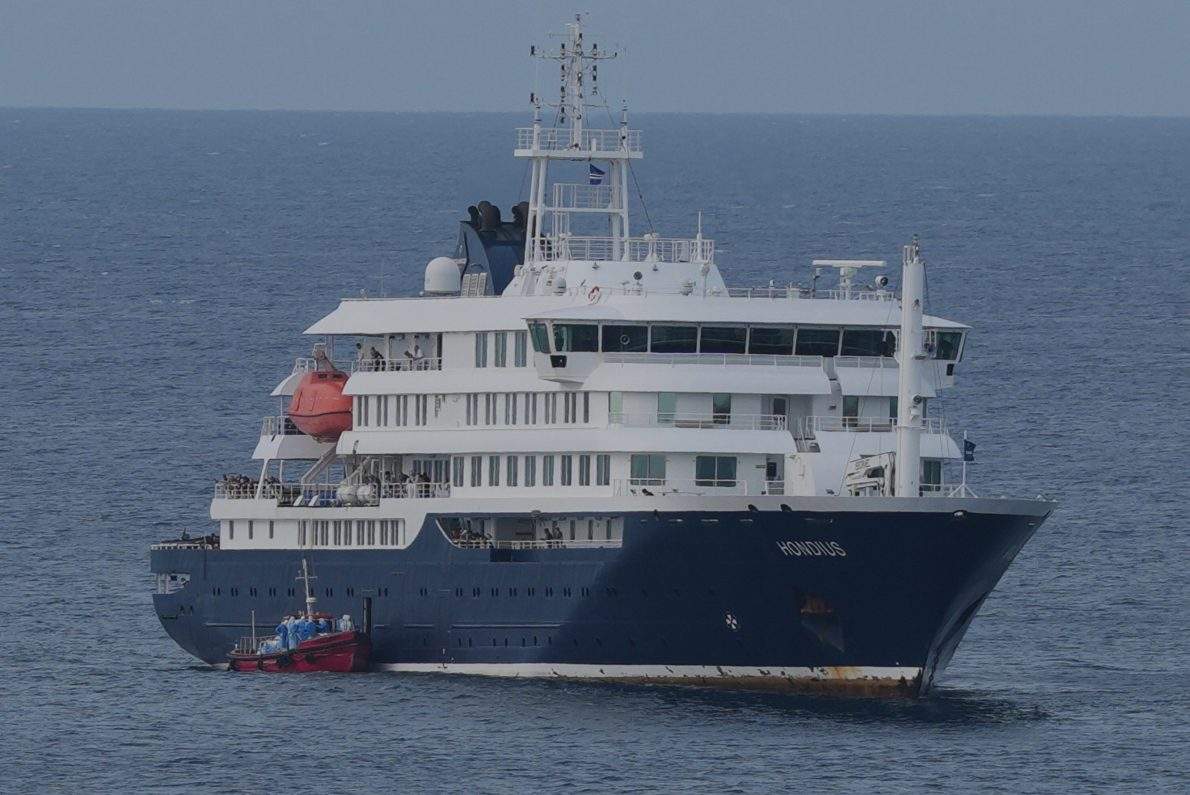
The recent media frenzy surrounding a Canadian passenger who contracted hantavirus on a cruise ship is a masterclass in public health illiteracy.
Headlines screamed about the "cruise ship virus." Outlets tracked the patient's recovery like it was a medical miracle. The underlying message was clear: step onto a cruise liner, and you are stepping into a floating biohazard petri dish.
It is a neat, terrifying story. It is also completely wrong.
By fixating on the cruise ship as the source of the threat, the public, the media, and even mainstream travel commentators are missing the entire mechanics of how this pathogen operates. They are asking how to sanitize ships when they should be looking at rural mechanics. They are demanding policy overhauls where simple biology already dictates the limits of transmission.
Let's dissect the panic, look at the actual data, and explain why worrying about catching hantavirus on your next vacation is a spectacular waste of mental energy.
The Geography of Misunderstanding
To understand why the cruise ship narrative is a farce, you have to look at how Orthohantavirus actually replicates and spreads.
Hantaviruses are zoonotic. They are not human-to-human pathogens (with the exceedingly rare exception of the Andes virus strain in South America, which was not the culprit here). You do not catch it because the guy in the cabin next to you coughed. You catch it through the aerosolization of excreta from infected rodents—specifically deer mice, white-footed mice, rice rats, or cotton rats.
Now, let's look at the environment of a modern cruise ship.
These vessels are steel monoliths scrubbed continuously with industrial-grade disinfectants. They do not possess the specific ecosystem required to sustain wild deer mouse populations. Mice do not thrive in the middle of the Atlantic Ocean on a diet of buffet scraps inside a steel hull. They need nesting grounds. They need fields, barns, and rural outbuildings.
When a passenger tests positive for hantavirus while on a cruise, the "lazy consensus" assumes the ship is the vector. The reality is a simple timeline problem. The incubation period for Hantavirus Pulmonary Syndrome (HPS) is anywhere from one to eight weeks. If a passenger tests positive three days into a cruise, they brought the virus with them from land. They inhaled the dried urine or feces of a rodent while cleaning out their suburban garage, hiking in a rural area, or opening up a summer cottage weeks before they ever boarded the ship.
I have spent years analyzing travel risk metrics and crisis management. The biggest mistake organizations and travelers make is misattributing the source of a risk based on where the symptoms manifest rather than where the exposure occurred. It is the equivalent of getting food poisoning from a sketchy roadside diner, boarding a plane, throwing up in mid-air, and then blaming the airline's pretzels.
The Statistical Reality Check
Let’s look at the actual data provided by the Centers for Disease Control and Prevention (CDC) and public health agencies.
Hantavirus is incredibly rare. In the United States, only a handful of cases are reported annually—usually between 20 and 40 cases per year across the entire population. To put that in perspective, you are statistically more likely to be struck by lightning twice than to contract hantavirus while sitting on a cruise ship balcony.
The table below breaks down the reality of travel-related health risks based on actual incidence rates versus media coverage.
| Disease Vector | Common Transmission Mode | Actual Risk Level to Cruisers | Media Panic Index |
|---|---|---|---|
| Norovirus | Fecal-oral, contaminated surfaces | Moderate (Gastrointestinal outbreaks occur) | Extremely High |
| Influenza / Respiratory | Airborne droplets, close contact | High (Enclosed spaces favor spread) | Low to Medium |
| Hantavirus | Aerosolized rodent excreta | Near Zero (Requires specific rural wildlife contact) | Apocalypse Level |
The public focuses on hantavirus because the mortality rate for HPS is genuinely alarming—roughly 38%. But a high mortality rate does not equal a high probability of infection. Merging the two is a cognitive error that leads to terrible decision-making.
Imagine a scenario where a traveler cancels a $5,000 cruise out of fear of hantavirus, only to spend that vacation week clearing out an old, dust-covered woodpile in their backyard without a mask. They have actively moved away from a statistically safe environment and directly into the prime ecological niche of the deer mouse, all while believing they made the safer choice. That is the cost of fear-driven ignorance.
The Flawed Questions Everyone Is Asking
If you look at internet forums and public health Q&As following this news story, the questions are fundamentally broken.
Question: "How do I know if my cruise cabin has been sanitized for hantavirus?"
Correction: You don't need to know, because the cabin steward isn't dealing with wild field mice. Standard housekeeping protocols that eliminate norovirus and coronaviruses easily destroy the lipid envelope of hantaviruses.
Question: "Should cruise lines test passengers for hantavirus before boarding?"
Correction: This is logistically impossible and scientifically useless. Because of the long incubation period and lack of rapid asymptomatic screening tools, you cannot screen for it at the gangway. Furthermore, because it does not spread from person to person, an infected passenger poses zero risk to the other 3,000 people on board.
The mainstream travel industry loves to pacify these flawed questions with comforting, meaningless PR statements about "enhanced cleaning protocols." This fuels the delusion. By promising to clean away a threat that isn't there, they validate the false premise that the threat existed on the ship in the first place.
The Real Risk of Over-Sanitization
There is a dark side to reacting to phantom threats. When cruise lines are forced by public pressure to respond to non-existent rodent-borne threats, they divert resources.
A crew focused on defending against an imaginary rodent infestation is a crew that is distracted from the actual, proven vectors of cruise ship illness: norovirus and seasonal influenza. Those are the pathogens that actually disrupt vacations and endanger the elderly. Norovirus thrives on high-touch surfaces like elevator buttons and buffet tongs. It requires rigorous, targeted hand hygiene and specific chemical agents to neutralize.
When we demand that the industry pivot to address headline-grabbing, hyper-rare anomalies, we dilute the efficacy of standard public health measures. We trade effective, boring safety protocols for theatrical, useless gestures.
Stop Looking at the Ship
If you want to avoid hantavirus, look at your home, not your itinerary.
The real work of prevention happens in the mundane spaces of everyday life. It happens when you seal the gaps in your home's foundation. It happens when you use a disinfectant spray to wet down rodent droppings in your shed rather than sweeping them up dry and breathing in the dust.
If you are healthy enough to walk across the gangway of a cruise ship, you have already bypassed the environments where hantavirus poses a tangible danger. Stop letting sensationalized medical anomalies dictate your risk assessment. Pack your bags, board the ship, and worry about the real dangers of travel—like sunburn, overpricing, and missing the departure clock at the port.