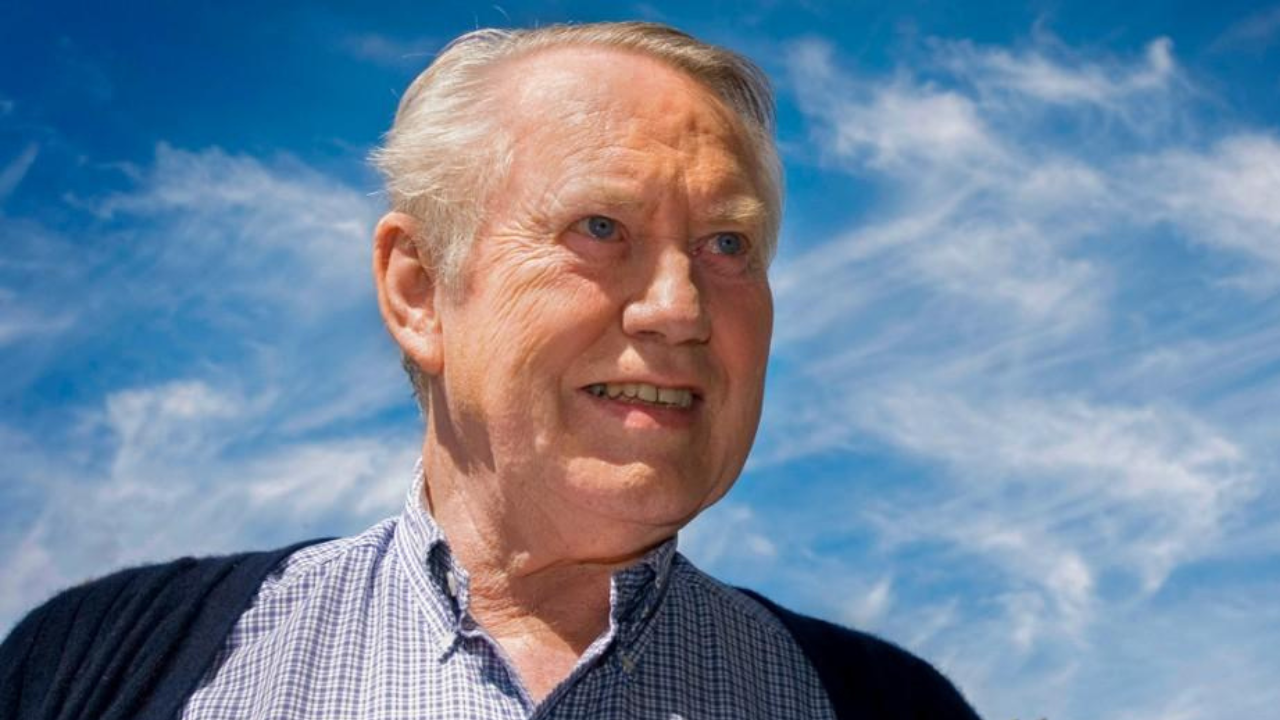
Most billionaires want their names carved into limestone. They build massive glass towers, fund university wings with strict naming rights, and establish perpetual foundations designed to outlive the sun. Then there was Chuck Feeney.
He didn't want his name on a building. He didn't want a tax shelter that trickled out 5% of its value every year just to keep the lawyers wealthy. Feeney wanted his bank account to read exactly $0.00 when he breathed his last.
When he died in 2023 at the age of 92, he had achieved his goal. The co-founder of Duty Free Shoppers (DFS) made roughly $8 billion over his lifetime. He gave away 99.9% of it in secret. While the rest of the Forbes 400 list competed for the highest rank, Feeney was aggressively trying to drop off it entirely. He lived in a modest, rented apartment in San Francisco, wore a $15 Casio watch, flew economy, and carried his papers in a plastic shopping bag.
This isn't just a feel-good story about an eccentric old man who didn't like fancy cars. It's a blueprint for an aggressive, high-impact philosophy called Giving While Living. It exposes the hollow nature of modern corporate charity and proves that waiting until you die to do good is just lazy asset management.
The Secret Heist of an $8 Billion Fortune
You can't understand Feeney's philanthropy without understanding how he built his empire. Born into a working-class Irish-American family in Elizabeth, New Jersey during the Great Depression, he learned how to hustle early. He shoveled snow, sold Christmas cards door-to-door, and eventually served as a U.S. Air Force radio operator during the Korean War.
The GI Bill got him into Cornell University's School of Hotel Administration. To survive, he sold bologna sandwiches to hungry classmates. That drive led him and classmate Robert Miller to spot a massive loophole in the 1950s: selling tax-free liquor and luxury goods to American servicemen and tourists overseas.
They founded Duty Free Shoppers in 1960. When the Japanese economy boomed in the mid-1960s and its citizens started traveling the world with cash to burn, DFS exploded into a global retail behemoth.
But the money quickly started suffocating Feeney. He realized he had no interest in the trappings of extreme wealth. In 1982, he created The Atlantic Philanthropies. Two years later, in 1984, he did something that baffled the few people who found out: he secretly transferred his entire 38.75% stake in DFS—worth hundreds of millions at the time—to his foundation.
He no longer owned his business. His business partners didn't even know. For the next fifteen years, Feeney went to work every day, grew the business, made smart bets on companies like Facebook, Priceline, and Alibaba, and let all the cash flow directly into a charity that operated completely in the shadows.
Why Anonymity is a Business Strategy, Not a Gimmick
Forbes eventually dubbed Feeney the "James Bond of Philanthropy" because of his stealth tactics. If an institution accepted money from Atlantic Philanthropies, they had to sign a strict contract. If they revealed where the cash came from, the funding stopped immediately.
This wasn't just humility; it was brilliant strategy.
- It avoided the luxury tax of ego: When a billionaire gives $100 million to a university and demands their name on the stadium, half the energy is spent on public relations, galas, and plaque designs. Feeney cut out the administrative bloat.
- It forced other donors to step up: By keeping his donations anonymous, Feeney prevented other wealthy donors from saying, "Oh, Chuck took care of it, we don't need to give."
- It allowed for nimble, high-risk bets: If a public foundation funds a project that fails, it faces a PR disaster. Because nobody knew Atlantic was behind the money, Feeney could invest in highly volatile, high-reward projects without worrying about public blowback.
The secret finally leaked in 1997. Feeney and his partner decided to sell DFS to the French luxury conglomerate LVMH. A presumptive lawsuit from his business partner threatened to expose that Feeney didn't actually own his shares anymore—his foundation did. Feeney chose to get ahead of the story and outed himself to The New York Times. The business world was stunned to find out that one of the planet's richest men had been functionally broke for over a decade.
The Failure of Modern Billionaire Foundations
Look at how philanthropy works today. The standard model is to build a massive endowment, invest the capital so it grows forever, and payout the bare legal minimum—usually around 5%—each year to maintain tax-exempt status.
It's self-preserving bureaucracy. The foundation becomes an institution focused on its own survival rather than solving the problems it was built to fix.
Feeney hated this. He argued that if you have the resources to fix a problem today, waiting fifty years to deploy them is a moral failure. Money loses its purchasing power against human suffering over time. A dollar spent curing a disease or building a school right now yields decades of compounding benefits.
He designed Atlantic Philanthropies to self-destruct. He set a hard deadline to give away every single dollar and close the doors by 2020.
Where the $8 Billion Actually Went
Feeney didn't sprinkle money around randomly. He ran his charity like a venture capital firm, looking for undervalued assets and high-impact leaders.
- Global Education ($3.7 Billion): He poured nearly $1 billion into Cornell University alone, transforming the physical campus and funding a massive tech campus on Roosevelt Island in New York City. He also single-handedly remade the higher education landscape in Ireland, investing over $1 billion into institutions like the University of Limerick.
- Public Health and Science: He spent hundreds of millions modernizing Vietnam’s healthcare infrastructure, built biomedical research hubs in Australia, and launched the Global Brain Health Institute to combat dementia.
- Social Justice ($870 Million): He funded grassroots campaigns that secured the passage of the Affordable Care Act (Obamacare) and poured $62 million into efforts to abolish the death penalty in the United States.
The Blueprint for Your Own Wealth Strategy
You probably don't have $8 billion sitting in a Swiss bank account. That doesn't mean Feeney's logic doesn't apply to you. The core lesson of his life is about the velocity of impact and the illusion of ownership.
People hoard resources because they're terrified of an uncertain future. They assume that leaving a massive pool of money behind after they die is the ultimate legacy. It's not. It's usually just a recipe for family squabbles and estate taxes.
If you want to adopt a high-impact mindset inspired by the world's most effective giver, start changing how you deploy your own capital right now.
1. Shorten Your Time Horizon
Stop waiting for retirement or a milestone age to become useful. Look at your local community or causes you care about today. If you have surplus cash, put it to work immediately. The return on investment for a community center, a scholarship, or a local business loan is much higher when you're alive to guide it and see the results.
2. Strip Away the Need for Recognition
Test your own motives. Write a check or help someone out without telling a single soul. Don't post it on LinkedIn. Don't mention it over dinner. See how it changes your relationship with your money. When you remove ego from the equation, you become a far more objective decision-maker.
3. Target the Root, Not the Symptom
Feeney didn't give money to buy band-aids; he funded the hospitals. Look at where your money or time goes. Are you funding temporary relief, or are you investing in structural changes that will eliminate the problem permanently?
Warren Buffett and Bill Gates both credit Feeney as their primary inspiration for the Giving Pledge. But while their foundations will grind on for generations under the weight of massive committees, Feeney achieved the ultimate luxury. He watched his money change the world with his own two eyes, signed the papers to close his foundation, and spent his final days in peace, owning absolutely nothing.
Take a hard look at your balance sheet. Figure out what you actually need to survive, and start pushing the rest into the world while you’re still around to enjoy the view.