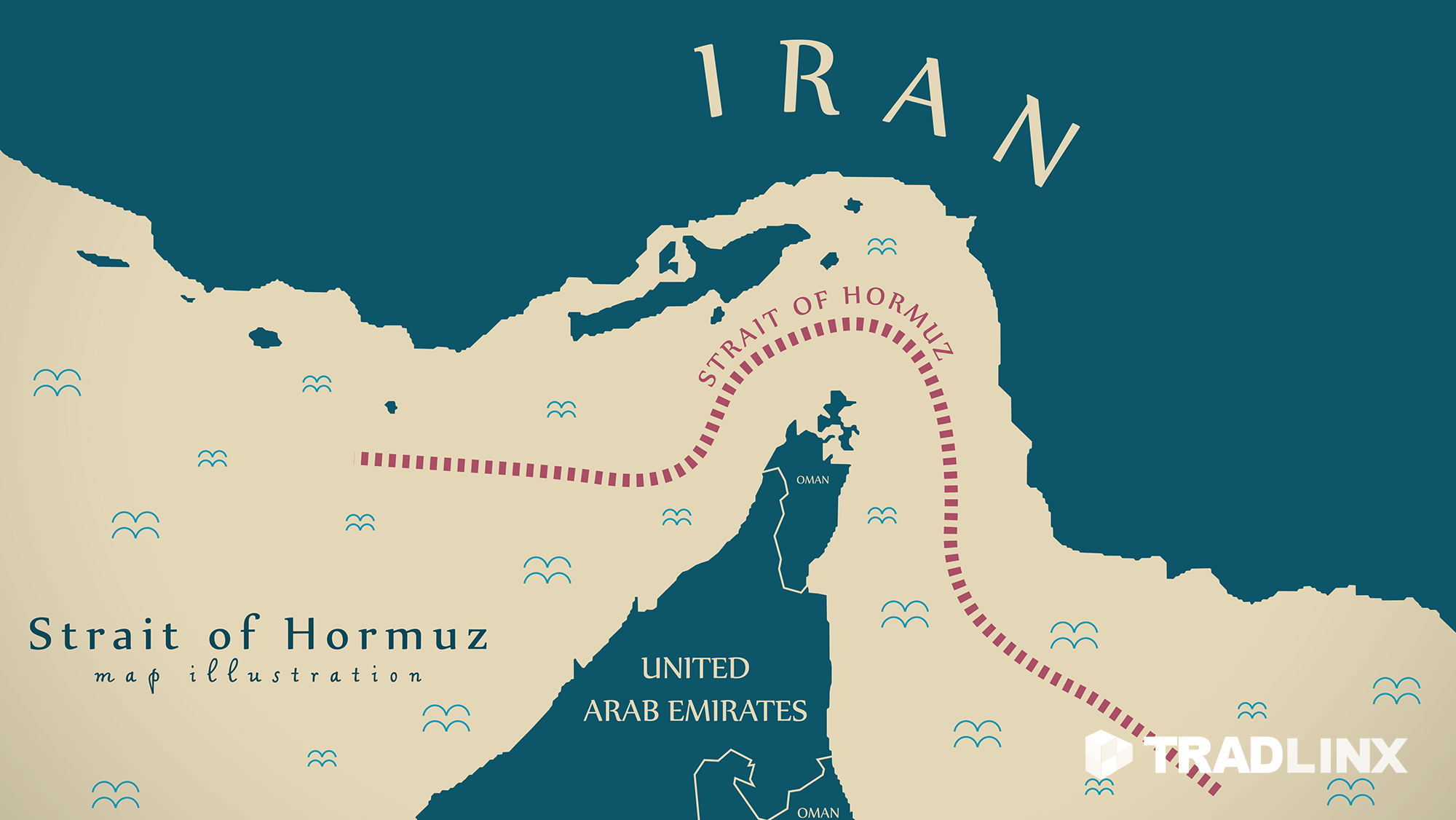
The maritime world just received another jarring reminder that the Strait of Hormuz remains the world’s most volatile jugular vein. When Iranian forces intercepted a commercial vessel in these narrow waters, it wasn't a random act of piracy or a simple maritime dispute. It was a calculated signal sent through the global supply chain. This latest seizure serves as a cold demonstration of Tehran’s ability to throttle the flow of global energy at will, turning a vital shipping lane into a theater of geopolitical leverage.
For those tracking the movement of crude oil and liquefied natural gas, the incident is a flashing red light on a dashboard already crowded with warnings. The Strait of Hormuz is a geographic anomaly that dictates the economic health of nations thousands of miles away. Approximately one-fifth of the world’s total oil consumption passes through this strip of water, which narrows to just 21 miles at its tightest point. When a ship is boarded here, the insurance premiums in London spike, the energy traders in Singapore scramble, and the political stakes in Washington reach a fever pitch.
The Mechanics of Maritime Harassment
Iran’s approach to naval confrontation has evolved from the crude "Tanker War" of the 1980s into a sophisticated doctrine of asymmetric pressure. They do not need a blue-water navy to challenge a superpower. Instead, they utilize the Islamic Revolutionary Guard Corps Navy (IRGCN) to deploy fast-attack craft, drones, and naval mines. The goal is rarely to sink a ship; the goal is to create a state of perpetual, unmanageable risk.
The recent boarding of the cargo vessel followed a familiar pattern of "legalistic" pretexts. Iranian authorities often cite judicial orders, environmental concerns, or alleged collisions as the justification for these interventions. It provides a thin veneer of international law to what is essentially a kinetic diplomatic negotiation. By detaining a ship, Tehran gains a physical asset to trade—a human and commercial bargaining chip that forces the vessel's flag state to the negotiating table.
This isn't just about regional squabbles. It is a direct response to the enforcement of Western sanctions. When Iranian oil is seized on the high seas by US authorities, a "counter-seizure" in the Strait is the standard retaliatory move. It is a tit-for-tat cycle where the global shipping industry pays the price for the friction between sovereign states.
The Insurance Ripple Effect
The immediate victim of these tensions, beyond the crew on board, is the bottom line of every shipping company operating in the Middle East. The Joint War Committee (JWC) in London, which represents the interests of the Lloyd’s insurance market, has long designated the Persian Gulf and the Strait of Hormuz as "listed areas." This means any ship entering these waters must notify their underwriters and pay an additional war risk premium.
When an incident like this occurs, those premiums don't just go up; they stay up. A single boarding can add hundreds of thousands of dollars to the cost of a single voyage. These costs are never absorbed by the shipping lines. They are passed down through the supply chain, eventually manifesting as higher costs at the fuel pump or increased prices for consumer goods that relied on that energy for production.
Risk is the only truly global currency. In the Strait, that currency is being devalued by uncertainty. Shipping giants are now forced to weigh the cost of long-term rerouting—sailing around the Cape of Good Hope—against the risk of being caught in the crosshairs of the IRGCN. While rerouting avoids the Strait, it adds weeks to transit times and burns through massive amounts of additional bunker fuel, creating its own set of economic and environmental headaches.
Why Conventional Deterrence is Faltering
The presence of the US Fifth Fleet and various international maritime coalitions was supposed to be the definitive answer to Iranian aggression. However, the reality on the water is far more complex. A massive destroyer or an aircraft carrier is a formidable tool for a total war, but it is remarkably poorly suited for preventing a 15-person boarding party from climbing onto a tanker in the middle of the night.
The Iranians operate in the "gray zone"—the space between peace and open conflict. They engage in actions that are provocative enough to disrupt the status quo but calculated enough to stay below the threshold that would trigger a massive military retaliation. If the US Navy fires on an Iranian fast-boat during a boarding attempt, it risks a full-scale escalation that could close the Strait entirely. Iran knows this. They use the West's desire for stability as a shield for their own instability-inducing tactics.
Furthermore, the technology of the shadow war has shifted. The rise of loitering munitions and "suicide drones" means that Iran can now strike or harass vessels from hundreds of miles away with high precision and low cost. They no longer need to put their own sailors at risk to disable a commercial ship’s steering or communication equipment.
The False Promise of Pipelines
There is a common argument that the world is becoming less dependent on the Strait of Hormuz due to new pipelines across Saudi Arabia and the United Arab Emirates. While these projects exist, they are nowhere near capable of replacing the sheer volume of the waterway.
- The East-West Pipeline (Saudi Arabia): Can move approximately 5 million barrels per day, but its capacity is often used for domestic supply or is already spoken for by long-term contracts.
- The Habshan–Fujairah Pipeline (UAE): Bypasses the Strait to the Gulf of Oman, but its 1.5 million barrels per day capacity is a drop in the bucket compared to the 20 million barrels that transit the Strait daily.
The math simply doesn't work. There is no "Plan B" for the Strait of Hormuz. The global economy is physically tethered to this specific coordinates on the map. This geographic reality gives Iran a permanent seat at the table of global power, regardless of their economic isolation or internal political strife.
The Human Cost in the Hold
We often talk about the Strait in terms of "barrels per day" or "market volatility," but there is a human element that is frequently ignored. Every time a ship is seized, dozens of merchant seafarers—most of them from developing nations like the Philippines or India—become pawns in a game they didn't sign up for. These crews are held for months in legal limbo, often in deteriorating conditions, while diplomats haggle over the fate of the hull and its cargo.
The psychological impact on the maritime workforce is profound. We are already seeing a "brain drain" in the merchant marine sector, where experienced officers are refusing contracts that take them through the Persian Gulf. If the industry cannot guarantee the safety of its workers, the logistical backbone of the world will begin to fracture. You can automate a port, but you cannot yet sail a 300,000-ton VLCC (Very Large Crude Carrier) through a combat zone without a human at the helm.
A Cycle Without an Exit
The tension in the Strait of Hormuz is not a problem to be "solved" through a single treaty or a military strike. It is a condition to be managed. As long as the West uses the global financial system as a weapon against Tehran, Tehran will use the global shipping system as a weapon against the West.
The international community's reliance on "freedom of navigation" as a self-evident truth is being tested. In the Strait, navigation is only as free as the most recent diplomatic cable suggests. The cargo ship recently boarded by Iran is just the latest data point in a decades-long experiment in how much pressure the global economy can withstand before it breaks.
Companies are now looking at "dark fleets"—tankers that operate with their transponders turned off and change names frequently to evade detection and sanctions. This shadow economy makes the waters even more dangerous, as it increases the risk of collisions and environmental disasters in one of the most crowded waterways on Earth. We are moving toward a bifurcated maritime world: one that follows the rules and pays the price, and one that operates in the shadows and takes the risk.
The incident near Hormuz is a warning that the era of predictable, safe maritime trade is over. The ocean is becoming a contested space again, and the Strait is the primary laboratory for this new brand of naval friction. Sovereignty is being asserted not through flags and borders, but through the barrel of a rifle on the deck of a freighter.
The real danger isn't that a single ship was taken. The danger is that the world has become accustomed to it. When we treat the hijacking of global commerce as a routine news cycle, we have already lost the deterrent value of the law. The next escalation won't be a boarding; it will be a blockade. And the global economy has no defense against a closed door at the mouth of the Gulf.
Take a hard look at the map and realize that every light in your office and every gallon in your tank is connected to a 21-mile wide strip of water. Then ask yourself how much longer you think that thread can hold under this kind of tension.
Stop looking for a resolution and start preparing for a permanent state of high-risk transit.