The official line coming out of Miami is polished, bipartisan, and designed to sell tickets. Rodney Barreto, co-chair of the Miami Host Committee, recently went on the record to say that Secretary of State Marco Rubio personally assured him that U.S. Immigration and Customs Enforcement (ICE) will not be "at the stadium" during the 2026 World Cup. It is a comforting thought for a city built on the backs of immigrants and for a global audience currently eyeing the American border with trepidation. But for those who have spent decades tracking federal enforcement and large-scale event security, the statement feels less like a guarantee and more like a carefully worded technicality.
Rubio’s reassurance addresses the physical footprint of the stadium bowl. It does not address the miles of transit corridors, fan zones, or the massive digital surveillance net that will blanket every host city from Seattle to Miami.
The 2026 World Cup is more than a soccer tournament. It is a logistical behemoth that requires the integration of local police, state troopers, and dozens of federal agencies. While a high-ranking official may promise that ICE agents won’t be checking IDs at the turnstiles, the reality of "Homeland Security" operations is far more complex. Under the current administration, the mandate for immigration enforcement has intensified. To suggest that one of the most visible federal agencies will simply sit out the largest sporting event in history is an oversimplification that borders on the deceptive.
The Perimeter Shell Game
Security for an event of this magnitude is organized in concentric circles. The inner circle—the stadium itself—is often managed by private security and local law enforcement. This is the area Barreto and Rubio are talking about. It is easy to keep ICE out of the VIP boxes.
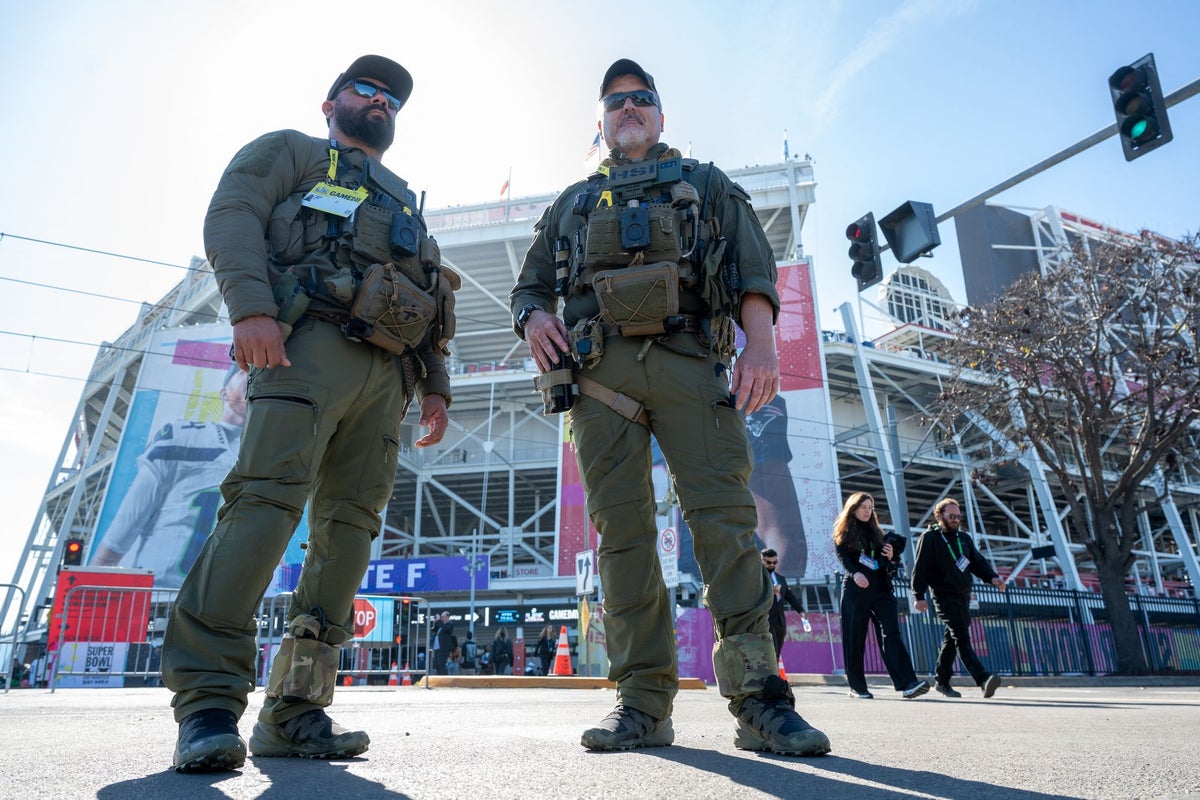
However, the "World Cup city" extends far beyond the grass of Hard Rock Stadium. The federal government designates these tournaments as Special Event Assessment Rating (SEAR) Level 1 events. This designation triggers a massive influx of federal resources. Even if ICE Enforcement and Removal Operations (ERO) stay away from the gates, Homeland Security Investigations (HSI)—a massive branch of the same parent agency—will be everywhere. HSI handles everything from human trafficking to intellectual property theft. They wear the same "POLICE/ICE" jackets. To a fan traveling from South America or Europe, the distinction between an agent investigating counterfeit jerseys and an agent checking visa status is non-existent.
The danger isn't necessarily a "roundup" during the national anthem. The danger is the "choke point" strategy. Security perimeters for 2026 are expected to be miles wide. To get anywhere near a match, fans must pass through multiple layers of scrutiny. If you are not at the stadium, but you are at a train station three blocks away, are you still "protected" by Rubio’s handshake deal?
The Digital Dragnet
We are moving past the era where a physical agent needs to stand on a street corner to be a threat. The 2026 World Cup will serve as a massive testing ground for advanced surveillance. Every host city is currently upgrading its "Real Time Crime Center."
- Facial Recognition: Cameras at every entry point, integrated with federal databases.
- License Plate Readers: Tracking every vehicle moving in and out of the host city’s hospitality zones.
- Data Sharing: Local police departments, who have promised not to act as "immigration agents," often feed their data into federal systems like the National Crime Information Center (NCIC).
Once a person’s data enters the system, the promise of a "safe stadium" vanishes. A fan could attend a match on Sunday without incident, only to have their biometric data flagged and processed by an ICE field office on Monday morning. The reassurance provided to Miami officials covers the 90 minutes of play. It offers zero protection for the other 23 hours of the day.
The Shadow of 2024
Miami’s anxiety isn't rooted in theory. It is rooted in the 2024 Copa América final. That night, Hard Rock Stadium saw a total collapse of security as fans without tickets breached the gates. It was a chaotic, dangerous scene that embarrassed the city on a global stage. The federal response to that failure hasn't been less enforcement; it has been a demand for more control.
When the 2026 tournament begins, the pressure to prevent a repeat of that chaos will be immense. Law enforcement will prioritize "order" above all else. In the current political climate, "order" is often synonymous with aggressive identity verification. The administration has made it clear that immigration enforcement is a pillar of its domestic policy. Expecting them to carve out a four-week exception for a soccer tournament is naive.
The Business of Fear
There is a financial imperative behind these reassurances. FIFA and the local host committees are terrified of a "no-show" crisis. If fans from Mexico, Central America, or North Africa believe that entering the United States is a one-way ticket to a detention center, they will stay home. The economic impact of the World Cup depends on millions of visitors spending billions of dollars on hotels, food, and transport.
Rubio is a savvy politician. He knows that Miami’s economy needs this tournament to be a success. By providing "personal assurances," he cools the temperature and keeps the tourism dollars flowing. But "assurances" are not law. They are not executive orders. They are not binding policy. They are words spoken in a room to settle a nervous committee.
The Reality for Host Cities
While Miami gets the headlines because of Rubio’s involvement, other host cities are facing the same friction. In Los Angeles and Houston, local advocates are already sounding the alarm about the lack of formal "sanctuary" protections for the tournament period. The "Save the World Cup" bill introduced in Congress was a recognition that without legislative intervention, the stadium perimeters are fair game for federal agents. That bill has faced a steep uphill battle.
The hard truth is that the 2026 World Cup will be the most heavily policed event in the history of the United States. The federal government does not spend hundreds of millions of dollars on security to leave "gaps" in its enforcement net. If you are a visitor or a resident with an unsettled immigration status, the stadium might be a "no-go zone" for ICE, but the city around it will be a fortress.
Relying on the word of a politician to protect you from a federal agency’s core mission is a dangerous gamble. The security plan for 2026 is being written in ink, while the promises are being whispered in the wind. When the first whistle blows, the only thing that will matter is the badge on the street, not the quote in the newspaper.
Check the fine print of your visa, verify the local laws of the city you are visiting, and understand that the "Safe Stadium" promise ends the moment you step off the stadium property. The net is being cast wide; the stadium is just the hole in the center.