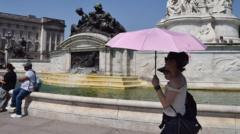
The fifth heatwave of the year is barreling toward us, and the thermometer is poised to breach 35C next week. Meteorologists track the pressure ridges. City officials dust off emergency cooling protocols. Public transit agencies issue delayed warnings about warped steel rails and buckling tarmac. Everyone acts surprised.
We should not be surprised.
This routine has become our new normal, repeated with the mind-numbing predictability of a bad metronome. Yet our societal response remains stuck in emergency mode, treating a systemic structural failure as an acute inconvenience. The core issue is not simply that the air is getting hotter. The crisis lies in our refusal to admit that the infrastructure supporting modern civilization was engineered for a climate that no longer exists.
The Anatomy of a Thermal Anomaly
To understand why a 35C threshold triggers cascading failures, one must look beneath the asphalt. Traditional urban planning relies heavily on concrete, brick, and dark roofing materials. These compounds absorb solar radiation during daylight hours and release it slowly long after the sun sets.
This dynamic creates the urban heat island effect. During an intense heatwave, downtown cores can remain 5C to 10C hotter than surrounding rural areas well into the night. Buildings cannot shed their thermal load. People inside apartment blocks without air conditioning endure prolonged physiological stress that compounds over consecutive days.
When a heatwave extends beyond three days, cumulative fatigue sets in. Human bodies fail to cool down during sleep. Electrical grids reach record demand peaks as every compressor, fan, and window unit draws maximum current simultaneously. Transformers blow. Substations fail. The system breaks precisely when it is needed most.
The Myth of the Quick Fix
Municipal leaders love quick fixes. They hand out bottled water at subway stations, open air-conditioned community centers, and publish public service announcements telling people to stay hydrated. These measures are necessary for triage, but they are entirely performative when deployed as a long-term strategy.
Handing out water bottles while approving developments with vast, unshaded parking lots and glass-tower facades is pure hypocrisy. It treats the symptom while supercharging the disease.
Consider the architectural choices dominating our skylines over the past four decades. Sealed glass curtain walls act as solar ovens. Without external shading devices or operable windows, these structures require massive mechanical cooling systems just to remain habitable. When the power blips, they transform into vertical greenhouses within hours. We built glass boxes in the sun and now act mystified that they trap heat.
Economic Tolls Hidden in Plain Sight
The financial cost of extreme heat goes far beyond emergency medical bills and overloaded power grids. Productivity plummets when ambient temperatures exceed safe thresholds. Outdoor laborers in construction, agriculture, and delivery services face severe occupational hazards.
When workers must take extended shade breaks or slow their pace to prevent heat stroke, project timelines stretch and economic output drops. Manufacturing facilities struggle to keep internal machinery from overheating, requiring energy-intensive industrial chillers that drive up operational overhead.
Insurance markets are beginning to factor these systemic risks into commercial property underwriting. Buildings lacking passive cooling resilience face skyrocketing premiums or outright coverage denials. The market is slowly realizing that a structure baking in chronic heatwaves is a depreciating asset with a high probability of catastrophic failure.
The Failure of the Grid
Our electrical transmission infrastructure represents another critical vulnerability. High ambient temperatures degrade the efficiency of power lines. Resistance increases as conductors heat up, meaning more electricity is lost as heat during transmission just as demand hits an all-time high.
Power plants themselves suffer. Thermal and nuclear generation facilities rely on rivers and lakes for cooling water. When those water bodies warm up during a heatwave, plants must either reduce output or risk shutting down entirely to avoid violating environmental temperature limits for aquatic life.
We have engineered a grid that operates at maximum vulnerability precisely when the weather demands maximum reliability.
Retrofitting the Concrete Jungle
Mitigating the threat of recurring heatwaves requires a total overhaul of how we construct and manage our living spaces. Superficial adjustments will no longer suffice.
Urban forestry offers one of the few high-return interventions available. Mature street trees do not merely provide shade; through transpiration, they actively cool the surrounding air. A well-placed canopy can lower local surface temperatures by 10C to 20C compared to unshaded asphalt. Yet cities routinely prioritize underground utility placement and road widening over tree preservation, treating greenery as decorative landscaping rather than vital municipal infrastructure.
Roofing materials demand equal scrutiny. Dark shingle roofs should be phased out entirely through building code updates, replaced by high-albedo reflective coatings or extensive green roofs that absorb rainfall and insulate buildings naturally.
The Regulatory Bottleneck
The technology to cool our cities sustainably exists. Passive design principles, cross-ventilation, earth-coupling, and high-efficiency heat pumps are well-documented engineering practices. The barrier is not technical. It is regulatory and financial.
Short-term profit incentives drive developers to use cheap, heat-absorbent materials that maximize initial gross floor area while externalizing long-term energy and health costs onto the public. Zoning laws frequently prohibit or heavily restrict traditional vernacular cooling methods, such as deep overhangs, operable shutters, and low-rise courtyard configurations that promote natural airflow.
Until zoning codes penalize thermal inefficiency with the same severity they apply to structural safety violations, developers will continue building ovens and calling them luxury apartments.
Preparing for the Inevitable Peak
As the upcoming heatwave pushes temperatures toward 35C and beyond, the emergency alerts will flash across mobile screens. Reporters will stand in front of fountains showing people splashing around, framing the weather as a temporary summer aberration.
It is time to drop the pretense.
This is the climate we live in now. Every consecutive heatwave serves as a stress test for a society that refuses to adapt its foundations. We can continue reacting with temporary shelters and bottled water, or we can fundamentally redesign our cities to withstand the fire we have built around ourselves. The thermometer does not negotiate, and it certainly does not care about our zoning disputes.