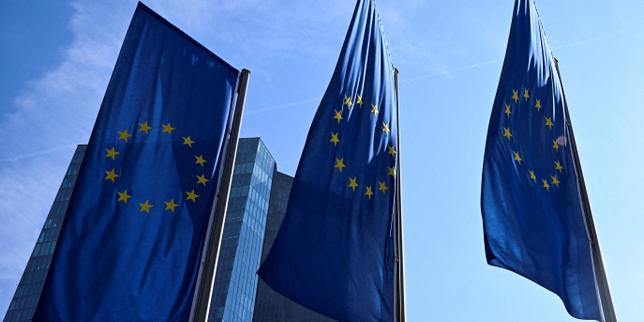
The European Union is currently hurtling toward a fiscal wall that most of its citizens don't even know exists. While headlines focus on geopolitical skirmishes and energy transitions, a much more fundamental war is being waged in the windowless rooms of Brussels over the next Multiannual Financial Framework (MFF). At the heart of this conflict sits the so-called "Frugal" coalition—led by the Netherlands, Denmark, Austria, and Sweden—who are currently digging in their heels against a tidal wave of spending demands. These nations aren't just being difficult. They are terrified that the EU’s current spending trajectory is a slow-motion suicide pact for national sovereignty and fiscal sanity.
The core premise is simple. The EU wants to spend more on defense, green energy, and technology to keep up with the United States and China. The Frugals, however, argue that the budget should be capped at roughly 1% of the EU's Gross National Income (GNI). They see the current trend toward "common debt" as a dangerous precedent that transforms a trade bloc into a transfer union.
The Myth of Necessary Expansion
Brussels insiders often argue that the EU cannot meet its new challenges without a massive cash infusion. They point to the "Draghi Report," which suggests Europe needs an additional €800 billion per year in investment to remain competitive. To a bureaucrat, that sounds like a call for a bigger central budget. To a Dutch taxpayer, it sounds like a heist.
The Frugals aren't arguing that the world hasn't changed. They are arguing that the EU is historically incapable of prioritizing. Every time a new crisis emerges, the Commission asks for new money instead of reallocating the billions already sitting in "Cohesion Funds" or the "Common Agricultural Policy" (CAP). The CAP alone still eats up about one-third of the total EU budget. Why are we funding 20th-century farming subsidies while begging for 21st-century AI investment?
This is the central friction point. The Frugals want "modernization through reallocation." They want to take the money away from inefficient legacy programs and move it into high-tech defense and border security. The Southern and Eastern blocs, however, view those legacy funds as their birthright. This creates a political stalemate where the only "solution" is to print more money or issue more debt, both of which the Frugals view as a betrayal of the Treaties.
The Shadow of NextGenerationEU
The elephant in the room is the €800 billion recovery fund created during the pandemic. At the time, it was sold as a "one-off" measure to deal with an unprecedented global catastrophe. We now know that was a convenient fiction.
For the "Friends of Cohesion"—nations like France, Italy, and Spain—the recovery fund was a proof of concept. They saw that the sky didn't fall when the EU issued collective debt. Now, they want to make that temporary mechanism permanent. They argue that if the EU is to survive as a geopolitical power, it must have a "permanent fiscal capacity."
The Frugals see this as a trap. They look at the current interest rates and the mounting cost of servicing that "one-off" debt and realize that the bill is coming due just as the next budget cycle begins. They are not being "mean" or "un-European." They are looking at the math. If the EU continues to issue debt without a massive increase in its own revenue—so-called "Own Resources" like carbon taxes or plastic levies—national contributions will have to skyrocket. For a country like Denmark, that is a political non-starter.
The German Pivot
Historically, Germany was the ultimate arbiter in these fights. They would let the Frugals bark for a while, then eventually open their checkbook to keep the peace. That era is over.
Germany’s "debt brake" and its own internal economic stagnation have turned the EU's largest paymaster into a de facto member of the Frugal camp. When Germany starts worrying about where the next billion is coming from, the power dynamic in Brussels shifts violently. The Frugal Four have effectively become the Frugal Five, and that bloc represents enough economic weight to veto any budget proposal that relies on massive new debt.
This shift has created a vacuum of leadership. France continues to push for "Strategic Autonomy," which is largely code for "Spending German and Dutch money on French-led industrial projects." Without a willing Germany to bridge the gap, the negotiations for the 2028-2034 budget are shaping up to be the most toxic in the Union's history.
The Reform That Nobody Wants to Talk About
If the EU were a corporation, an analyst would look at its balance sheet and immediately recommend a massive divestment from non-core assets. In the EU's case, those "non-core assets" are the bloated administrative costs and the regional development funds that often end up subsidizing corruption or redundant infrastructure in the East and South.
But the EU isn't a corporation. It’s a political delicate-balancing act. Every euro spent is a bribe to keep a member state aligned with the broader project. If you cut the CAP, you lose the French farmers and, by extension, the French government. If you cut Cohesion Funds, you lose the support of Poland, Hungary, and the Baltics.
The Frugals are the only ones willing to point out that this "budget by bribery" is unsustainable. They are pushing for a "conditionality" mechanism that would tie funds not just to the rule of law, but to economic performance and structural reform.
The Hidden Cost of "New Priorities"
When the Commission talks about "New Priorities," they usually mean:
- European Defense Union: Building a military industrial complex that doesn't rely entirely on the US.
- Green Deal Industrial Plan: Subsidizing battery plants and green hydrogen to compete with China’s state-backed giants.
- Digital Sovereignty: Trying to find a way to make Europe relevant in a world dominated by Silicon Valley.
These are noble goals. They are also incredibly expensive. The Frugals argue that the EU cannot be a superpower on a discount budget, but they also refuse to pay for a superpower that refuses to clean its own house first.
The Sovereignty Trap
At its core, this isn't a fight about money. It’s a fight about what the European Union is actually for. Is it a confederation of sovereign states that cooperate on trade and security? Or is it a proto-state with its own taxing and spending power?
The Frugal nations represent the "Confederation" view. They believe that tax-and-spend power belongs to national parliaments. When the EU issues debt, it bypasses those parliaments, creating a "democratic deficit" that fuels populist movements like the PVV in the Netherlands or the SD in Sweden. Every time Brussels asks for more money, it hands a gift to the very anti-EU parties that want to tear the whole thing down.
The irony is that by trying to "save" Europe through massive spending, the pro-integrationists might be ensuring its collapse. If the Frugals are forced into a budget they can't sell to their voters, the "Nexits" and "Swexits" of the world move from the fringe to the mainstream.
The Coming Collision
We are approaching a point where the "muddling through" strategy will no longer work. The EU’s current budget expires in 2027. Negotiations for the next one must conclude by 2025 or 2026 to ensure a smooth transition.
The Frugals have already laid out their red lines:
- No increase in the percentage of GNI contributed by member states.
- No new common debt mechanisms.
- Strict rebates to ensure that "net payers" aren't being unfairly burdened.
- Priority shifts from agriculture to innovation and border control.
The "Friends of Cohesion" have their own red lines:
- No cuts to regional development or farming subsidies.
- New debt to fund defense and climate goals.
- End of rebates for the wealthy northern nations.
These two positions are mathematically irreconcilable. One side has to break.
The most likely outcome isn't a grand bargain, but a fractured, "skinny" budget that fails to address Europe’s existential threats. The Frugals will likely succeed in capping the spending, but they will fail in forcing the structural reforms needed to make that spending effective. The result will be an EU that is too broke to lead and too stubborn to change.
Europe is currently trying to buy a first-class future with a third-class ticket. The Frugal nations are the only ones pointing out that the train is running out of track. Instead of dismissing them as "stingy," the rest of the Union needs to start asking why they are so afraid of an audit. The era of the blank check is dead, buried under the weight of rising interest rates and a stagnant continent.
Stop looking for a "compromise" that satisfies everyone. In a zero-sum game, someone has to lose. For the European project to survive, the losers will have to be the legacy interests that have treated the EU budget as a private ATM for decades. If the Frugals lose this fight, the Union loses its last shred of fiscal credibility. If they win, the Union might finally be forced to grow up and prioritize its survival over its subsidies.
The bill is on the table. Nobody wants to pay.