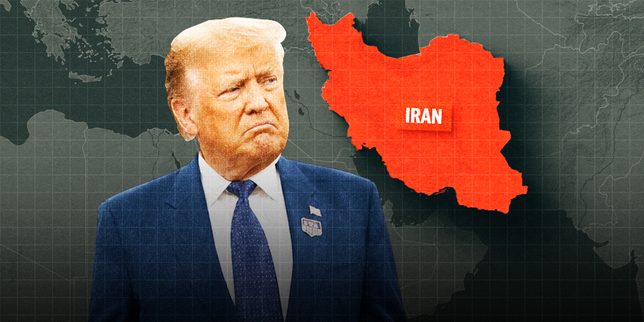
Washington thought it could starve Tehran into submission. By tearing up the Joint Comprehensive Plan of Action in 2018 and deploying a scorched-earth campaign of maximum pressure, the United States aimed to collapse the Iranian economy, force a renegotiation of its nuclear program, and permanently curtail its regional influence. It did not work. Years after the initiation of these suffocating sanctions, the Islamic Republic has not buckled. Instead, the strategy inadvertently accelerated Iran's nuclear enrichment, deepened its strategic alliances with China and Russia, and forced Washington back to the negotiating table from a position of relative weakness.
The strategy rested on a fundamental miscalculation of state survival. American policymakers operated under the assumption that cutting off a nation from the global financial grid would trigger internal political collapse or absolute compliance. They underestimated the resilience of gray-market economies and the willingness of authoritarian regimes to offload economic misery onto their civilian populations.
The Mirage of Economic Suffocation
The math behind the initial sanctions appeared devastating on paper. Iran saw its oil exports plunge from over two million barrels per day to a mere trickle. The national currency, the rial, entered a tailspin, triggering rampant inflation that eroded the savings of ordinary citizens. Foreign corporations packed up their bags and fled the country to avoid secondary American penalties.
Tehran adjusted. Authoritarian regimes do not respond to economic pain the way Western democracies do. Instead of capitulating, the political leadership in Tehran built a highly sophisticated network of front companies, illicit shipping fleets, and alternative financial channels to keep the oil flowing to buyers who were willing to ignore Washington's dictates.
China became the ultimate pressure valve. Beijing recognized an opportunity to secure discounted energy while quietly undermining American hegemony in the Middle East. Small, independent Chinese refineries, known colloquially as teapots, began absorbing millions of barrels of Iranian crude. These transactions were handled in renminbi rather than dollars, rendering American financial surveillance entirely blind to the transactions. The cash kept the regime afloat, proving that unilateral sanctions cannot succeed when a global superpower is willing to act as an economic backstop.
The Enrichment Acceleration
The most catastrophic failure of the maximum pressure campaign occurred in the very sector it was designed to neutralize. Before the American withdrawal from the nuclear accord, Iran was operating under strict limits overseen by international inspectors. Its stockpile of enriched uranium was capped, and its advanced centrifuges were locked away.
Ripping up the agreement removed the guardrails. Iran responded to the reimposition of sanctions by methodically violating every single restriction in the deal. They did not do this in secret. They announced each step, using their nuclear program as a geopolitical counterweight to match American economic aggression.
Spinning advanced centrifuges became the new normal. The country moved from enriching uranium at low, civilian-grade levels to purifying it up to 60 percent, a technical stone's throw from weapons-grade material. The breakout time, the period required to produce enough fissile material for a nuclear weapon, shrunk from a year under the original accord to mere days. The aggressive stance taken by Washington did not stop the nuclear clock. It wound it up and smashed the glass.
The Failure of Regional Containment
A secondary goal of the policy was to starve Iran's regional proxies of cash. The theory was simple. If the central government in Tehran had no money, it could not fund militant groups across Lebanon, Iraq, Syria, and Yemen.
Geopolitics rarely follows simple scripts. While the proxies did face temporary budgetary tightening, their operational capacity never truly degraded. Iran prioritized its regional defense doctrine above domestic spending, ensuring that groups like Hezbollah and the Houthis remained well-armed and strategically active.
The pressure campaign actually intensified regional instability. Lacking the ability to export oil normally, Iran engaged in asymmetric retaliation. Tankers were targeted in the Persian Gulf, global energy infrastructure faced drone strikes, and the shipping lanes of the Red Sea eventually became a shooting gallery. Tehran demonstrated that if it could not export its oil, it could jeopardize the transit of energy for the rest of the world. The policy designed to bring security instead created an unpredictable, multi-front security crisis.
The Backroom Return to Realism
The ultimate validation of a policy's failure is when its architect is forced to reverse course. High-level diplomatic movements in places like Doha and Switzerland reveal that Washington has been forced to offer significant concessions just to freeze the current status quo.
The current terms under discussion are a far cry from the complete capitulation once demanded. Talk of a permanent, comprehensive dismantling of the Iranian nuclear infrastructure has vanished from practical diplomatic discourse. Instead, the focus has shifted to transactional de-escalation. Washington is preparing temporary waivers to allow Iran to sell its oil openly again, principally to China, while attempting to secure agreements that will allow international inspectors back into sensitive facilities.
The irony is thick. To secure these basic monitoring agreements, billions of dollars in frozen Iranian assets are being unlocked from overseas escrow accounts. The administration is forced to spin these developments as wins for domestic constituencies, pointing to clauses that mandate the funds be spent on agricultural imports. Tehran openly disputes these restrictions, confident that once the money is in motion, the leverage has shifted entirely back into their hands.
A hard look at the geopolitical chessboard reveals that the years of absolute economic warfare achieved the exact opposite of their intended goals. Iran is closer to a nuclear capability than at any point in its history. Its alliance with Beijing and Moscow is solidified, and its regional posture remains deeply entrenched. The belief that economic coercion alone could rewrite the security architecture of the Middle East was a fantasy.
Washington spent years burning its diplomatic capital to isolate Iran, only to find itself navigating a reality where the target of its pressure holds a stronger hand than before the campaign began. The economic war did not break the regime. It simply taught it how to survive in the dark.