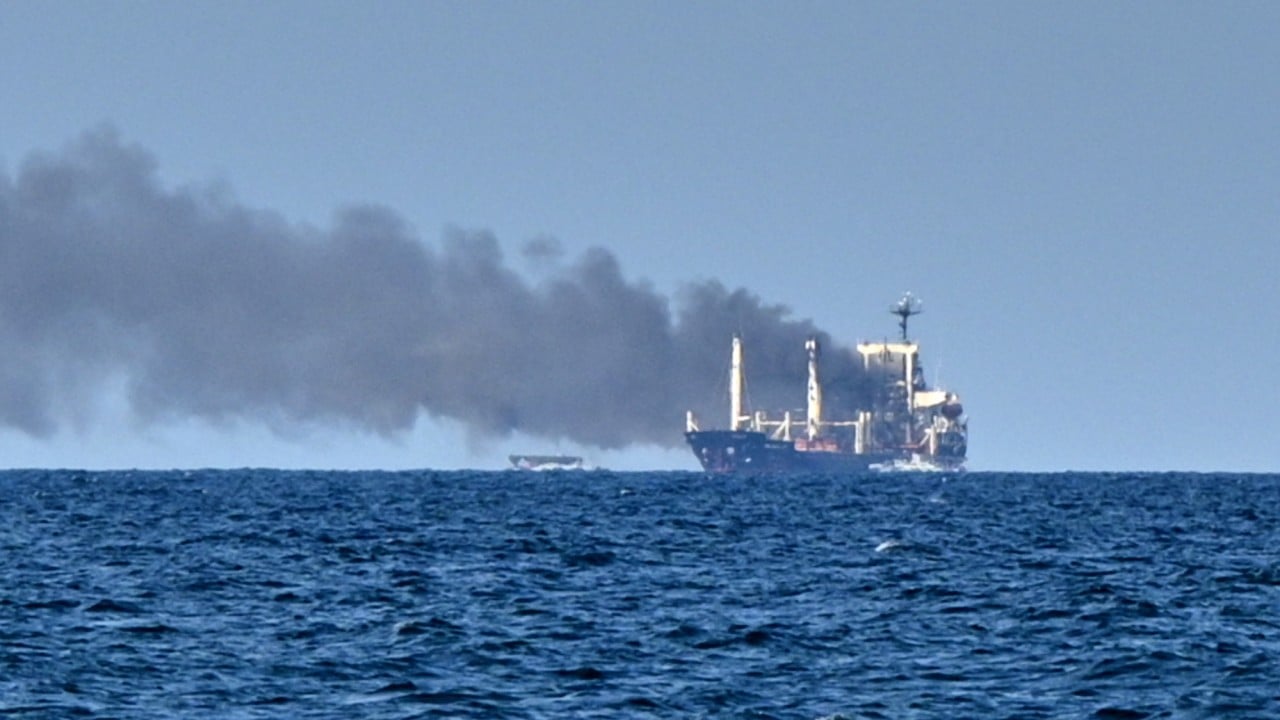
The Black Sea isn't just a combat zone anymore. It's a hunting ground for commercial shipping, and the latest escalation should have global markets on high alert.
A civilian cargo ship carrying grain was torn apart by Russian cruise missiles just outside Odesa. Six people are dead, several are injured, and others have vanished into the water. This wasn't a case of collateral damage or a stray missile drifting off course. It was a targeted, direct strike on international commerce.
If you think this is just another localized headline in an ongoing war, you're missing the bigger picture. This attack alters the risk calculus for global shipping logistics, food security, and maritime insurance.
Anatomy of the Golden Leo Strike
The vessel targeted was the Golden Leo, a dry-cargo ship owned by a Turkish company but flying the flag of Guinea-Bissau. It was doing exactly what hundreds of civilian ships do daily: moving grain out of Ukraine's maritime corridor to feed global markets.
According to data released by the Ukrainian navy, Russian forces fired three Kh-59/Kh-69 cruise missiles directly at the ship. The impacts slammed into the starboard side of the superstructure, immediately igniting a massive fire.
The human cost of this strike is severe. The crew wasn't Ukrainian; it was an international group including sailors from Syria and India. A Ukrainian maritime pilot who was guiding the ship safely out of the port area was killed alongside five crew members. Emergency crews from the Ukrainian Navy and the Maritime Search and Rescue Service rushed to the scene, pulling eight survivors from the burning wreckage, but four sailors remain missing in the Black Sea.
This wasn't a sudden blunder. This strike happened the very same day Moscow launched a massive, five-hour overnight missile barrage against Kyiv using Iskander-M and hypersonic Zircon missiles. It shows a deliberate choice to expand the target list from domestic infrastructure to international economic lifelines.
The Real Strategy Behind Infrastructure Terror
Why target a Turkish-owned ship flying an African flag? To understand the move, you have to look past the immediate destruction. This is about economic strangulation.
Ukraine has successfully bypassed Russia's naval blockade over the last couple of years by utilizing a domestic shipping corridor that hugs the coastlines of NATO members like Romania and Bulgaria. It worked surprisingly well. Grain kept moving, and Ukraine's agricultural economy stayed on life support.
By hitting a civilian vessel directly, Moscow sends a clear message to international shipowners: if you dock in Ukraine, your flag won't protect you, and your crew might not make it home.
This isn't an isolated incident either. Just a day prior, another foreign merchant vessel flying the flag of Antigua and Barbuda was hit in the Black Sea, leaving one dead. Russia is actively trying to break the Ukrainian maritime corridor by turning the waters into an uninsurable death trap.
The Economic Ripple Effect on Insurance and Food
When a cruise missile hits a cargo ship, the shockwaves hit London and Singapore within minutes. The maritime insurance market is entirely built on risk calculation.
Every time a civilian ship gets struck, war risk premiums for the Black Sea region skyrocket. When insurance rates become prohibitively expensive, commercial shipping companies simply refuse to send their fleets. They can't justify the risk to their assets or their crews.
- Higher Freight Costs: Fewer willing ships means the ones that do take the risk charge a massive premium.
- Supply Chain Chokepoints: Grain sits in silos instead of moving to the Middle East and Africa, where it's desperately needed.
- Market Volatility: Global food commodity prices spike on the mere threat of a prolonged Black Sea shutdown.
Turkey is caught in a brutal diplomatic vice here. Ankara has spent years trying to play the mediator, balancing its NATO obligations with its relationship with Moscow. Turkish Foreign Minister Hakan Fidan openly stated that Ankara does not want to see this war spread further into the Black Sea. Yet, its own commercial entities are now taking direct hits.
What Happens Next for Maritime Logistics
If you're managing global supply chains or trading agricultural commodities, you can't treat the Black Sea as a stable route right now. The safety buffer is gone.
Expect a major chilling effect on crew availability. Finding sailors willing to sail into Odesa was already tough; now it's going to require massive hazard pay, if it's possible at all. Shipowners are going to demand stronger security guarantees, possibly renewing pressure for international or NATO-backed naval escorts in the western Black Sea—a move that carries massive geopolitical escalation risks.
For businesses relying on these trade routes, diversification isn't optional anymore. You need to maximize alternative overland rail routes through Europe or Danube River ports, even if they come with lower capacities and higher baseline costs. The era of assuming civilian markings offer safety in the Black Sea is officially over.