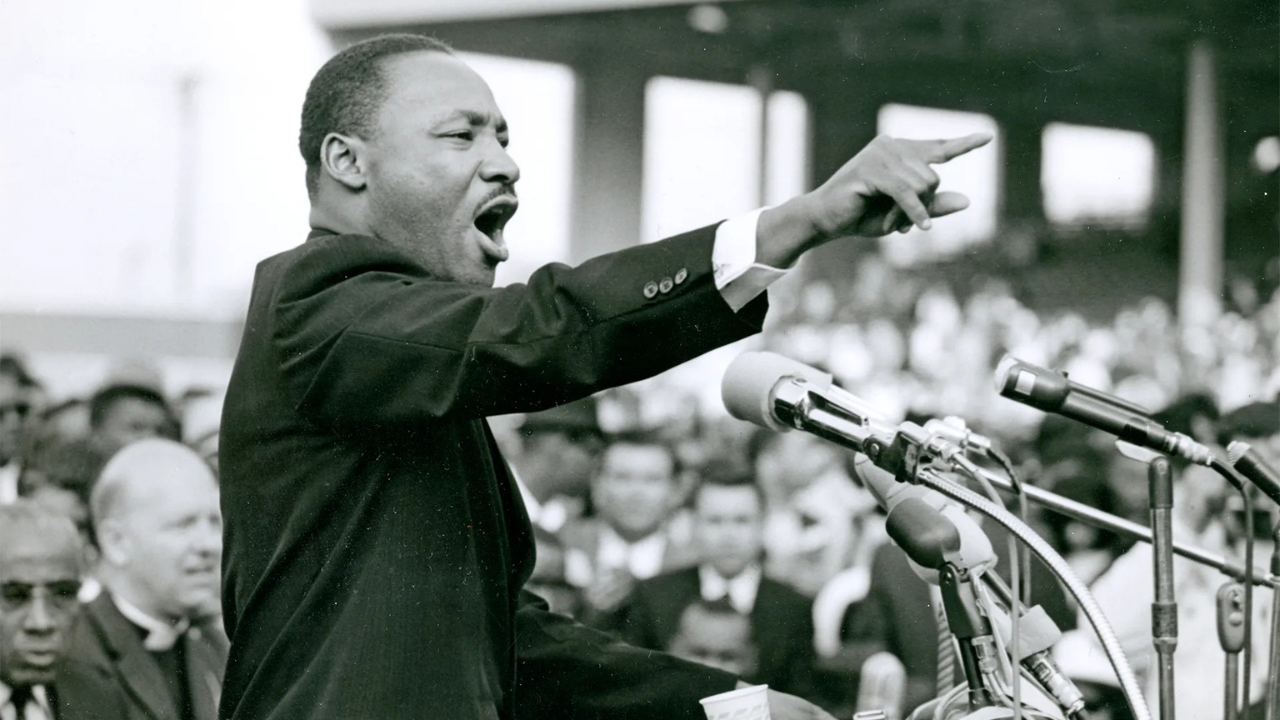
Every January, the machinery hums to life. Public officials, corporate marketing departments, and cable news anchors dust off the same thirty words spoken by Martin Luther King Jr. They quote the line about darkness and light, or they flatten his dream into a harmless vision of colorblind harmony. It is a sanitized ritual. We are handed a safe, digestible icon who speaks in inspirational posters rather than a rigorous strategist who systematically dismantled the comfortable myths of American society.
The real Martin Luther King Jr. was not a gentle prophet of consensus. He was a radical social critic whose late-career analyses targeted the foundational economic and political structures of the United States. When the movement reduced his legacy to a series of greeting card platitudes, it did something dangerous. It stripped his words of their teeth, transforming a revolutionary blueprint for structural change into a comforting lullaby for the status quo.
The Manufacturing of a Harmless Icon
History is rarely preserved as it happened. It is curated to serve the present order.
In the immediate aftermath of his assassination, the process of domestication began. A man who was reviled by the majority of Americans during his lifetime—polling in 1966 showed that nearly two-thirds of the public viewed him unfavorably—was swiftly retrofitted into a national hero of unity. The shift required selective amnesia. To make King palatable to the establishment, educators and politicians had to sever his famous address at the Lincoln Memorial from his actual platform, ignoring his scorching critiques of militarism, poverty, and institutional inertia.
Consider how the famous darkness quote is deployed. When people cite the phrase about light driving out darkness, they almost always use it to urge patience, civility, and quiet reconciliation. They use it to quiet dissent. Yet King was talking about systemic evil, the interconnected web of racism, economic exploitation, and war. He argued that superficial changes would never suffice.
True confrontation requires acknowledging the machinery of oppression rather than wishing it away with poetic metaphors. By treating his rhetoric as a substitute for action, contemporary institutions use his memory as a shield against actual accountability.
The Economic Radicalism That America Forgot
Most retrospectives conveniently stop talking about King the moment the Civil Rights Act of 1964 and the Voting Rights Act of 1965 are signed into law. This boundary creates a comforting narrative arc where the problem is solved, justice rolls down like waters, and the nation achieves redemption.
King knew better.
In his later years, he shifted his focus toward the Poor People's Campaign and began targeting class inequality with the same ferocity he had applied to segregation. He recognized that legal equality meant little if Black Americans, and poor people of all backgrounds, remained trapped in economic destitution. In speeches that modern commentators rarely air, he spoke openly about the need for a redistribution of economic power. He called for a guaranteed annual income, massive federal investments in housing and jobs, and a critical reassessment of capitalism itself.
"True compassion is more than flinging a coin to a beggar," King wrote in his 1967 book Where Do We Go From Here: Chaos or Community?. "It comes to see that an edifice which produces beggars needs restructuring."
That is not the language of a moderate. It is the language of a structural analyst who understood that poverty is not an accidental byproduct of an economic system, but a primary feature of it. When we erase this phase of his life, we erase the hardest truths he left behind. We pretend that racism can be excised from a society while leaving the economic hierarchies that reward racial division completely intact.
The Mechanics of White Moderate Resistance
One of the most enduring and uncomfortable documents left behind by the civil rights movement is the Letter from Birmingham Jail. Written on scraps of paper smuggled out of a damp cell, it contains a critique that hits just as hard today as it did in 1963.
King did not reserve his harshest words for the Ku Klux Klan or the explicit white supremacists. He directed his most piercing analysis toward the white moderate.
He identified this demographic as the greatest stumbling block in the path toward actual justice. The white moderate, in King's view, preferred a negative peace—which is merely the absence of tension—to a positive peace, which is the presence of justice. They constantly advised patience, telling activists to wait for a more convenient season, preaching order over righteousness.
This dynamic repeats itself in every major social upheaval. When people take to the streets today demanding fundamental changes in policing, wealth distribution, or environmental justice, the immediate pushback from respectable society is rarely a defense of injustice. Instead, it is a critique of the method. The rhetoric focuses on tone, property damage, traffic disruptions, and procedural decorum.
People who claim to support the ultimate goal invariably condemn the tactics required to achieve it. They want the change without the friction. They demand justice without the struggle. King diagnosed this impulse decades ago, noting that the privileged rarely give up their privileges voluntarily; justice must be demanded, agitated for, and forced into existence by the oppressed.
Reclaiming the Real Legacy
If we are to honor King, the first step is to stop using him as an emotional comfort blanket.
That means reading his actual words in full context. It means confronting his opposition to the Vietnam War, a stance that alienated many of his former liberal allies who believed civil rights leaders should stay in their lane. It means acknowledging his insistence that American foreign policy abroad was deeply tied to domestic oppression at home. It means looking at the data of modern wealth gaps, housing segregation, and mass incarceration, and realizing that we are still living inside the exact crises he warned us about.
When an entire society agrees to celebrate a radical, it is worth asking what was lost in translation. The historical record shows a man who was exhausted, surveilled by his own government, deeply unpopular with the political center, and entirely unwilling to compromise on the fundamental demand for human dignity.
The light he spoke of was not a metaphor for turning the other cheek while injustice ran its course. It was the harsh, revealing glare of truth cast upon a society that preferred to keep its flaws hidden in the dark.