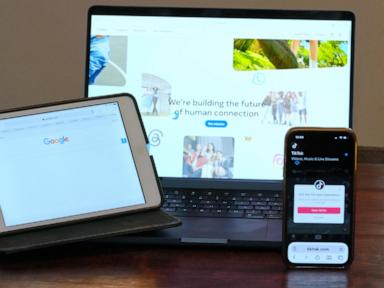
Australia isn't playing nice with Silicon Valley anymore. The government just dropped a bombshell piece of legislation called the News Media Bargaining Incentive (NMI). It’s basically a "pay up or get taxed" ultimatum aimed squarely at Meta, Google, and TikTok.
The goal? To stop tech giants from getting a free ride on the back of Australian journalism. If these platforms don't strike deals with newsrooms, they'll be hit with a 2.25% levy on their local revenue. We’re talking about roughly $250 million a year that would go straight back into funding reporters and newsrooms.
You might remember the 2021 standoff where Facebook literally blocked all news in Australia. This new move is the government's way of saying they won't be bullied by a "remove news" button this time around.
The 2.25% ultimatum
The government’s new plan is clever because it’s structured as an incentive, not just a flat tax. If a platform like Google or TikTok plays ball and signs commercial deals with local publishers, they get offsets. These offsets can wipe out the tax bill entirely.
But if they refuse? The government collects the money and distributes it based on how many journalists a media outlet actually employs. It’s a direct attempt to fix a broken system where the people creating the content (newsrooms) are starving while the people distributing it (social feeds) are raking in billions in ad spend.
Who gets hit
The rules don't apply to every small app out there. The NMI targets the heavy hitters. To fall under this new law, a company needs:
- To be a search engine or social media service.
- At least 5 million Australian users for social media or 10 million for search.
- Consolidated Australian revenue of more than $250 million.
Right now, that list is short: Meta (Facebook/Instagram), Google, and TikTok. Interestingly, the law explicitly carves out AI chatbots like ChatGPT or Gemini. The government wants to focus on the platforms that use news as "ambient content" to keep people scrolling.
Why the old system failed
Back in 2021, the world watched as Australia pioneered the News Media Bargaining Code. It worked for a while. Platforms signed deals worth millions. But those deals started expiring in 2024.
Meta took one look at the bill and said "no thanks." They decided they'd rather pull out of news entirely than keep paying. They argued that news is a tiny fraction of what people see on Facebook and that publishers actually benefit from the traffic they get.
The Australian government isn't buying that. Prime Minister Anthony Albanese was blunt about it: "It shouldn’t just be able to be taken by a large multinational corporation and used to generate profits... with no compensation."
Big Tech is already fighting back
Meta’s response was predictably sharp. They’re calling the levy a "digital services tax" in disguise. Their argument is that it’s a government-mandated transfer of wealth that ignores the actual value exchange. Google isn't happy either, pointing out that they already have existing deals and that the new law arbitrarily ignores competitors like Microsoft or Snapchat.
There’s also the "Washington factor." Because all the targeted companies are American, there’s always a risk of trade tension. But Australia seems ready for the fight. They’ve seen what happens when local news dies out—especially in regional areas—and they’ve decided that protecting democracy is worth the corporate friction.
How the money gets spent
If the platforms choose to pay the tax instead of making deals, the money doesn't just vanish into the government's general fund. It’s earmarked.
- The funds go to news organizations based on journalist headcount.
- There are specific "uplift" incentives for deals made with small or regional publishers.
- The 2.25% rate is calculated based on revenue from three years prior, so companies can't easily "game" the numbers by shifting money around last minute.
What happens next
The draft legislation is out, and the consultation period ends on May 18, 2026. The government wants this passed and running by July 1, 2026.
If you're a news consumer, don't be surprised if you see another "news blackout" on your feed. Meta has shown they're willing to go nuclear to avoid these types of mandates. However, with TikTok now in the mix and Google facing similar pressures worldwide, the tech giants might find they have fewer places to hide.
Keep an eye on your social feeds over the next few months. If the "share" button for news articles suddenly disappears, you'll know exactly why. For now, the ball is in Big Tech's court: negotiate with the people who write the stories, or write a very large check to the Australian Treasury.