The core vulnerability of multi-billion-dollar integrated air defense systems (IADS) is not a failure of kinetic capability, but a structural failure of economic sustainability. Traditional military doctrine optimizes air defense for high-altitude, low-volume, high-velocity threats like ballistic missiles and multi-role fighter jets. When forced to confront low-altitude, high-volume, ultra-low-cost unmanned aerial vehicles (UAVs), the unit economics of defense invert catastrophically. The strategic crisis unfolding across modern battlefields stems from a fundamental mismatch: deploying a interceptor missile costing between $1 million and $4 million to eliminate a commercial-off-the-shelf (COTS) or rapidly manufactured drone costing less than $500. This disparity creates a system bottleneck where an adversary can achieve complete strategic denial not by breaching the defense system, but by bankrupting it.
The operational reality of modern attrition warfare requires breaking down this problem into three distinct vectors: the cost-exchange ratio, the radar cross-section (RCS) detection threshold, and the saturation mechanics of target tracking systems.
The Three Pillars of Air Defense Asymmetry
To understand why multi-layered networks like Russia’s S-400 or Tor missile systems face systemic exhaustion against small drone fleets, the problem must be evaluated through three rigid operational constraints.
+-------------------------------------------------------------------+
|                  THE INTERCEPT EXHAUSTION CYLINDER                |
+-------------------------------------------------------------------+
|                                                                   |
|   [Phase 1: Economic Depletion]                                   |
|   Cost-Exchange Ratio Inversion                                   |
|   Interceptor ($2M) vs. Target ($500)                             |
|                                                                   |
|   [Phase 2: Sensor Invalidation]                                      |
|   Radar Cross-Section (RCS) Sub-Threshold Velocity                 |
|   Drone filtered out as environmental clutter (birds/insects)     |
|                                                                   |
|   [Phase 3: Kinetic Saturation]                                   |
|   Tracking Target Channels < Inbound Swarm Volume                  |
|   Fire control radars locked; subsequent waves penetrate perimeter    |
|                                                                   |
+-------------------------------------------------------------------+
1. The Cost-Exchange Ratio Inversion
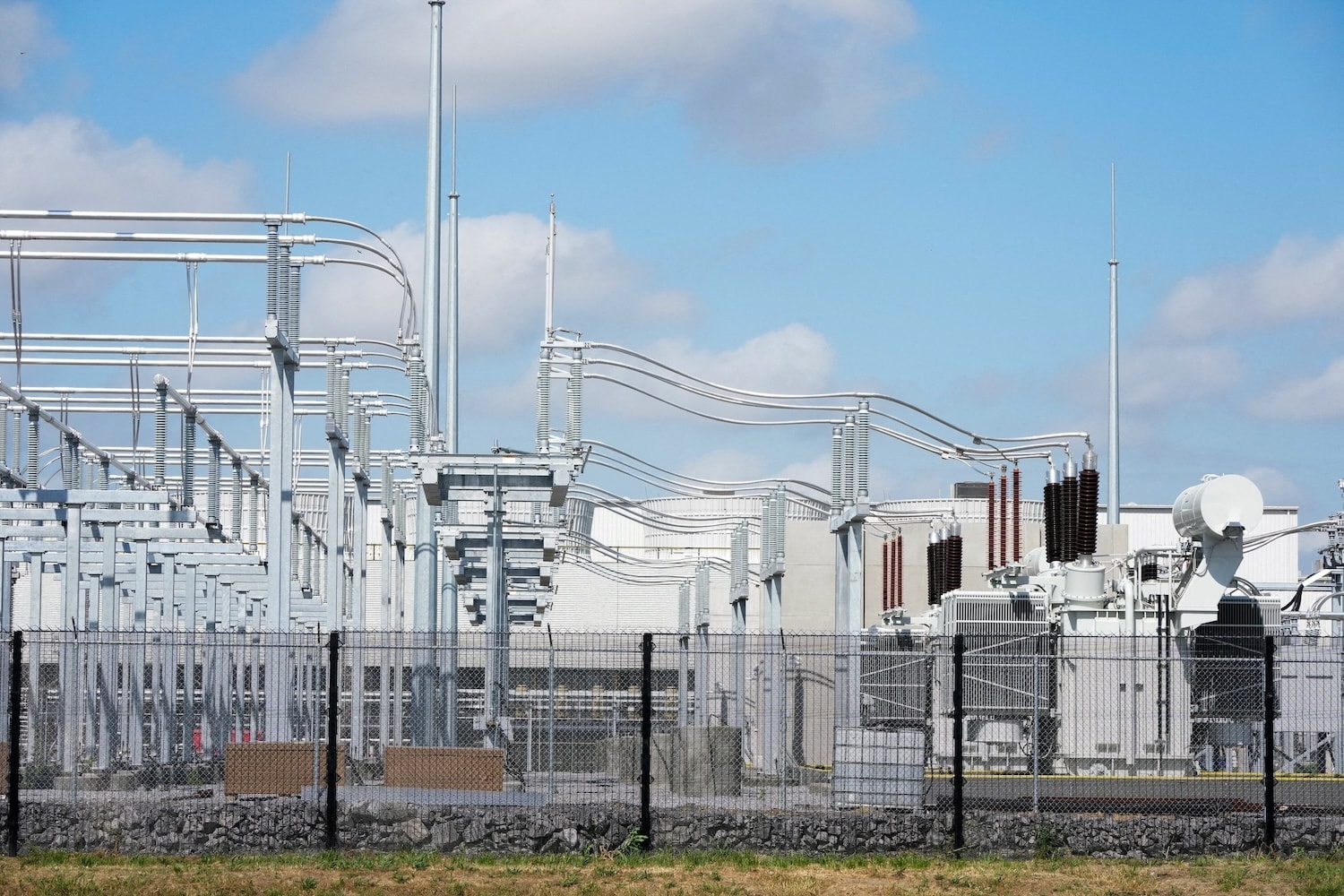
The economic math of traditional air defense relies on defending high-value assets (airfields, command nodes, energy infrastructure) against equally expensive threats. If a $2 million interceptor destroys a $30 million cruise missile heading toward a power plant, the investment yields a massive net positive return on protection.
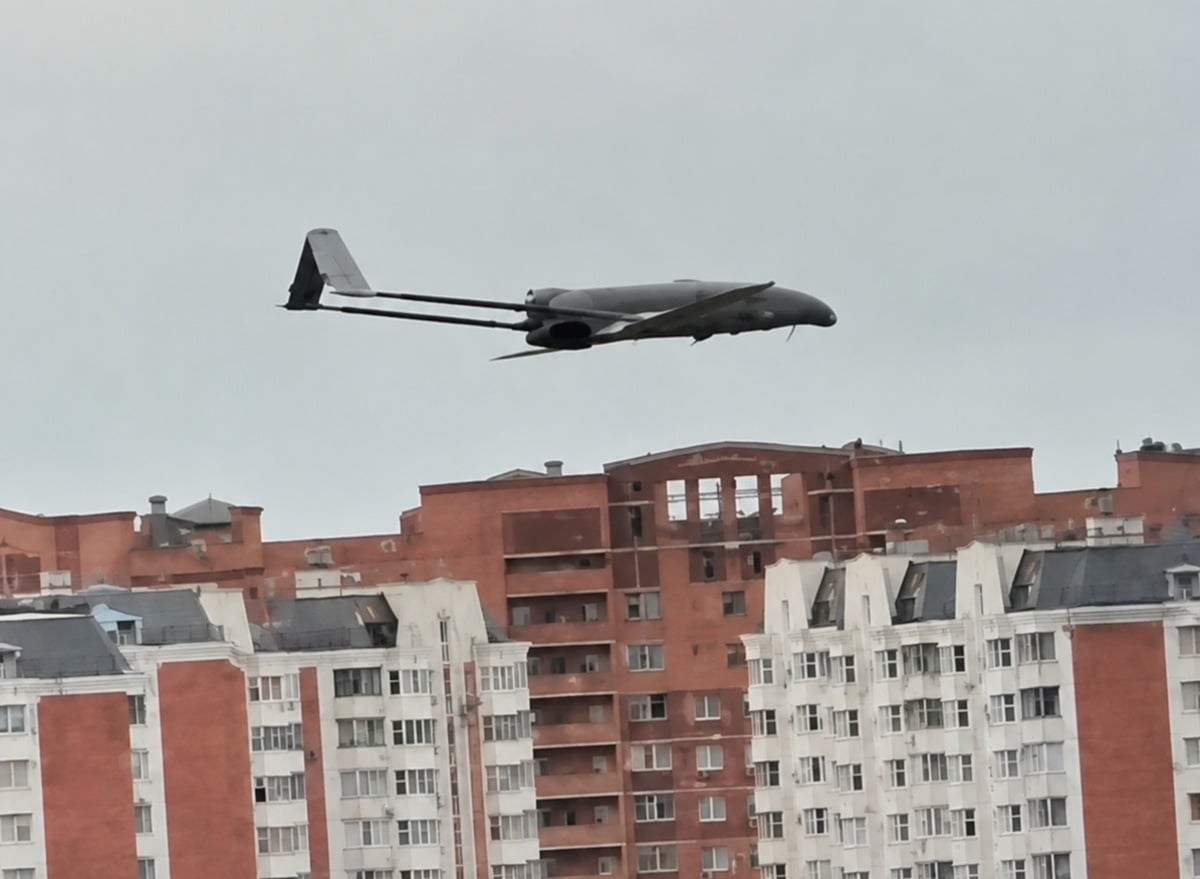
When the threat shifts to large numbers of low-cost first-person view (FPV) drones or long-range one-way attack (OWA) UAVs, the math breaks completely. The cost function of the attacker scales linearly: ten drones cost $5,000; one hundred drones cost $50,000. Conversely, the cost function of the defender scales exponentially because interceptor inventories are finite, highly complex to manufacture, and bound by slow supply chains. The defender suffers an absolute resource drain long before the physical assets under protection are ever touched.
2. Radar Cross-Section and Sensor Disruption
Legacy radar networks rely on specific Doppler shift parameters and radar cross-sections to classify objects. A standard fighter jet presents an RCS of roughly 1 to 5 square meters; a stealth aircraft might drop to 0.001 square meters but moves at high velocities.
Small plastic and carbon-fiber quadcopters possess an RCS below 0.01 square meters and fly at altitudes under 100 meters, frequently mimicking the speed and flight paths of migratory birds. Air defense software must implement clutter-rejection algorithms to prevent operators from being overwhelmed by false positives caused by birds, weather, or terrain. Consequently, low-flying, slow-moving drones exploit this software filter. By the time a radar system isolates the drone from background clutter, the reaction window has shrunk past the minimum engagement range of long-range surface-to-air missiles (SAMs).
3. Kinematic and Tracking Saturation Mechanics
Every air defense battery has a finite number of engagement channels—the maximum number of targets its fire-control radar can track and illuminate simultaneously, and the maximum number of interceptors it can guide at one moment. For an S-400 complex, this might be 36 target tracks using up to 72 missiles simultaneously under ideal conditions.
If an attacker deploys 50 coordinated low-cost drones into a single radar sector, the battery faces immediate mathematical saturation. Even assuming a flawless 100% interception rate, the battery will exhaust its ready-to-fire missile tubes during the first wave. The mechanical bottleneck then shifts to reload time. Replacing heavy interceptor canisters onto a transporter-erector-launcher (TEL) takes between 45 and 90 minutes. During this reload window, the entire air defense umbrella is offline, leaving the protected zone totally exposed to subsequent kinetic strikes.
The Cause-and-Effect Chain of Tactical Disruption
This economic and sensor failure triggers a predictable, cascading failure cascade across tactical operations. When heavy air defenses are forced to withdraw or adapt to small drone threats, the entire combined-arms structure destabilizes.
The first consequence is the defensive rollback. To protect multi-million-dollar air defense radars and launchers from being hunted by cheap FPV loitering munitions, command structures pull these units further back from the forward line of own troops (FLOT). This movement creates a localized sensor and engagement vacuum near the front lines.
With long-range SAMs pushed back, a secondary bottleneck emerges: medium and short-range systems (like the Pantsir-S1 or Tor-M2) are left to defend the long-range assets, rather than covering advancing infantry or armor units. These mobile systems are then quickly picked apart by saturated drone strikes or artillery corrected by overhead surveillance drones.
The ultimate operational effect is the loss of air superiority at low altitudes (from ground level up to 3,000 feet). When an military loses control of this layer, its heavy armored columns can no longer advance without being tracked in real-time and systematically disabled by low-cost precision strikes.
Countermeasure Systems and Technical Limitations
Resolving this tactical crisis requires identifying alternative defense frameworks that bypass the economic traps of traditional rocketry. Military forces are rushing to field three alternative technologies, though each possesses severe engineering and operational limitations.
Electronic Warfare and Radio Frequency Jamming
Electronic warfare (EW) seeks to disrupt the command links and GPS signals guiding the drone, offering an exceptionally low cost-per-engagement. However, EW is limited by line-of-sight physics and the rapid evolution of electronic counter-countermeasures (ECCM).
- The Frequency Bottleneck: Drones can quickly shift from standard 2.4 GHz or 5.8 GHz control frequencies to non-standard bands (e.g., 400 MHz or 900 MHz), rendering pre-configured jammers useless.
- The Autonomous Guidance Shift: The introduction of terminal optical guidance—where an onboard microcomputer uses machine vision to lock onto a target during the final phase of flight—completely neutralizes RF and GPS jamming. Once the drone is autonomous, cutting its radio link does not stop the attack.
Directed Energy Weapons (DEW)
High-energy lasers and high-power microwave (HPM) systems offer a theoretically unlimited magazine with a cost-per-shot measured in pennies.
- The Atmospheric Limit: Laser efficacy drops off sharply in poor weather conditions, such as heavy fog, rain, dust, or smoke clouds. Furthermore, lasers require a constant "dwell time" on a single spot of the target to burn through the casing, limiting how quickly they can engage large swarms.
- The Thermal Management Constraint: HPM systems can neutralize entire swarms instantly by frying internal circuits, but the enormous energy storage units required create a massive logistics and thermal footprint, making these systems high-value targets that are difficult to move quickly.
Gun-Based Kinetic Systems with Programmable Ammunition
Modernized anti-aircraft guns utilizing airburst ammunition (such as the Skynext system or upgraded self-propelled anti-aircraft guns) represent the most reliable near-term solution. These systems fire bursts of 35mm or 40mm shells that detonate right in front of a target, spraying a cloud of dense tungsten pellets.
- The Range Constraint: Gun systems are strictly limited to short-range engagements, typically under 4,000 meters.
- The Protection Footprint: Because their range is limited, a defender requires a large number of individual gun systems to protect a wide geographic area, driving up total procurement costs and straining personnel requirements.
The Strategic Playbook for the High-Asymmetry Battlefield
To survive in an environment saturated by cheap precision drones, military logistics and defense procurement must abandon the dogma of monolithic, centralized air defense architecture. Command structures must immediately pivot toward a decentralized, asymmetric defense framework built around three core strategies.
First, transition from a missile-first doctrine to an integrated multi-tiered network that prioritizes gun systems and electronic warfare for everything under 5,000 feet. Long-range, multi-million-dollar interceptors must be strictly reserved for high-altitude, high-velocity threats like cruise and ballistic missiles. Using them on lower-tier targets must be treated as a doctrinal failure.
Second, field modular, vehicle-mounted short-range air defense (SHORAD) units equipped with automated airburst guns alongside every company-level asset. Defense cannot be treated as an umbrella managed from miles away; every tactical unit must possess its own autonomous, low-cost kinetic interception capability.
Finally, invest heavily in the industrial-scale manufacturing of attritable defensive counter-drones—small, fast interceptor quadcopters designed to ram or detonate near inbound enemy drones. By matching the cost structure of the attacker with an equally inexpensive, agile, and mass-producible defensive asset, defenders can finally neutralize the economic inversion that threatens to collapse modern air defense networks.