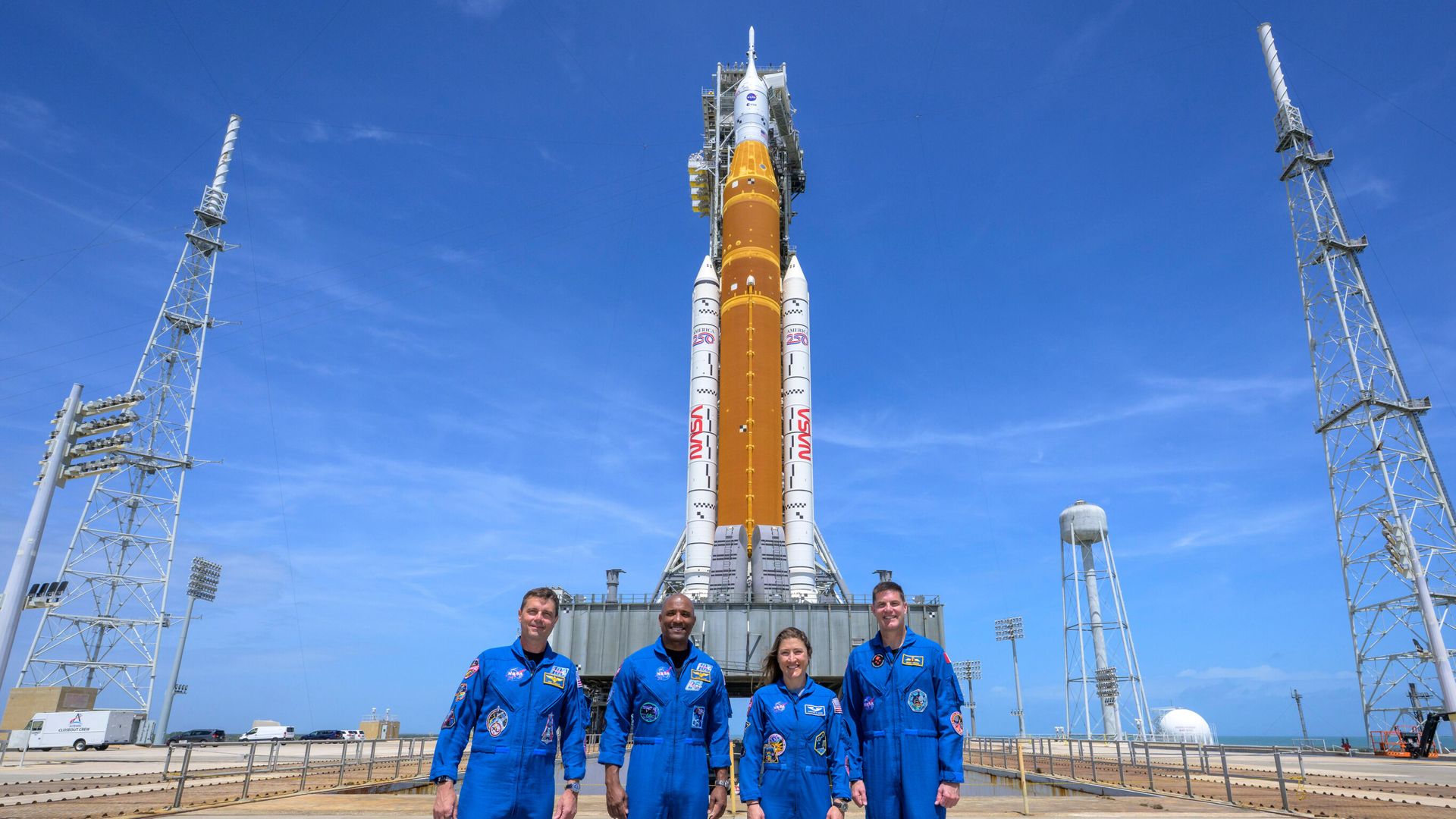
NASA stands on the precipice of a gamble that defines the modern era of spaceflight. The Artemis program is not merely a sequel to the Apollo missions of the 1960s; it is a complex, multi-billion-dollar experiment in public-private partnerships, aging hardware, and geopolitical positioning. While the official narrative focuses on the inspiration of "the first woman and next man" on the lunar surface, the underlying reality is a grueling fight against physics, budgets, and a ticking clock. The countdown has indeed begun, but it is counting down toward a moment of truth for an agency that has not sent a human beyond low-Earth orbit in over half a century.
The primary objective is clear. NASA intends to establish a long-term presence on the Moon, using it as a literal and metaphorical launching pad for Mars. However, achieving this requires the synchronization of three massive, independent components: the Space Launch System (SLS) rocket, the Orion spacecraft, and SpaceX’s Starship Human Landing System (HLS). If any one of these pillars falters, the entire architecture of American deep-space exploration risks a decade-long stall.
The SLS Debt and the Cost of Legacy
The Space Launch System is the most powerful rocket ever built by the agency, but it carries the heavy weight of its own heritage. Critics often refer to it as a "jobs program" or a "Senate Launch System" because it utilizes components recycled from the Space Shuttle era, such as the RS-25 engines and solid rocket boosters. This was a deliberate choice meant to save money and preserve a specialized workforce. It did neither.
Each launch of the SLS currently costs approximately $2.2 billion. This figure does not include the $11.8 billion spent on development. When you factor in the Orion capsule and ground systems, the price tag per mission swells to over $4 billion. For a veteran observer, these numbers are staggering. We are looking at a disposable rocket—one that falls into the ocean after a single use—costing more than the annual GDP of some small nations.
The agency justifies this through the lens of capability. No other operational rocket can currently lift the Orion capsule along with the necessary life support and cargo directly to the Moon in a single shot. But this reliance on "Big Government" hardware creates a bottleneck. Because the rockets are so expensive and difficult to manufacture, the mission cadence is agonizingly slow. We aren’t looking at a weekly bus service to the Moon; we are looking at a rare, high-stakes event that happens once every two years if everything goes perfectly.
The SpaceX Variable
Perhaps the most radical departure from the Apollo era is NASA’s total dependence on Elon Musk’s SpaceX for the actual landing. Under the HLS contract, the SLS will take the crew to lunar orbit, but it cannot land. Instead, the astronauts must transfer to a modified version of Starship that will be waiting for them like a celestial taxi.
This introduces a massive technical hurdle: cryogenic fuel transfer in space. Starship is too heavy to reach the Moon on its own after breaking Earth's gravity. It requires "tanker" Starships to launch in rapid succession—estimates range from 10 to nearly 20 launches—to refuel the main lander in orbit before it can head to the Moon. This has never been done. Not once.
If SpaceX cannot master the art of moving super-chilled liquid oxygen and methane between two ships moving at 17,500 miles per hour, the astronauts will be stranded in the Orion capsule, circling a Moon they cannot touch. It is a bold, some would say reckless, reliance on a single private provider's unproven technology. While SpaceX has a track record of defying skeptics, the sheer scale of the "refueling farm" required for Artemis III is a logistical nightmare that keeps mission planners awake at night.
The South Pole Cold War
The destination isn’t just "the Moon" anymore. It is specifically the Lunar South Pole. This region is home to permanently shadowed craters where temperatures drop lower than the surface of Pluto. Why go there? Water ice.
Water is the gold of the solar system. It can be cracked into hydrogen for rocket fuel and oxygen for breathing. Whoever controls the "peaks of eternal light" and the adjacent ice-filled craters controls the future of space economy. But the United States isn't the only player at the table. China’s CNSA (China National Space Administration) has its sights set on the exact same real estate.
This has turned Artemis into a sprint disguised as a marathon. If China lands and establishes a base first, they could theoretically claim "safety zones" under the precedent of international law, effectively cordoning off the most valuable resource-rich areas. The scientific mission is now inextricably linked to a territorial one. This adds a layer of political pressure that Apollo never truly faced; back then, we just wanted to prove we could get there. Now, we have to stay there to ensure we aren't locked out.
The Fragility of the Orion Life Support
While the SLS gets the headlines, the Orion capsule is the actual home for the crew. During the Artemis I uncrewed test, the heat shield experienced "charring" and material loss that wasn't exactly according to the models. NASA has spent the last year analyzing whether this erosion poses a lethal risk to a human crew during a high-speed re-entry from the Moon.
Re-entering the atmosphere at Mach 32 creates temperatures of 5,000 degrees Fahrenheit. If the heat shield fails, the mission ends in tragedy. The agency has been uncharacteristically quiet about the specifics of the fix, opting for "data-driven" delays rather than rushing into Artemis II. This caution is warranted. The memory of the Challenger and Columbia disasters hangs heavy over the halls of Johnson Space Center. In the modern era of 24-hour news cycles and instant social media backlash, NASA knows that a single fatal accident would likely end the Artemis program—and perhaps the future of human deep-space flight—for a generation.
Suit Up or Stay Home
One of the most overlooked failures in the lead-up to the return to the Moon was the development of the Extravehicular Mobility Unit (EMU), or the spacesuit. For years, NASA tried to develop these in-house, spending hundreds of millions with little to show for it. The old suits used on the International Space Station are essentially relics; they are too stiff for walking on the lunar surface and are sized poorly for a diverse crew.
In a move of desperation and pragmatism, NASA pivoted to the private sector, awarding contracts to Axiom Space and Collins Aerospace (who later backed out). Axiom is now tasked with building a suit that is flexible enough for geology but tough enough to withstand the "razor-blade" nature of lunar regolith. Lunar dust isn't like beach sand; it is volcanic glass that hasn't been weathered by wind or water. It eats through seals, clogs joints, and destroys electronics. Without these suits, the mission is a flyby.
The Budgetary Cliff
The numbers don't lie. The Artemis program is projected to cost $93 billion through 2025. With inflation and technical delays, that number is a floor, not a ceiling. Congressional appetite for space spending is notoriously fickle. While there is currently bipartisan support, that support is contingent on visible progress.
If Artemis II—the crewed loop around the Moon—doesn't happen by 2025 or early 2026, the political will may begin to crumble. We are seeing a shift where lawmakers ask why we are spending billions on a "flags and footprints" mission when private companies claim they can do it cheaper. The irony is that those private companies are being funded by the very NASA contracts they are supposedly outperforming. It is a circular economy of taxpayer dollars.
The Biological Unknown
We often talk about the machines, but we rarely talk about the meat. A trip to the Moon involves crossing the Van Allen radiation belts and enduring deep-space radiation without the protection of Earth’s magnetic field. While the Apollo astronauts were lucky to fly during a period of relatively low solar activity, Artemis crews may not be so fortunate.
NASA is currently testing advanced shielding and "Vests" designed to protect vital organs from solar flares, but the long-term effects of lunar gravity—only one-sixth of Earth’s—on the human body are still poorly understood. We know what zero-G does to bone density and eyesight. We don't know if 1/6th-G is enough to mitigate those risks during a month-long stay on the surface.
Why This Time Is Different
The skepticism surrounding Artemis is rooted in a history of canceled programs. From the Space Exploration Initiative of the 90s to the Constellation program of the 2000s, NASA has a graveyard of "next big things." What makes Artemis different is the hardware actually exists. The SLS has flown. Orion has flown. Starship is conducting test flights at a blistering pace in South Texas.
This isn't a PowerPoint presentation anymore. It is metal on the pad.
The success of the mission hinges on moving away from the "mission of the month" mindset and toward a sustainable infrastructure. This includes the Lunar Gateway, a small space station that will orbit the Moon. Critics argue the Gateway is a needless complication—a "toll booth" in space—but NASA sees it as a vital way-station for long-term operations. It allows for the refurbishing of landers and serves as a communications hub for the far side of the Moon.
The Reality of the Timeline
Expect delays. The current goal of landing humans on the Moon by September 2026 is, by almost all internal accounts, optimistic to the point of fantasy. A more realistic window is 2027 or 2028. This isn't necessarily a failure; it is the reality of complex systems engineering.
We are no longer in a "Space Race" fueled by the existential threat of nuclear war, which allowed Apollo to consume nearly 5% of the federal budget. Artemis operates on less than 0.5%. We are trying to do more with less, in a more transparent environment, with higher safety standards.
The countdown isn't just for a rocket launch. It's a countdown for the American space program to prove it can still do the impossible without a blank check. The Moon is a harsh mistress, and she doesn't care about budget cycles or political optics. Every weld, every line of code, and every seal must be perfect.
Stop looking at the Moon as a destination and start seeing it as a test. If we can't solve the logistics of a three-day trip to our closest neighbor, the three-year journey to Mars remains a pipe dream. The hardware is ready, the crews are trained, and the money is spent. Now comes the part where we find out if we still have the stomach for the risk.