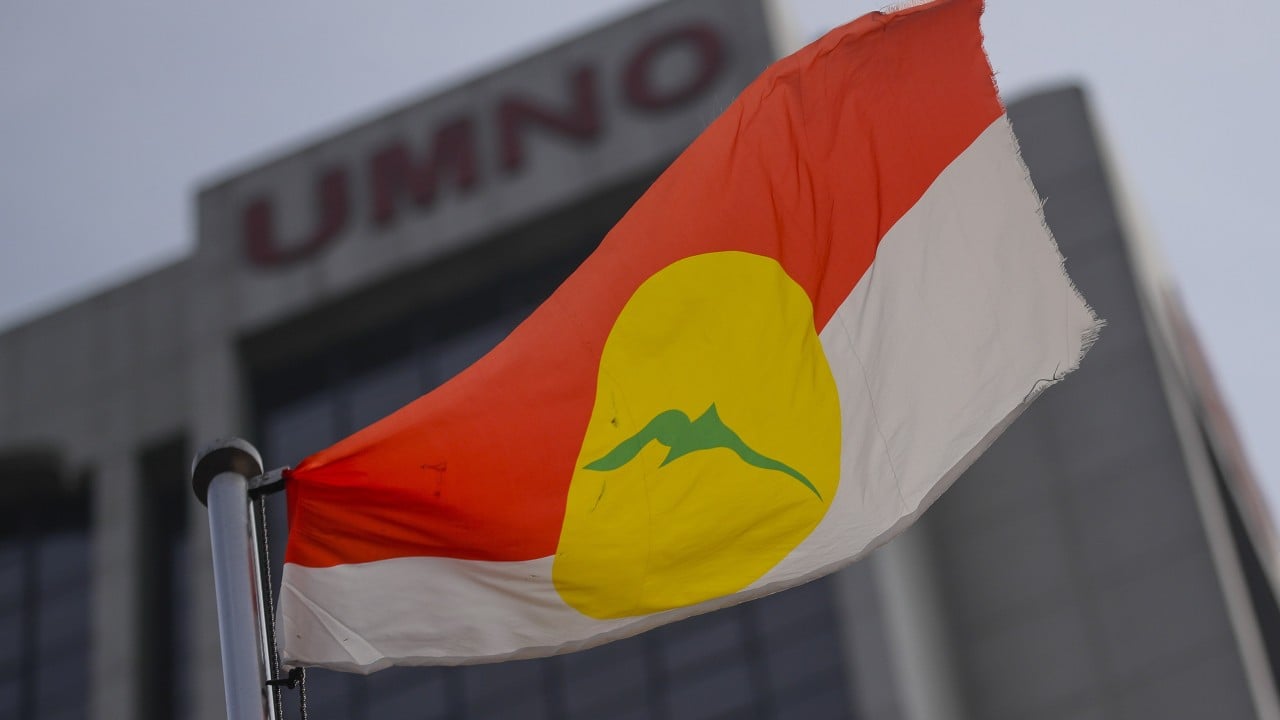
The United Malays National Organisation (Umno) is currently navigating a survival-defining inflection point. By signaling a "solo" bid for the next general election (GE16), the party leadership is attempting to decouple from its current status as a junior partner in the Unity Government and re-establish itself as the primary vehicle for Malay political identity. This maneuver is not a simple rejection of current allies; it is a calculated effort to optimize its bargaining position in a post-election environment by reclaiming a critical mass of Malay-majority seats.
The success of this strategy depends on three structural variables: the fragmentation of the Malay vote, the efficiency of party machinery in rural heartlands, and the party's ability to differentiate its brand from both the multi-ethnic Pakatan Harapan (PH) and the Islamist-nationalist Perikatan Nasional (PN).
The Tri-Polar Fragmentation Model
The Malaysian electoral landscape has shifted from a stable two-coalition system to a volatile tri-polar competition. In this model, the Malay electorate—comprising approximately 60% of the population—is split across three distinct ideological and strategic vectors:
- The Incumbent Reformist Vector (PH): Attracts urban, progressive, and middle-class voters but struggles with "Malay anxiety" regarding secularism and ethnic privileges.
- The Conservative-Religious Vector (PN): Dominates the "Green Wave" by combining PAS’s grassroots religious reach with Bersatu’s ethnic nationalist messaging.
- The Institutionalist Vector (Umno): Historically rooted in state-sponsored development and traditional Malay hierarchy.
Umno’s "solo" bid is a response to the "efficiency gap" created by its current coalition with PH. In the 2022 general election and subsequent state polls, Umno faced significant "vote transferability" issues. Data suggests that while PH voters were willing to support Umno candidates to block PN, a substantial portion of traditional Umno voters defected to PN rather than support a coalition that included the Democratic Action Party (DAP). Going solo is an attempt to stop this leakage by presenting a "pure" ethnic choice.
The Cost Function of Coalition Dependency
Umno’s current participation in the Anwar Ibrahim administration carries a high strategic cost. This "dependency tax" manifests in two ways:
- Policy Neutralization: As a junior partner, Umno cannot aggressively champion Malay-centric policies without alienating PH’s multi-ethnic base. This creates a vacuum that PN fills with populist rhetoric.
- Brand Dilution: The longer Umno remains embedded in a PH-led government, the more it loses its identity as the "protector" of Malay interests. This leads to a permanent migration of its core supporters toward PN.
The solo bid seeks to eliminate this tax. By contesting independently, Umno aims to win a projected 50 to 60 seats. The logic is purely mathematical: in a hung parliament, a 50-seat bloc becomes the kingmaker. The party’s goal is not necessarily an outright majority, but the acquisition of enough leverage to dictate terms to either PH or PN after the votes are counted.
The Operational Bottleneck: Machinery vs. Momentum
The primary risk to the solo strategy is the erosion of Umno’s grassroots machinery. Historically, Umno’s strength lay in its patronage networks and its presence in every village (cawangan). However, recent local leadership disputes—such as the 2026 turmoil in Negeri Sembilan where Umno assemblymen withdrew support for the PH Chief Minister—reveal a widening rift between the party’s central leadership and its regional power brokers.
A solo bid requires a high-functioning, unified machine. If the party enters GE16 with internal fractures, the "solo" bid will likely result in three-way splits that favor PN in rural seats and PH in semi-urban seats.
Strategic Variables for Seat Retention
To secure the 60-seat threshold required for kingmaker status, Umno must optimize for three conditions:
- The Felda Factor: Reclaiming dominance in Federal Land Development Authority (Felda) settlements, which have historically been Umno bastions but shifted toward PN in 2022.
- Candidate Archtyping: Moving away from "warlord" politics and fielding younger, technocratic Malay professionals who can compete with PN’s "clean and stable" narrative.
- Incumbency Performance: Using its current ministerial portfolios (e.g., Rural and Regional Development, Investment and Trade) to deliver tangible economic benefits to the Malay heartlands before the parliament dissolves.
The Post-Election Arbitrage Strategy
The "solo" declaration is a pre-election posture designed to maximize post-election options. This is a classic arbitrage play. If Umno remains in an official pre-election pact with PH, it is locked into one outcome. By going solo, Umno creates a competitive market for its support.
The second limitation of this strategy is the "First-Past-The-Post" (FPTP) system. In three-cornered fights, a party can lose a seat despite having a significant share of the vote if the opposition is not unified. Umno’s gamble is that its "brand equity" is still higher than PN’s in specific regions (Johor, Perak, and Pahang), allowing it to survive a split-vote scenario.
The Credibility Gap
The most significant hurdle remains the public perception of the party's leadership. Legal challenges involving top-tier leaders and the perception of "survival-at-all-costs" politics have damaged the party's E-E-A-T (Experience, Expertise, Authoritativeness, and Trustworthiness) among the youth. The return of former leaders and the softening of internal disciplinary actions are attempts to consolidate the "Big Tent" of Umno, but these moves risk alienating the middle-ground voters who prioritize governance over identity politics.
Strategic Forecast
Umno’s solo bid will likely materialize as a "tactical independence" rather than a total isolation. The party will likely maintain informal "no-contest" agreements in specific high-value seats while publicly distancing itself from the PH-DAP alliance to appease its base.
The strategic play for Umno is to force a realignment where they are no longer the junior partner in a "Unity" framework, but the dominant anchor of a "Malay-Muslim" framework. To execute this, the party must focus on the following maneuvers:
- Aggressive Rural Populism: Implementing a shadow budget that highlights specific Malay economic grievances.
- Decoupling Strategy: Systematically highlighting policy disagreements within the cabinet to signal independence.
- Regional Consolidation: Strengthening ties with East Malaysian blocs (GPS and GRS) to ensure that any post-election coalition must pass through Umno as the gateway to the Borneo parties.
Failure to secure at least 40 seats in a solo bid would likely signal the end of Umno as a national pillar, relegating it to a regional party or a subsidiary of a more dominant conservative coalition. The solo bid is not a sign of strength, but the final defensive measure of a legacy institution attempting to avoid obsolescence in a fragmented market.