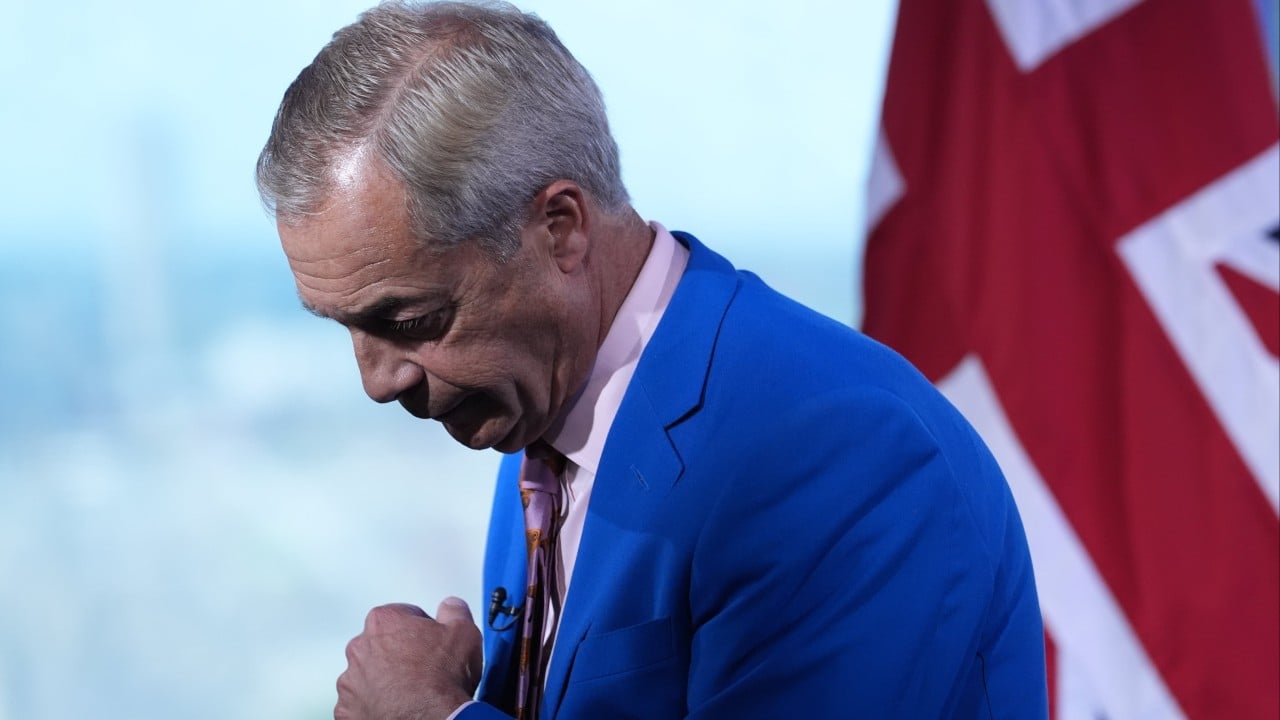
Nigel Farage’s resignation as the Member of Parliament for Clacton is not an exit; it is a defensive capital reallocation strategy designed to front-run an impending regulatory liquidation. Faced with a cascading series of investigations by the Parliamentary Commissioner for Standards over un-declared assets and high-value foreign capital injections, the Reform UK leader has chosen to deliberately crash his own legislative tenure to trigger a special by-election. By engineering a sudden electoral reset, Farage seeks to achieve two structural objectives: first, to automatically pause or disrupt the state's internal compliance mechanisms, and second, to convert a highly toxic compliance liability into a low-risk asset of populist leverage. This is political game theory executed at a high level, utilizing the asymmetry of the UK electoral system to short-circuit constitutional oversight.
The Compliance Bottleneck: Assessing the Financial Liabilities
The structural driver behind Farage’s abrupt resignation is an escalating balance sheet of compliance and regulatory liabilities. The Parliamentary Standards Commissioner, Daniel Greenberg, has been conducting an investigation into a £5 million ($6.7 million) personal cash injection from Thailand-based cryptocurrency entrepreneur Christopher Harborne. Under House of Commons rules established in 2024, newly elected lawmakers are required to register any gifts or financial benefits exceeding £300 received in the 12 months prior to their election.
Farage’s defense hinges on a precise legal distinction: he classifies the £5 million as an "unconditional personal gift" designated specifically for private security infrastructure before he assumed public office. However, under the Parliamentary Code of Conduct, the definition of a relevant benefit extends to any financial support that could reasonably be perceived to influence an MP's public actions. The risk profile of this investigation is severe. A finding of non-compliance by the Standards Committee carries a maximum penalty of suspension from the House of Commons. Crucially, a suspension exceeding 10 legislative days triggers the Recall of MPs Act 2015, which allows constituents to force a by-election via petition if 10% of local voters sign it.
The institutional risk expanded significantly following a secondary disclosure by the Sunday Times, which detailed undeclared financial assistance, logistical infrastructure, and staff funding provided by George Cottrell, a long-term associate and convicted financial fraudster based in Montenegro. The Labour Party immediately petitioned the Electoral Commission to investigate whether these cross-border capital flows breached rules against impermissible foreign donations.
By resigning voluntarily before these regulatory bodies could issue a formal verdict, Farage has executed a pre-emptive strike. The operational mechanism of a parliamentary standards probe relies on the subject retaining the status of a sitting MP. Resignation introduces an immediate procedural disruption, rendering the immediate threat of a forced, humiliating recall vote obsolete and shifting the battlefield to an arena where Farage possesses a distinct competitive advantage.
The Cost Function of a Manufactured By-Election
A political party operating under corporate principles must evaluate the capital expenditure of its operations. The cost of administering a parliamentary by-election typically falls upon the local state treasury, often exceeding £200,000. To mitigate the inevitable narrative that he is wasting public funds to solve a personal legal crisis, Farage announced that Reform UK would fully underwrite the administrative costs of the election.
This capital outlay reveals the underlying corporate-political structure of Reform UK, which operates less like a traditional democratic party and more like a privately held corporate entity with concentrated voting shares. The willingness to deploy an immediate £200,000 liquidity injection to fund a local ballot demonstrates that the party views this expenditure not as a sunk cost, but as an optimization strategy.
The return on investment (ROI) for this capital expenditure is calculated across three distinct variables:
- The Mandate Premium: Re-entering the House of Commons with a fresh, post-scandal mandate effectively neutralizes future findings by the Standards Commissioner. If Farage wins a commanding majority after the facts of the £5 million donation are public knowledge, he can credibly claim that the electorate has already arbitrated and dismissed the offense.
- Media Arbitrage: By controlling the timing and format of the announcement—distributed via a pre-recorded video with independent press strictly barred from asking questions—Farage has forced the national media to operate on his terms. The narrative shifts from "MP faces corruption probe" to "Leader challenges the establishment in a populist referendum."
- Opponent Starvation: The abruptness of the vacancy forces rival parties into a compressed timeline where they must deploy scarce capital and organizational resources to a seat they are highly unlikely to win.
The Asymmetrical Electoral Matrix of Clacton
The selection of Clacton-on-Sea as the laboratory for this high-stakes experiment is based on hard demographic and mathematical realities. Farage did not choose this path out of bravado; he chose it because the electoral data indicates a highly insulated downside risk.
In the July 2024 general election, Farage secured the seat with a decisive 46.2% of the total vote share, establishing a dominant majority of 8,405 votes over the incumbent Conservatives, who finished second at 28%. The Labour Party lagged in a distant third place with just 16%.
The underlying demographic fundamentals of the Clacton constituency explain this distribution and illustrate why it functions as a highly defensive fortress for Reform UK:
| Demographic Variable | Clacton-on-Sea Profile | UK National Average | Strategic Implication |
|---|---|---|---|
| Median Age | ~51 years | ~40.5 years | High concentration of older, naturally conservative, high-turnout voters. |
| Eurosceptic Sentiment | 73% Leave (2016) | 52% Leave (2016) | Deep-seated ideological alignment with Farage’s core political brand. |
| Economic Structure | High dependency on state pensions, seasonal tourism, low-wage service sector. | Diverse service, tech, and manufacturing economy. | Susceptibility to populist critiques of national macroeconomic decline and migration. |
Because the opposition parties face an acute dilemma, the strategic layout favors Farage. The Liberal Democrats have already called for a coordinated boycott, urging other major parties not to field candidates in order to starve Farage’s "vanity project" of mainstream legitimacy. If the Conservatives and Labour field weak, low-budget campaigns to avoid wasting resources, Farage will run essentially unopposed, guaranteeing a mathematically inflated margin of victory. If they fight aggressively, they risk losing heavily to a consolidated Reform UK machine, handing Farage an even more potent symbol of cross-party defiance.
Macro Political Instability: The National Power Vacuum
The Clacton by-election occurs in an environment of extraordinary macro-political volatility across the broader UK political landscape. The governing Labour Party is presently navigating an internal leadership transition following the sudden resignation of Prime Minister Keir Starmer earlier this month. The recent victory of Andy Burnham in the Makerfield special election has positioned him as the clear prime-minister-in-waiting, but the executive branch remains temporarily decentralized.
Simultaneously, the Conservative Party under Kemi Badenoch is struggling to establish a coherent ideological counterweight to Reform UK, dismissing Farage’s move as an "ego-driven gimmick" while failing to offer a structural alternative to his right-leaning voter base.
Farage’s move is timed to exploit this dual-vacuum. Reform UK has led or closely matched the traditional parties in national opinion polling for over a year, propelled by aggressive messaging regarding cross-Channel migration and alleged institutional bias within the police and civil service. However, the party's operational model has shown structural deficiencies: despite strong polling, Reform underperformed in the May local elections and lost three consecutive special elections where it expected to make breakthroughs.
The Clacton by-election is a calculated effort to halt this structural deceleration. By framing the local vote as a nationwide "people versus the establishment" proxy war, Farage is attempting to recalibrate his party’s momentum ahead of the wider political realignments that will accompany Andy Burnham’s expected ascension to Downing Street.
Strategic Outlook and Recommendations
For institutional observers, corporate strategists, and opposing political directorates, treating this event as an isolated personal scandal or a temporary "hissy fit" is a fundamental analytical error. It must be read as a highly calculated corporate restructuring.
The optimal strategy for opposition parties is not an active campaign, which plays directly into Farage’s narrative of confrontation, nor is it a total boycott, which yields the field and grants an unearned landslide. The rational play is a low-rhetoric, highly localized campaign focused strictly on municipal governance, infrastructure delivery, and the literal abandonment of the constituency by an MP who resigned for personal legal convenience.
For Reform UK, the operation carries a single point of failure: voter turnout. Populist campaigns rely on high emotional volatility. If the local electorate views this by-election as a transparent maneuver to avoid regulatory compliance, voter apathy could depress turnout among Farage’s core demographics. If turnout drops below 40%, the structural safety margin built into Clacton’s demographics degrades rapidly, exposing the party to a highly volatile, low-turnout margin error that could fundamentally break the Farage project before the next general election.