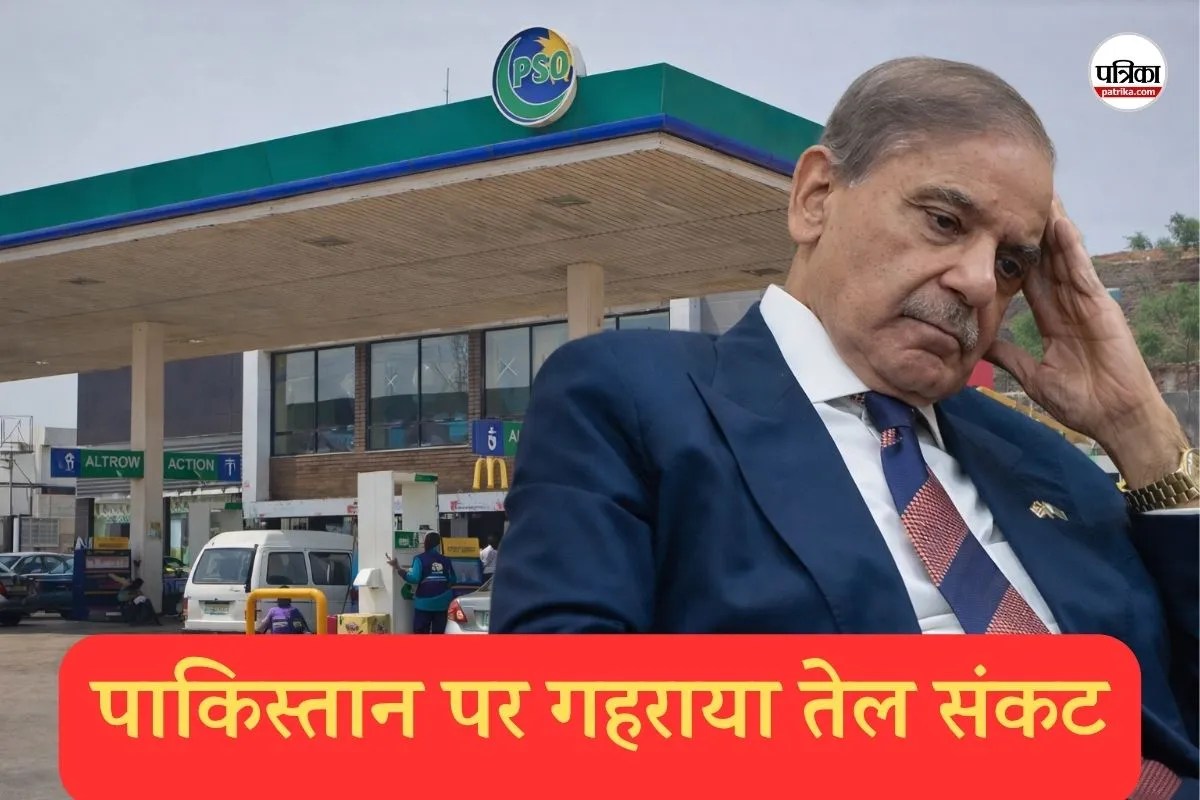
Pakistan is currently trapped in a predatory cycle of energy insolvency that threatens to dismantle its industrial base. While local headlines focus on the immediate scarcity of fuel and the skyrocketing price of petrol, the actual crisis is much deeper than a simple shortage. It is a systemic failure of liquidity. The country is effectively functioning on a hand-to-mouth basis, where every shipment of Liquified Natural Gas (LNG) or crude oil depends on the successful negotiation of the next tranche of a multi-billion dollar bailout. Without a fundamental restructuring of how the state manages its energy debt, the current "tighten your belt" measures are merely delaying an inevitable economic cardiac arrest.
The Circular Debt Trap That Suffocates Every Reform
To understand why the lights are flickering in Karachi and why petrol pumps go dry in Lahore, one must look at the "circular debt." This is a uniquely South Asian financial plague, but in Pakistan, it has reached a terminal stage. It starts when power distribution companies fail to collect bills from consumers or lose electricity to theft and aging infrastructure. Because they don't have the cash, these companies can’t pay the power producers. The power producers, in turn, cannot pay the fuel importers.
The chain breaks at the most critical link: the international market. Global oil and gas suppliers do not accept excuses or domestic political promises. They require hard currency. When the state-owned Pakistan State Oil (PSO) finds its receivables blocked by internal government bickering, its ability to open Letters of Credit (LCs) vanishes. This isn't just a technical banking issue. It means ships literally sit idling off the coast of Karachi, burning money while the central bank hunts for enough US dollars to let them dock.
The Mirage of Fossil Fuel Subsidies
For decades, successive administrations in Islamabad have used fuel subsidies as a political sedative. They kept prices artificially low to prevent civil unrest, but they did so by borrowing money the country didn't have. This created a distorted reality where the public grew accustomed to energy prices that bore no relation to global market shifts.
When the International Monetary Fund (IMF) finally demanded the removal of these cushions as a condition for survival, the shock was seismic. The sudden jump in prices wasn't just inflation; it was the violent correction of a twenty-year fantasy. Small businesses that operated on thin margins found their overhead doubling overnight. Logistics firms, the backbone of the export sector, had to choose between grounding their fleets or passing costs to a consumer base that was already skipping meals.
Why Domestic Production Cannot Save the Day
There is a common argument among local nationalists that Pakistan should simply "drill its way out" of this mess. The reality is far more sobering. While the country has untapped reserves, the investment climate is radioactive. International oil majors have been quietly exiting the region for years. They are tired of "stuck" profits that cannot be repatriated and a regulatory environment that changes with every new cabinet.
Exploration is a high-stakes gamble that requires massive upfront capital. When a country’s sovereign credit rating hovers near default, no sane board of directors will authorize a ten-year drilling project. Even the existing domestic gas fields are depleting at an alarming rate of nearly 10% annually. Without new technology and foreign expertise, the gas that once powered Pakistani kitchens and fertilizer plants is disappearing, leaving a void that can only be filled by expensive, imported LNG.
The Industrial Exodus and the Death of Exports
The most dangerous byproduct of the energy crisis is the de-industrialization of the Punjab heartland. Textile mills, which account for the lion's share of Pakistan’s foreign exchange earnings, are shutting down or moving operations to countries like Bangladesh or Vietnam.
An industrialist cannot run a factory on "maybe." They need a guaranteed supply of power at a predictable price. When the state implements "load shedding"—a polite term for rolling blackouts—it destroys the reliability of the supply chain. If a mill cannot guarantee a delivery date to a European retailer because they didn't have electricity for three days, that retailer takes their business elsewhere. Once those contracts are lost, they don't come back. The energy crisis is thus directly cannibalizing the very exports needed to earn the dollars to buy more energy. It is a snake eating its own tail.
The Strategy of Desperation
The government’s current response has been a series of "emergency" measures that feel more like panic than policy. Closing markets at 8:00 PM and encouraging civil servants to work from home are maneuvers designed to shave a few percentage points off national consumption. They are the equivalent of trying to put out a forest fire with a water pistol.
These measures also ignore the informal economy. Millions of Pakistanis rely on evening trade to survive. Forcing a bazaar to close early doesn't just save electricity; it evaporates the daily wages of laborers, rickshaw drivers, and street vendors. The social cost of these energy-saving mandates often outweighs the fiscal benefit, yet the government feels it has no other choice because the alternative is total darkness.
The Role of Geopolitics in the Tanker Queue
Pakistan’s energy security is also a hostage to its geography and its friendships. Reliance on "friendly nations" for deferred payment oil schemes is a temporary fix that carries a heavy diplomatic price. When you rely on a neighbor to keep your trucks moving, your foreign policy is no longer entirely your own.
The much-discussed pipeline projects that could bring cheaper gas from the north remain stalled by sanctions and regional instability. This leaves Pakistan at the mercy of the spot market for LNG, where it must compete with wealthy European nations that can outbid it every single time. In the global energy pecking order, a struggling economy with a weak currency is always at the back of the line.
Rebuilding the Grid from the Bottom Up
Fixing this requires more than just a new loan or a shipment of discounted crude. It requires a ruthless overhaul of the national grid.
- Decentralization: The obsession with massive, centralized thermal power plants is a relic of the 20th century. Pakistan needs to pivot toward micro-grids and localized solar installations that don't rely on thousands of miles of leaky transmission lines.
- Privatization of Distribution: The state has proven it cannot efficiently collect revenue or stop electricity theft. Moving these operations to the private sector is politically unpopular but mathematically necessary.
- Infrastructure Modernization: A significant portion of the energy produced never reaches the consumer. It is lost to heat in ancient, sagging wires. Investing in the grid is less glamorous than building a new dam, but it offers a much faster return on investment.
The time for incremental adjustments ended when the first LCs were turned down by international banks. The current hardship being felt by the Pakistani public isn't a temporary dip in the road; it is a fundamental shift in the cost of living. To survive, the state must stop treating energy as a political tool and start treating it as a commodity that must be paid for, secured, and managed with professional transparency rather than populist rhetoric.
The next few months will determine if Pakistan can transition to a sustainable energy model or if it will continue to lurch from one shipment to the next, forever one missed payment away from a total standstill. Policy makers should stop looking for the next handout and start looking at the meters in their own backyard.
Check the balance sheets of the power distribution companies in your local district to see where the money is truly disappearing.