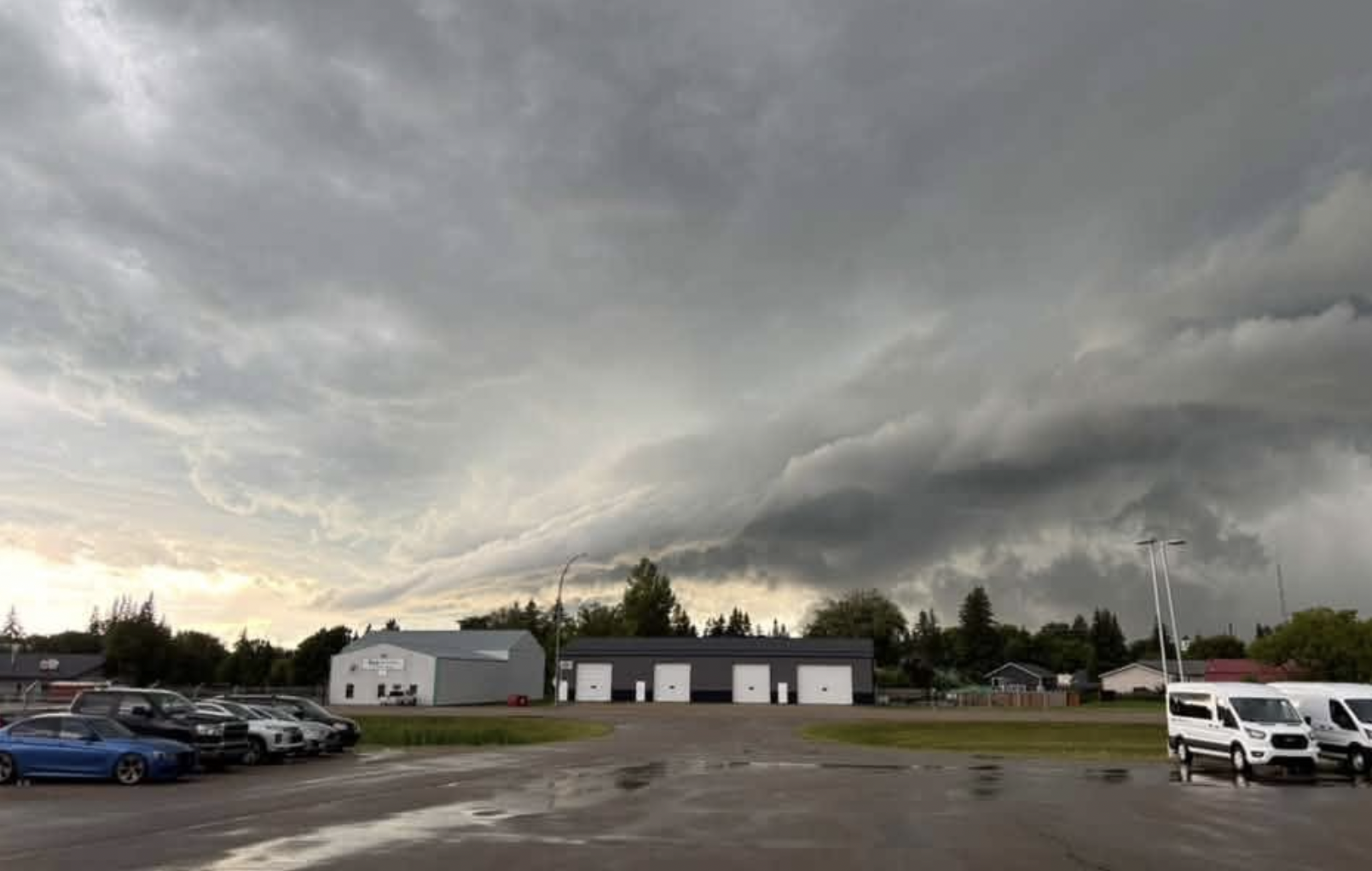
Saskatchewan just tied its record with 10 tornadoes in a single day, and the predictable media panic machine immediately kicked into high gear. The headlines practically write themselves. They scream about unprecedented heat waves, climate collapse, and atmospheric anomalies.
They are looking at the wrong map.
The lazy consensus among mainstream environmental reporters is simple: more heat equals more extreme weather, which equals an unprecedented spike in tornadoes. It sounds logical on a superficial level. But anyone who actually analyzes convective severe weather knows this narrative ignores how atmospheric physics operates.
A 10-tornado day in Saskatchewan is not proof of a breaking climate. It is proof of a massive upgrade in our ability to see what was already there. We are not experiencing a sudden, apocalyptic shift in storm frequency. We are experiencing the normalization of high-resolution radar networks, citizen satellite tracking, and a population armed with 4K cameras.
The Convective Ingredient Fallacy
To understand why the media narrative falls apart, you have to look at the basic mechanics of how a tornado forms. Meteorologists break this down into specific ingredients: moisture, instability, lift, and wind shear.
The common mistake is focusing entirely on the first two. Yes, a historic heat wave pumps up the instability. It builds massive potential energy in the atmosphere. But energy without organization is just a humid afternoon.
Tornadoes require a highly specific vertical wind profile. You need wind speed and direction to change rapidly as you go up in the atmosphere. This is wind shear, and it is what creates the rolling, horizontal tubes of air that get tilted vertically by an updraft to form a supercell.
Here is the kicker: major heat waves are often driven by massive, stagnant high-pressure systems. These systems frequently suppress the very jet stream dynamics required to generate strong wind shear. When a heat wave breaks, you get a violent clash of air masses, but the idea that higher temperatures automatically scale up tornado counts is physically illiterate.
If heat alone dictated tornado frequency, the deep summer months of July and August across the Great Plains would systematically out-produce the volatile, cooler transitions of April and May. They do not.
The Detection Illusion
The real culprit behind the "record-tying" data is a phenomenon known as detection bias.
Decades ago, if an Environment and Climate Change Canada (ECCC) meteorologist wanted to confirm a tornado in rural Saskatchewan, they relied on visual confirmation from a handful of spotters or a physical damage survey. If a weak EF0 or EF1 tornado touched down in an empty canola field, spun around for four minutes, and lofted nothing but dirt, it never happened. It did not exist in the official ledger.
Today, the Northern Tornadoes Project (NTP) out of Western University has completely rewritten how we collect data. They do not just wait for a phone call. They deploy:
- High-resolution rapid-revisit satellite imagery to detect faint crop scars.
- Advanced drone fleets to map structural damage paths down to the centimeter.
- Crowdsourced social media scrapers that pull geotagged video instantly.
Consider the historical baseline. When Saskatchewan set its previous records, our radar infrastructure was blind to low-level rotation in remote northern zones. We missed dozens of tornadoes every single year. Now, we are catching the weak, short-lived twisters that previously spun harmlessly into oblivion.
We are not seeing a hyper-acceleration of severe weather. We are finally building a dataset that reflects reality. When you look at the historical data with an analytical eye, the long-term trend line for violent, truly destructive tornadoes (EF3 and above) across North America is flat to slightly declining. The spike is almost exclusively driven by weak, brief tornadoes that we now have the technological privilege to see.
The Problem With the PAA Consensus
If you look at the standard queries the public searches during these events, the flaws in our collective understanding become even more obvious.
Does a heat wave cause more tornadoes?
No. A heat wave increases the available energy in the atmosphere, but tornadoes require a precise trigger and strong wind shear to form. High heat without a strong upper-level trough simply creates a capped, stable atmosphere where storms cannot even break through.
Is Saskatchewan getting more dangerous?
The data says no. While the reported number of tornadoes is rising due to better tracking infrastructure, the actual risk to human life remains tied to urban sprawl, not atmospheric escalation. Your grandfather faced the exact same atmospheric risks in the 1950s; he just didn't have an app telling him a funnel cloud touched down 80 kilometers away in an unpopulated grid road.
The Real Risk We Are Ignoring
By obsessing over the sensationalized headline of "10 tornadoes," we miss the actual, systemic vulnerability in infrastructure.
The real danger in the Canadian Prairies is not that the weather is becoming fundamentally alien. It is that our built environment is expanding into areas that have always been volatile, while our building codes rely on outdated assumptions about wind resilience.
I have watched insurance companies lose hundreds of millions of dollars on property damage claims following prairie storms. The blame is always shifted onto "unprecedented climate anomalies." It is a convenient excuse for executives. It shifts the liability away from poor engineering and suburban sprawl into the unmanageable realm of global atmospheric shifts.
If we want to mitigate the impact of these storms, the answer is not a defeatist shrug at a record-tying statistic. The answer is concrete action:
- Mandate Hurricane Ties: Simple metal connectors linking the roof truss to the wall studs cost pennies during construction but prevent the catastrophic roof failures that turn an EF1 tornado into a total property loss.
- Overhaul Rural Power Grids: The vulnerability of our overhead transmission lines to straight-line winds and weak tornadoes is a choice. Burying critical infrastructure is expensive, but relying on wooden poles in a known storm corridor is active negligence.
- End the Data Panic: Stop treating every upgraded statistical point as a sign of imminent doom. Use the data from the Northern Tornadoes Project to map actual localized risk zones, instead of using it to generate clickbait panic.
Stop looking at a high tornado count as an unprecedented atmospheric anomaly. Start recognizing it for what it truly is: a triumph of modern sensor networks detecting a natural cycle that has been playing out across the Canadian Prairies for thousands of years. The atmosphere isn't breaking. Our ability to see it just finally woke up.